
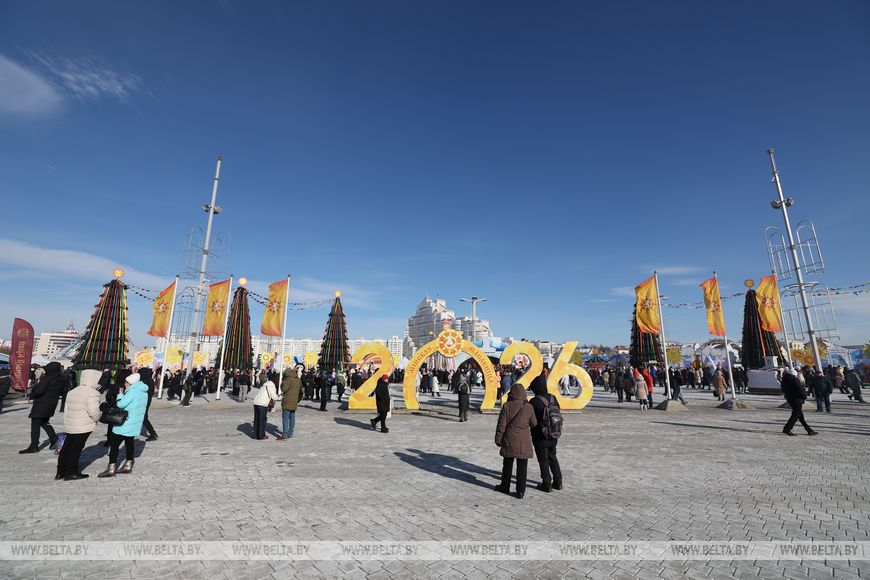
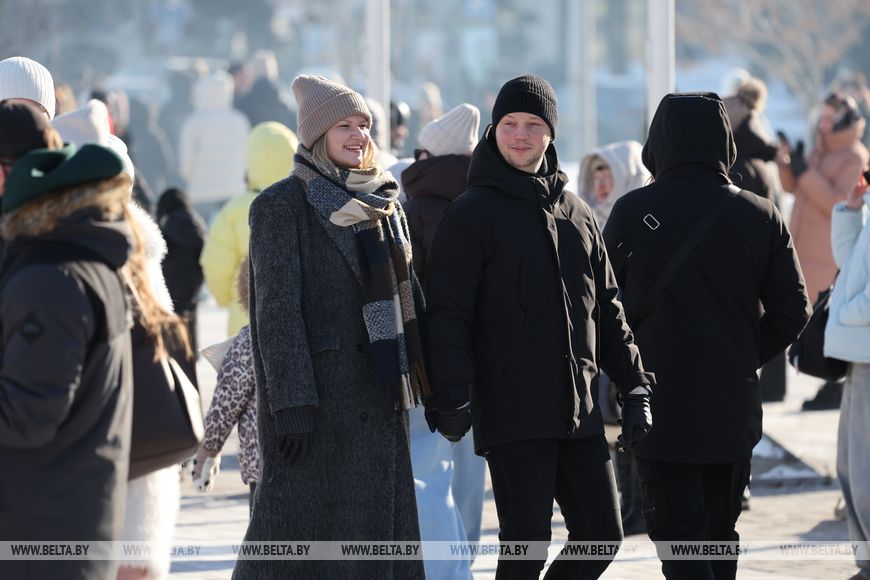
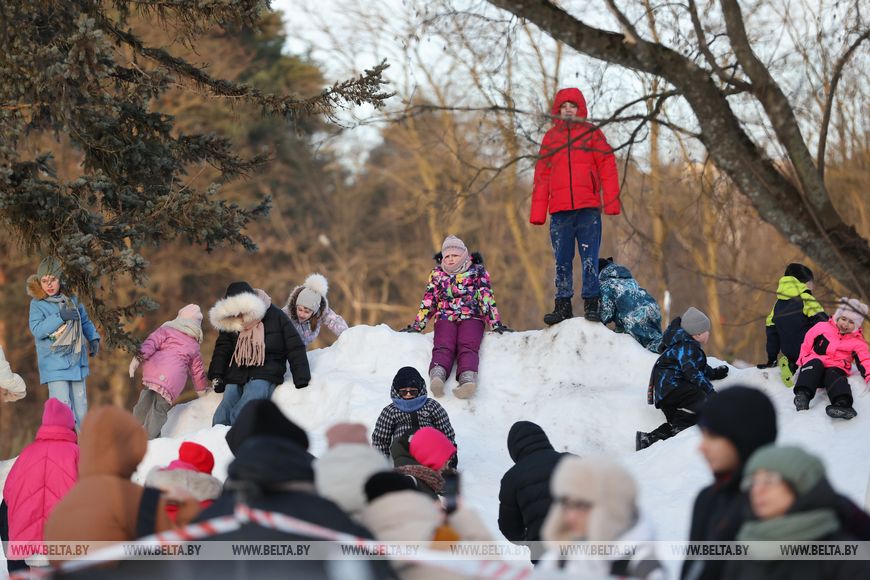
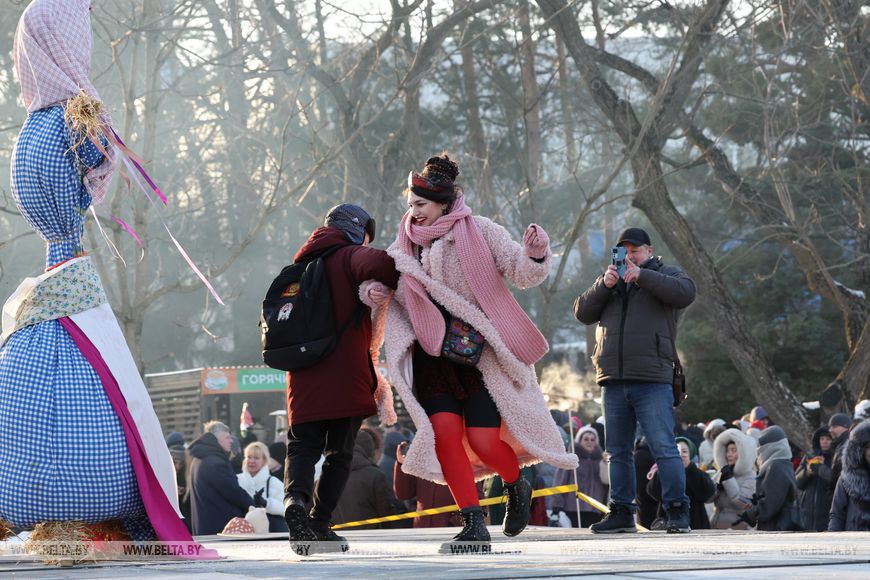
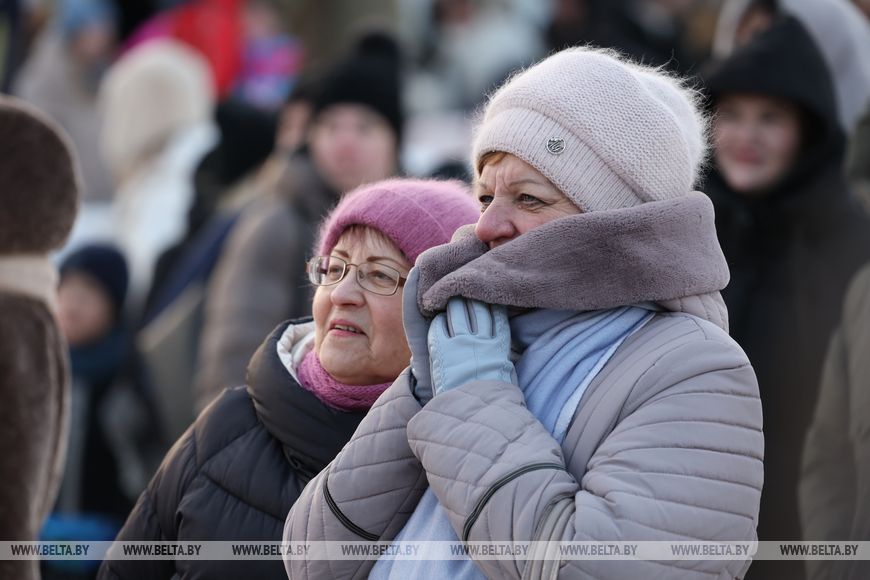
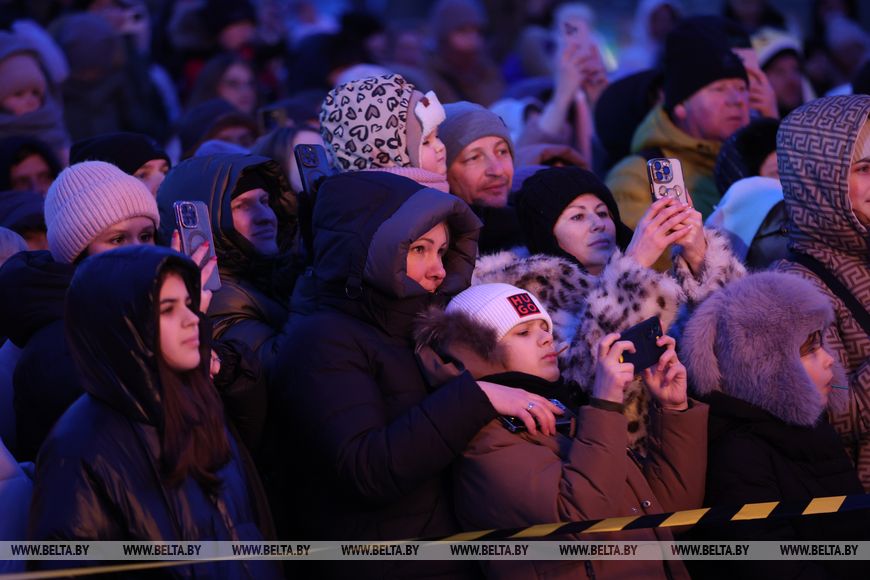
Maslenitsa week in Belarus is drawing to a close, but its most vibrant part is just gaining momentum. Drawn by the aroma of fragrant pancakes with a variety of fillings, thousands of people are flocking to the festivities despite the frosty weather. They are kept warm not only by the food but also by dancing, and there will also be chances to work up a sweat in various contests. A BelTA correspondent visited the celebration on the square near the Palace of Sports, where Minsk residents and guests are summoning a sunny spring.
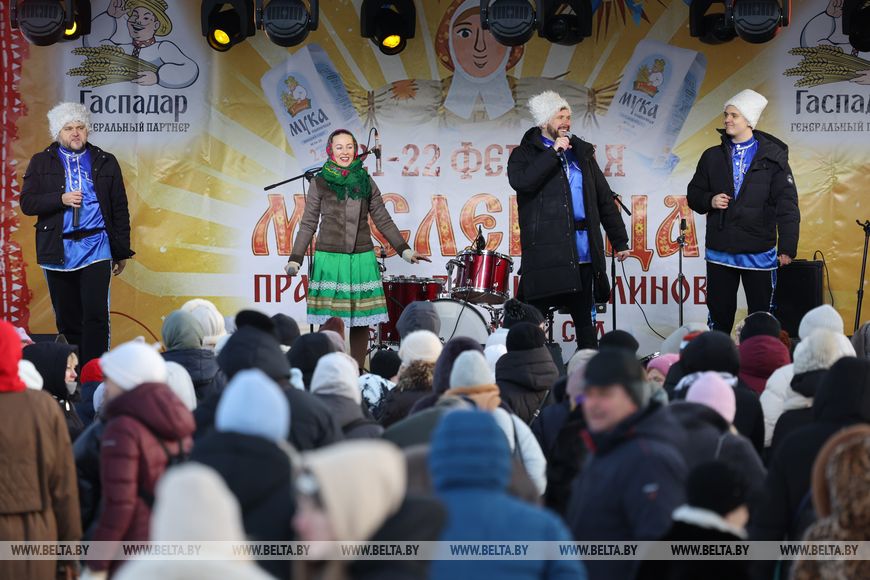
Music and Belarusian songs could be heard far from the concert venue. The singing was periodically interrupted by the loud and energetic voice of the permanent host of Maslenitsa in Minsk, Maria Fedorenko. For her, this holiday means a good mood, wonderful people, and, most importantly, the imminent arrival of warm weather
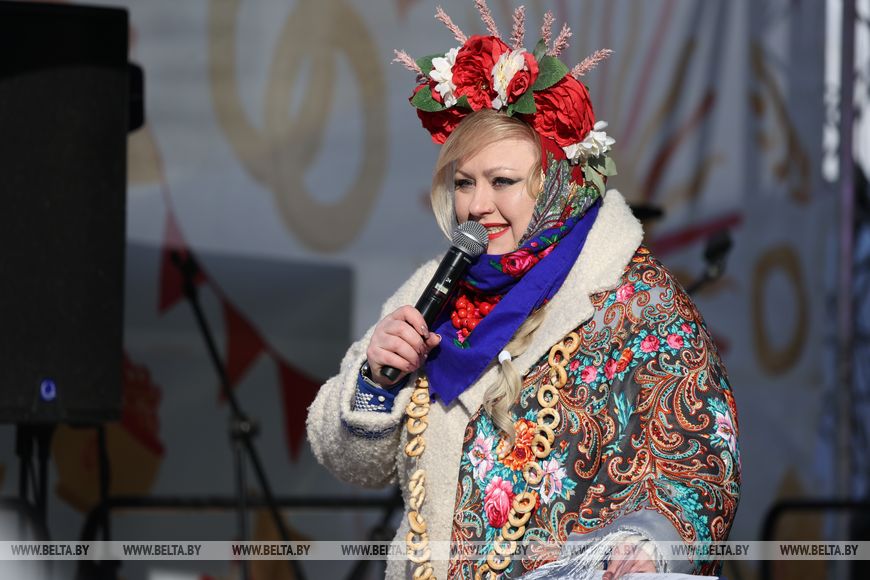
 “Maslenitsa is our Belarusian brand, our roots; this holiday was created by our distant ancestors. Today, it is celebrated brightly and beautifully in any city. And our guests today have a chance to test their wit, ingenuity, and all sorts of other qualities,” she said.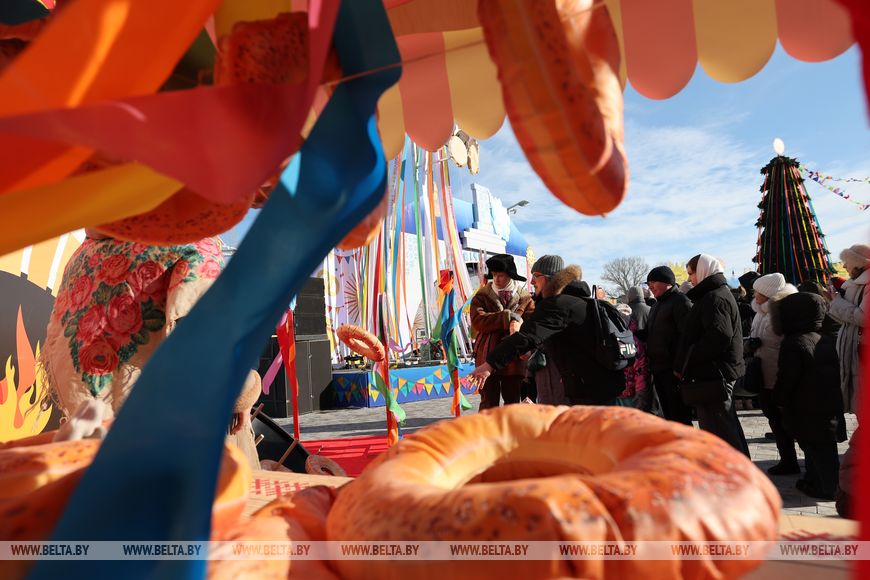
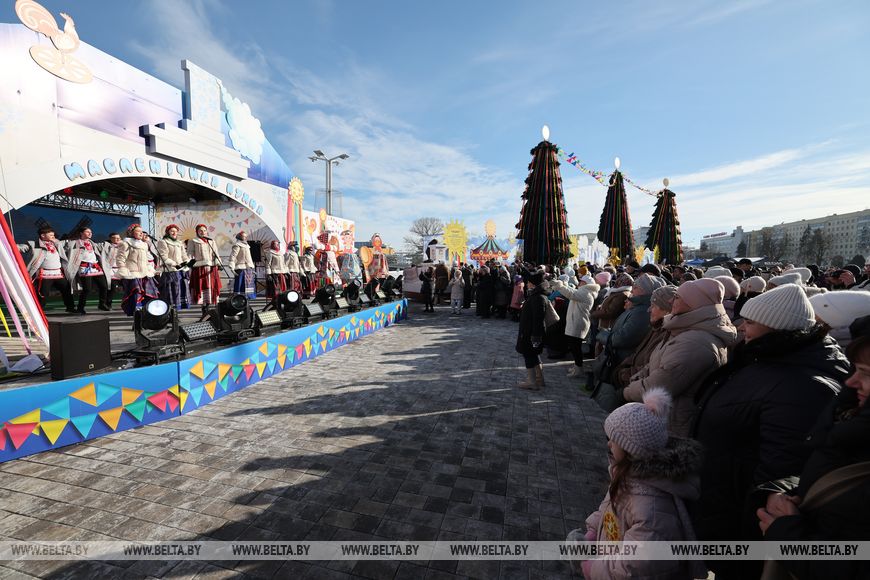
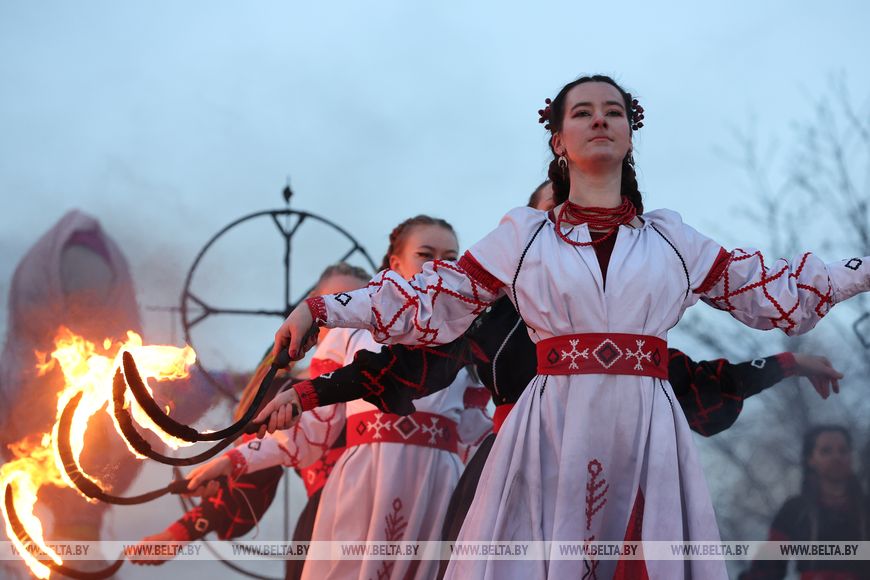
 On 21 February, the festivities in the capital city continued until eight in the evening, with a vibrant mood created by folk bands, honored and professional groups, and popular Belarusian artists and modern hits on the theme of Maslenitsa.
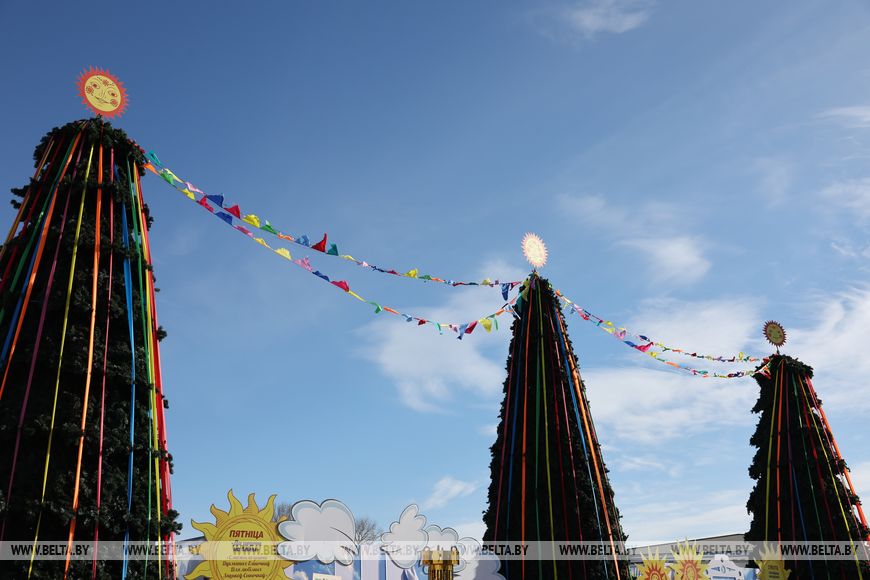
Dmitry Sergeychuk, the principal director of the holiday, said that the main concept of the Minsk Maslenitsa was inspired by the diverse ritual foods of Belarusians. Meanwhile, we looked around and noticed other details: the stage was designed in the shape of a huge oven, and tall, brightly decorated fir trees were placed on the square. It might seem that the concept has nothing to do with spring, but that's only at first glance.
 “Back in the day, in the central region of our country people used to decorate fir trees with ribbons on this day, and we decided to incorporate this into the thematic design,” Dmitry Sergeychuk explained.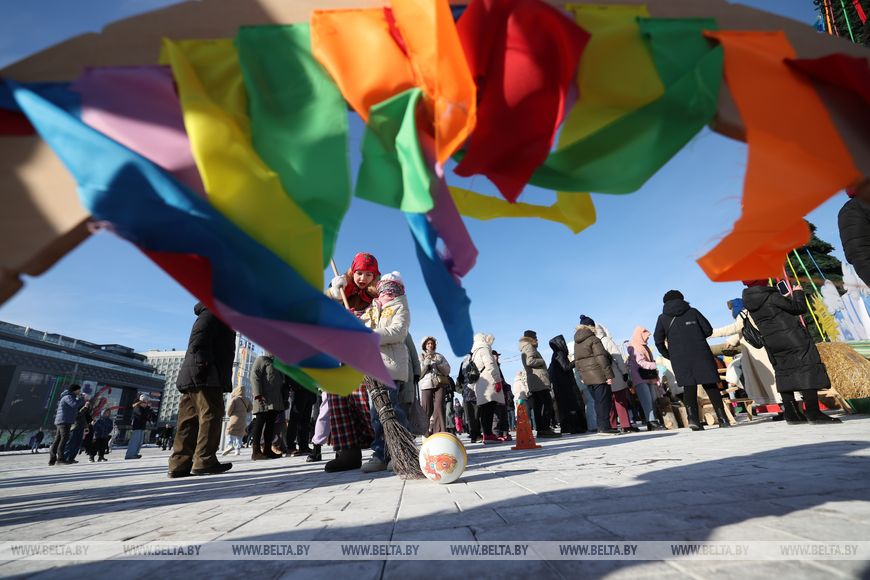
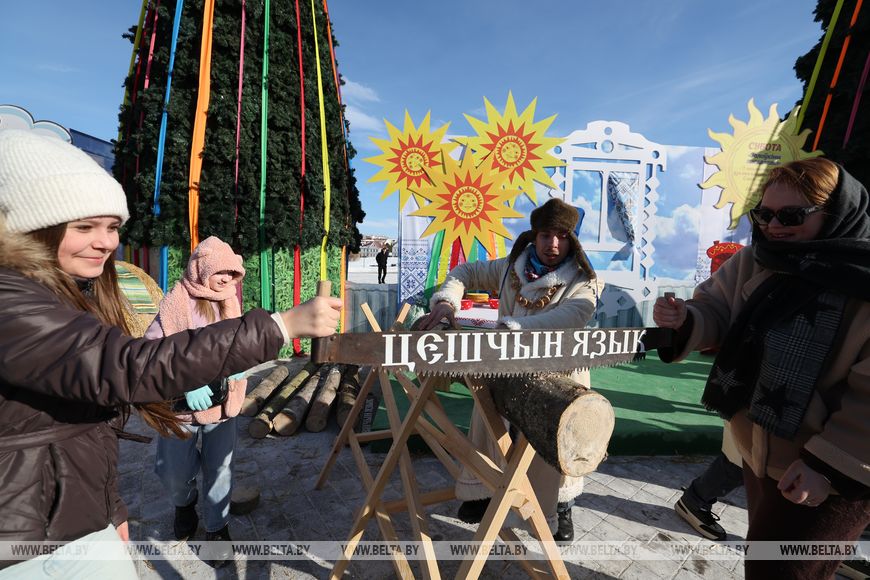
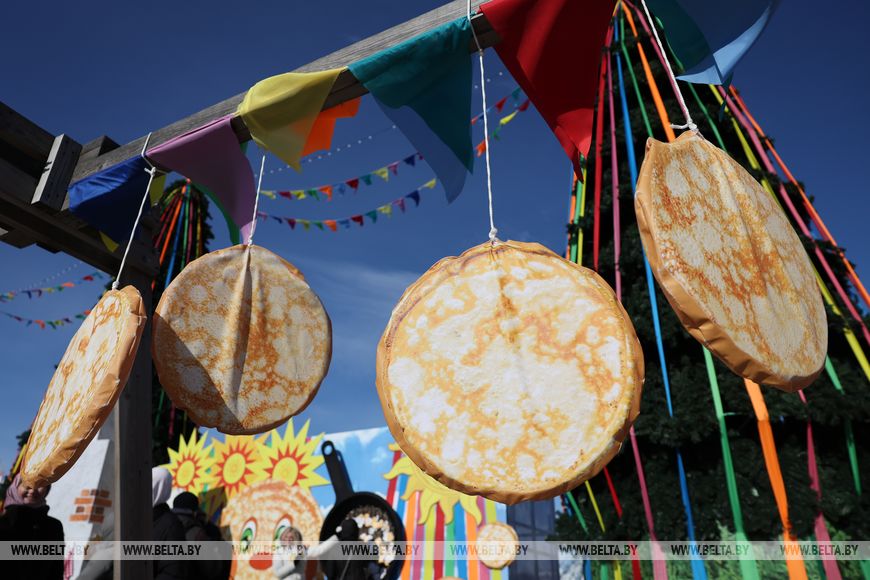
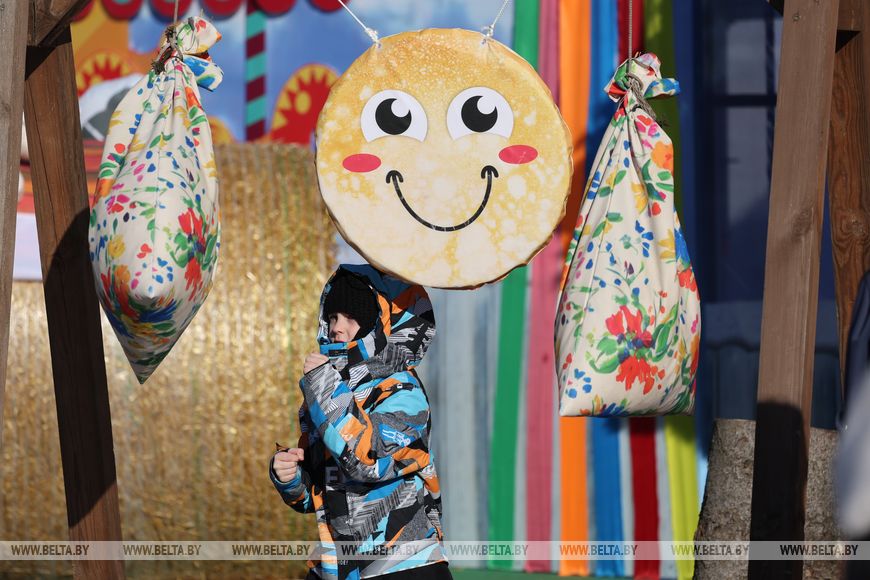
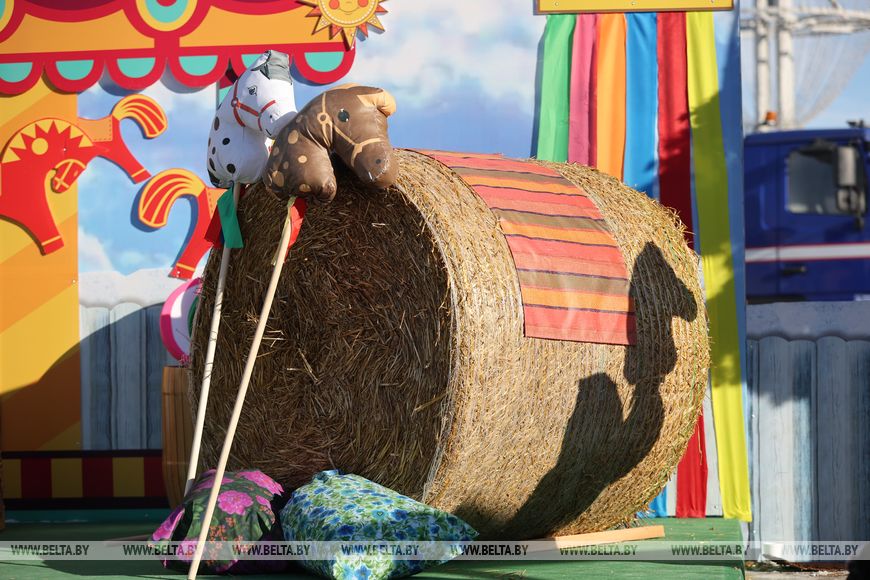 The main focus of the holiday is traditional Maslenitsa cuisine, everything connected with pancakes, fluffy fritters, butter, milk, and cheese. There are six locations, each adhering to the theme. There are interactive zones: for example, at one, you need to toss a plush pastry onto a frying pan to win a prize.
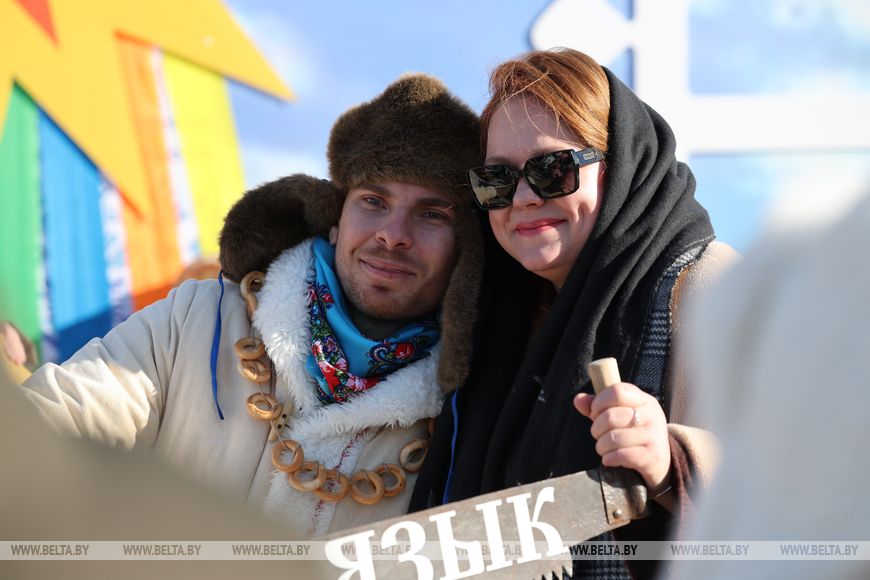
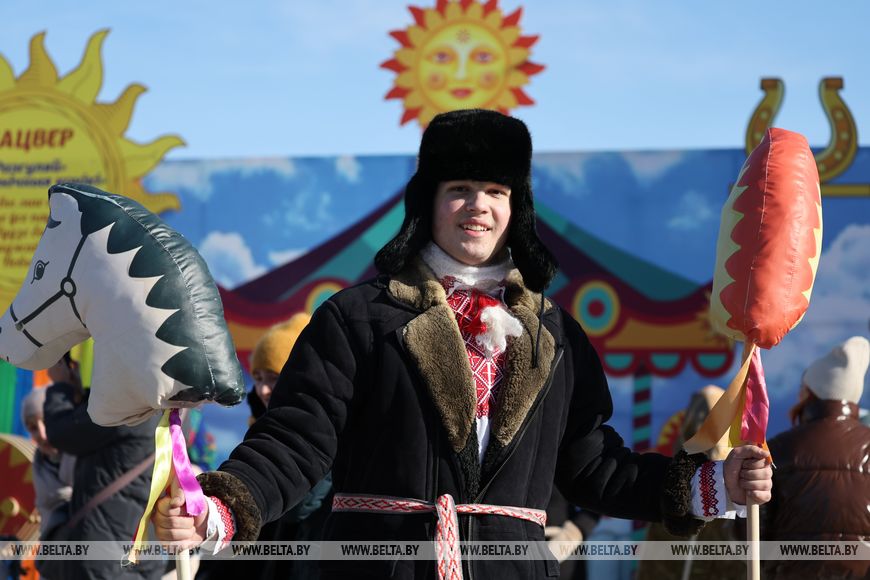
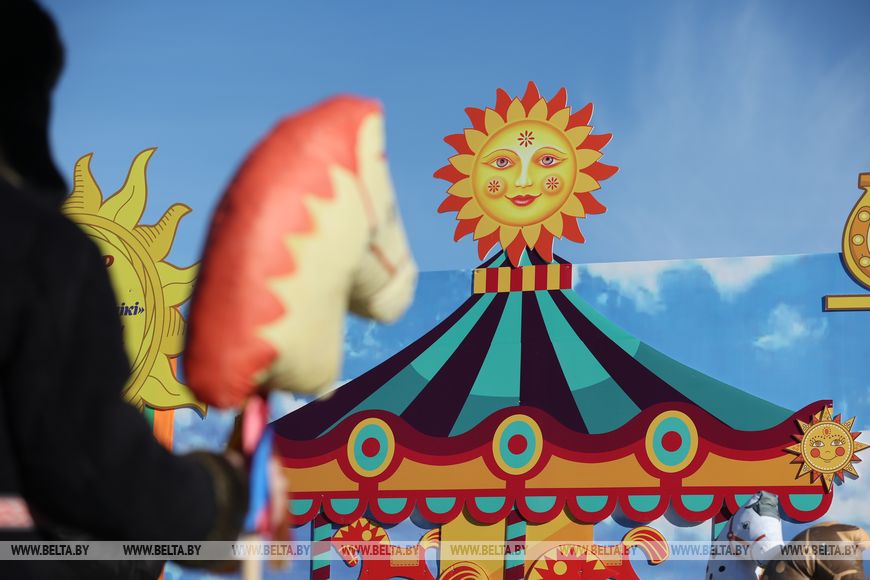
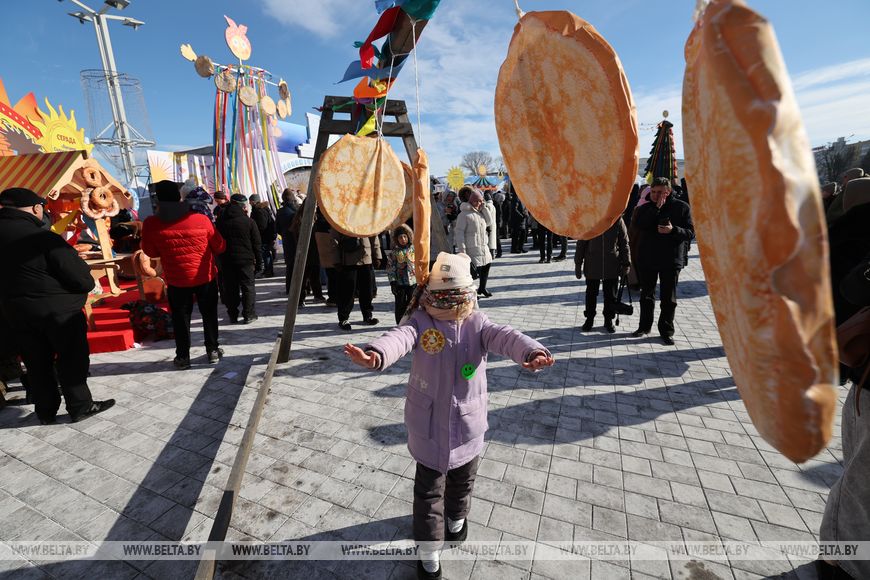 There are indeed a great many trials and entertainments: each one is tied to a specific day of Maslenitsa week. For example, on Thursday, guests are invited to go horseback riding and navigate various obstacles; at another spot, they can play “lyndy” (a type of traditional game); and on Monday, they can spin the Maslenitsa wheel and try to win a sweet lollipop. But even if you don’t win anything, it's no big deal. You'll get a large sticker with a bright sun to attach to your clothes. Some guests have a lot of such stickers, which means they've participated in almost all the contests and are having a great time.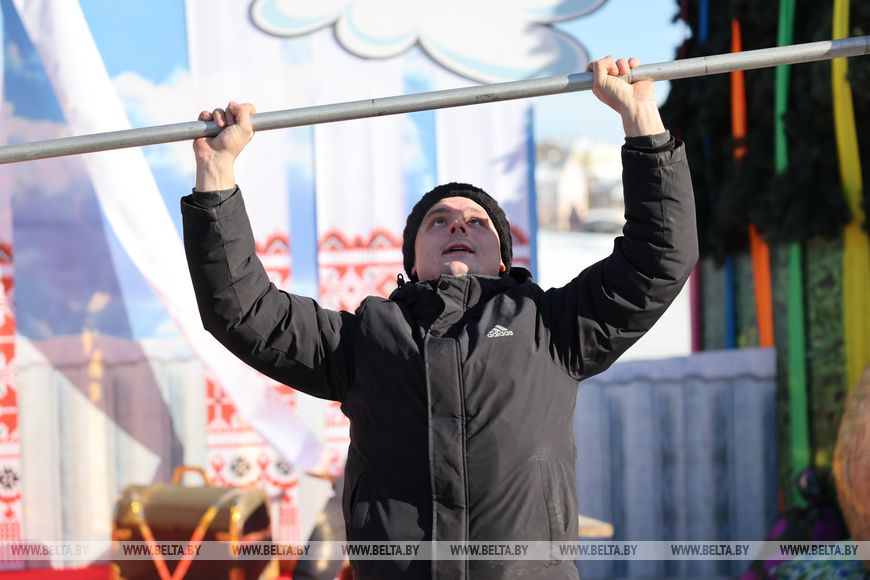
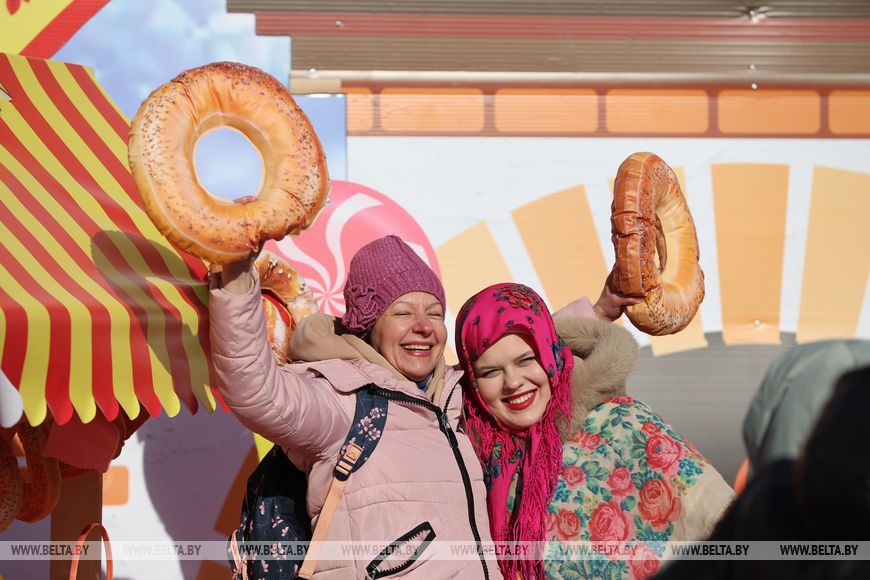
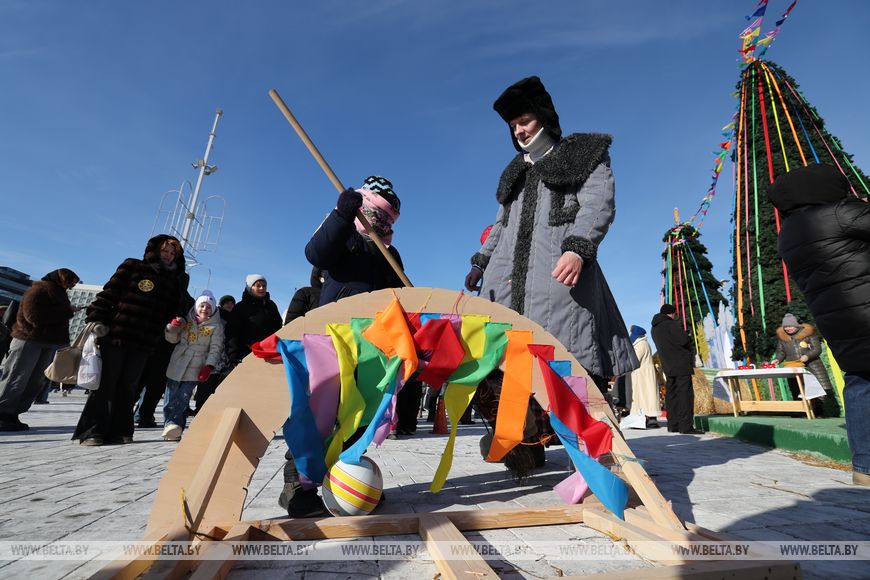 “Experience shows that people really enjoy the holiday. Last year, Maslenitsa lasted for one day, and drew about 6,000-7,000 visitors a. It attracts people with its openness and cheerful atmosphere, thanks to the games. The contests are different each time and always adhere to the concept,” the director explained.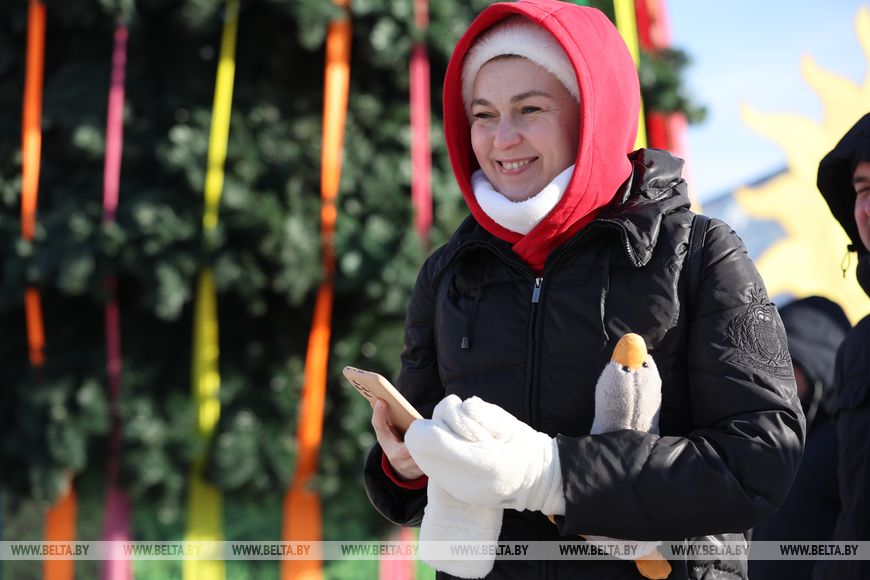
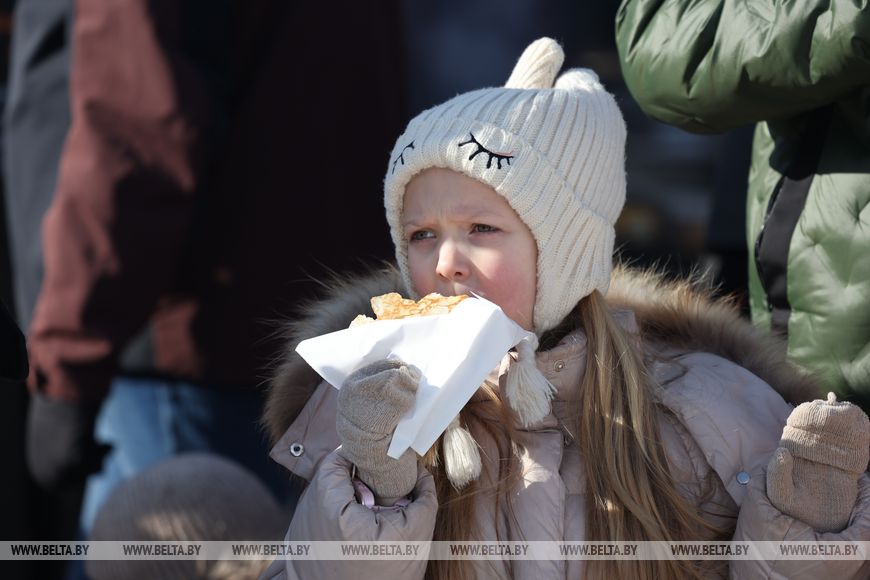
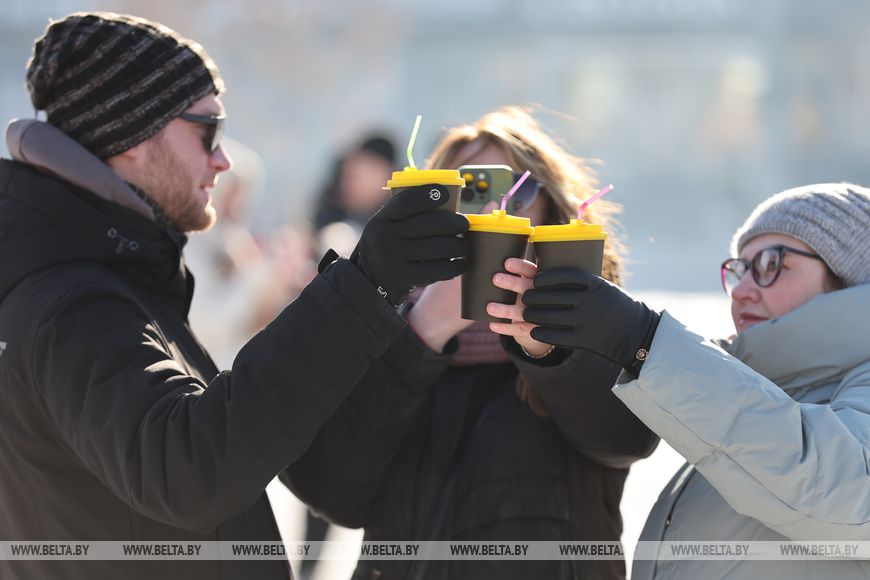
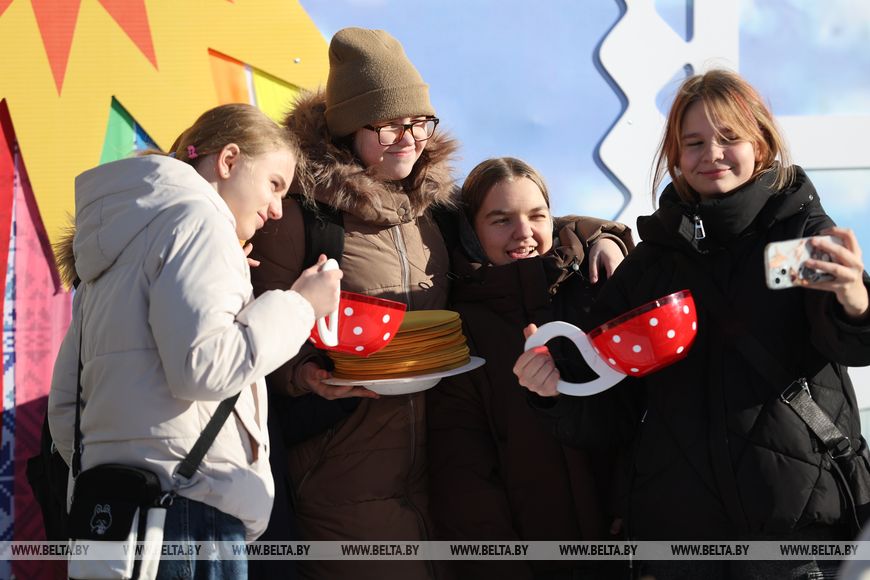
 The main highlight of the program is, of course, the pancakes. They are baked in every stall along the long trade row. Besides the usual ones with cheese and ham, you can also find something new, for example: with salmon, fish spread, hot shashlik, or caviar. And if one pancake isn't enough, you can grab some meat and salad snacks, hot corn, potatoes, or grilled shrimps.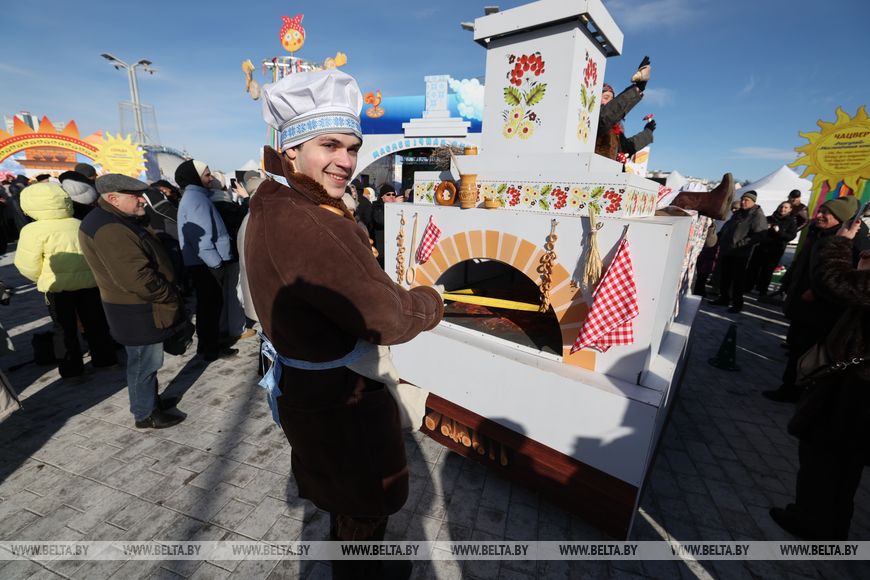
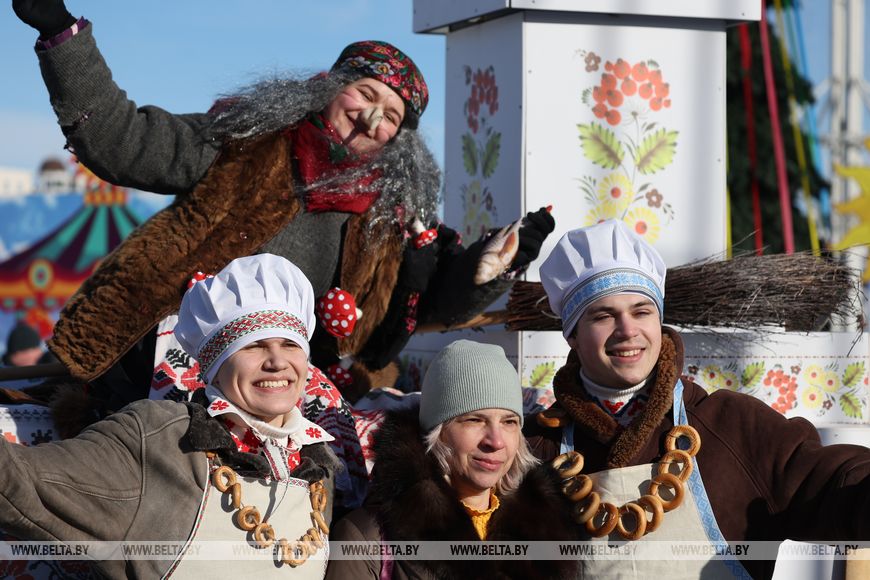
 Together, they were taking photos with animators who had arrived on a “stove”, that has small wheels underneath, dressed as Baba Yaga and other fairy-tale characters.
“Usually we organize children's contests, but today we've eaten and are having a good time. It’s especially delicious to eat hot pancakes in the cold and warm up with them. This is our first time here; the last time I was at Maslenitsa was a very long time ago, back in childhood. The atmosphere is very cool,” a girl said.
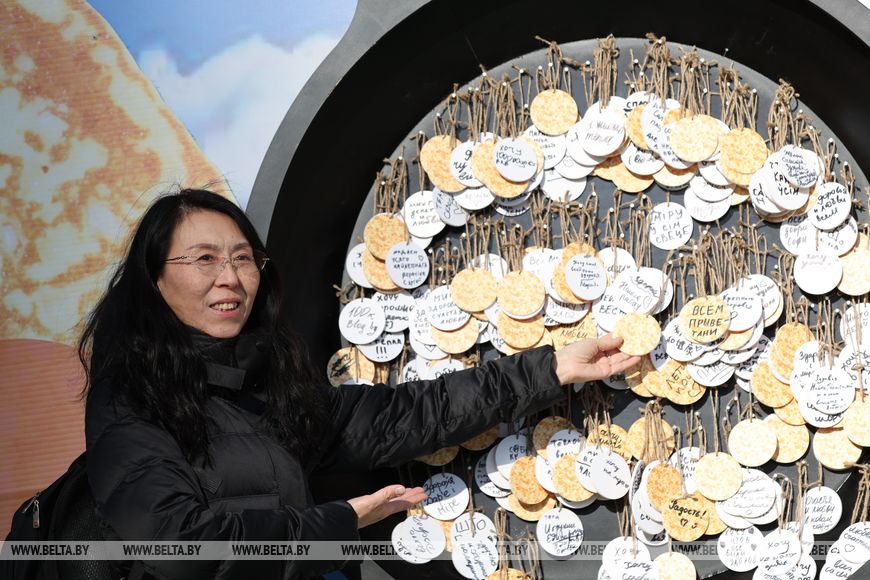
 Russians are also getting acquainted with Belarusian culture through Maslenitsa. For example, Oksana Shulmina, along with her husband Dmitry and son Savely, came to Minsk from Yekaterinburg. “We ended up here by chance, and we really like it. It's non-stop entertainment not only for children but also for adults. The groups are performing great; we are enjoying the holiday and feeling the Belarusian hospitality,” the guest said.
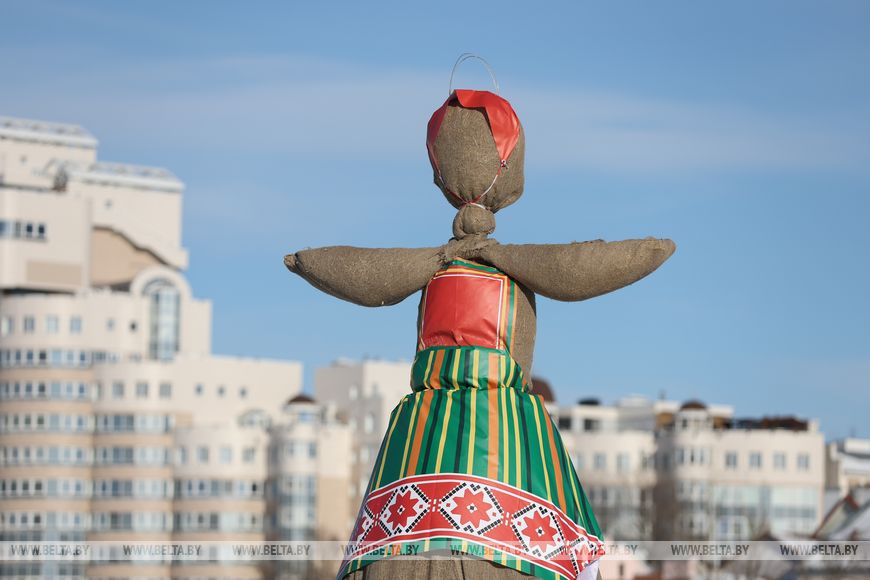
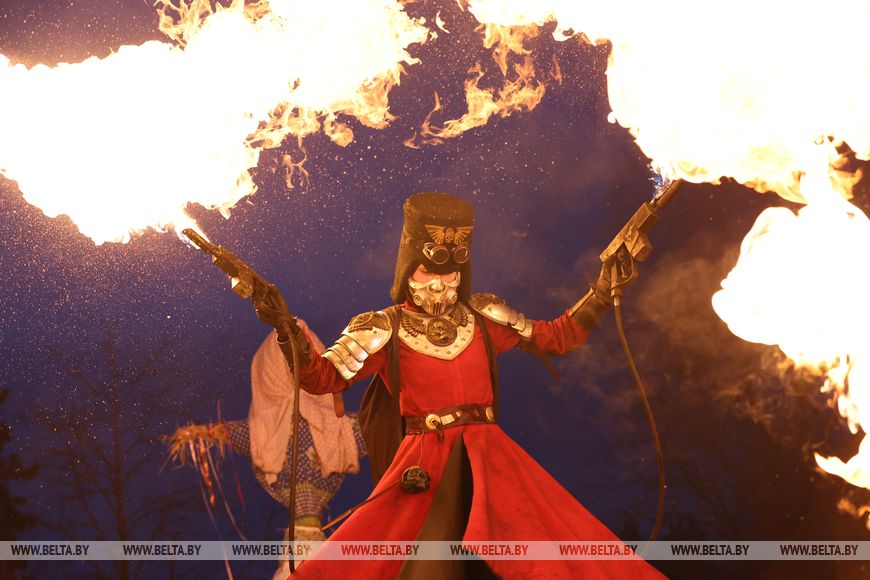
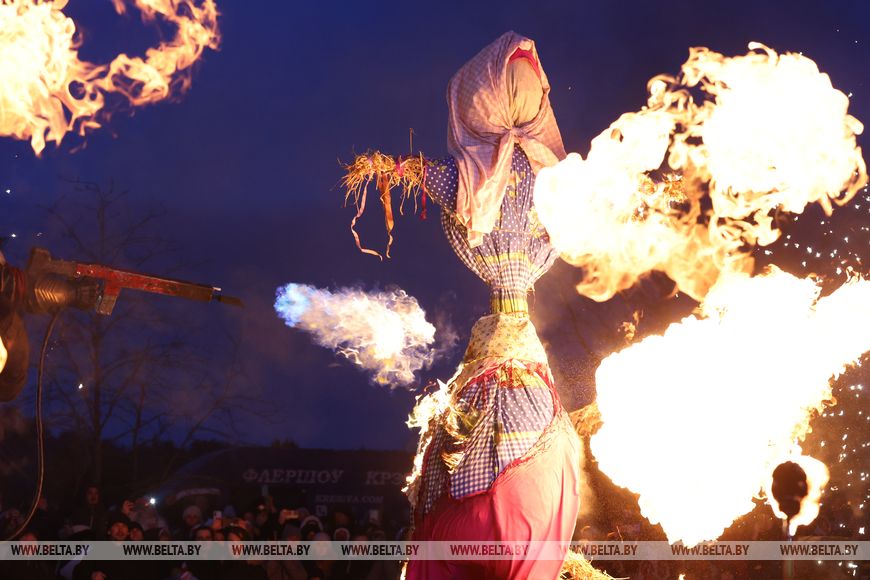
The celebration of spring will continue on Sunday and culminate in the burning of the effigy. This traditional ritual will help cleanse bad thoughts and let new, bright things into life.
Photos by Andrei Sinyavsky
BelTA