
News of the story
"After the Fact: Lukashenko’s Decisions"
Some 20 years ago, Belarusian President Aleksandr Lukashenko stressed that globalization, or rather, the Americanization of the world, is fraught with a great danger for all countries. "Can such a huge civilization as ours rely on one support?" the president wondered. Any mathematician or physicist will say: the more points of support, the more stable the system is. Slowly but surely, the modern world is moving towards multipolarity, and BRICS is becoming one of these points of support in global politics today. In this episode of BelTA;s YouTube channel “After the Fact: Lukashenko's Decisions” we will tell you why BRICS is different from other international associations and how the organization can surprise the international community. Why does Aleksandr Lukashenko seek to "register" Belarus with BRICS and what radical steps he is willing to take on the way to multipolarity? What challenge does the global majority pose to the "powers that be" and will it be able to tame the Western hegemon?
What is BRICS?
The abbreviation BRICS appeared a few years earlier than the organization itself. The acronym BRIC was coined in 2001 by the English baron and financier Jim O'Neill. In his policy brief, he thus identified the four countries (Brazil, Russia, India and China) as rising economic powers which were at a similar stage of newly advanced economic development. According to the economist's estimates, these economies would dominate global growth by 2050.
The sequence of letters in the abbreviation is also a play on words, or rather word. Thus, Jim O'Neill emphasized that the world economy would grow largely thanks to these states. Since then, the term has come into widespread use, and it has been actively used by corporations investing in the economy of the Big Four.
How did BRICS come into being?
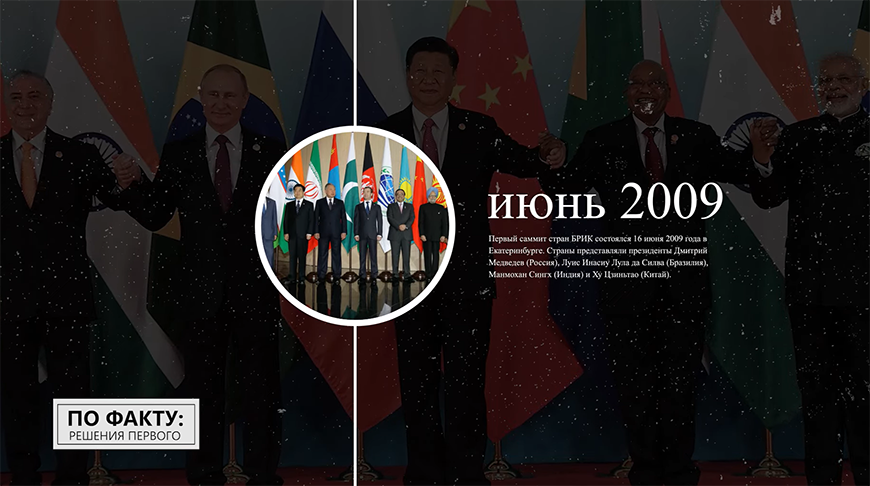
Five years later, in June 2006, a meeting of the economy ministers of Brazil, Russia, India and China was held on the sidelines of the St. Petersburg Economic Forum. A couple of months later, at the suggestion of Russia, foreign ministers gathered on the sidelines of the UN General Assembly in New York. The BRIC heads of state held their first meeting in 2009 to define the goal of the partnership as "consistent, active, pragmatic, open and transparent dialogue and cooperation" for the sake of common interests, harmonious world and common prosperity.
"We have already reached the point where the world has become not just unipolar but U.S.-centric. This is even more than unipolarity. China, Russia, and Belarus and many others say that the world should be multipolar. Unfortunately, the world is not yet moving in this direction. It is moving in the opposite direction. Towards greater unipolarity. It's dangerous, it's scary. I always say that a system based on one pillar cannot exist for a long time. It must have additional support or it will collapse. There is no third option. Therefore, I am not pessimistic, but very critical of what is happening in the world today,” Aleksandr Lukashenko told the media back in 2005.
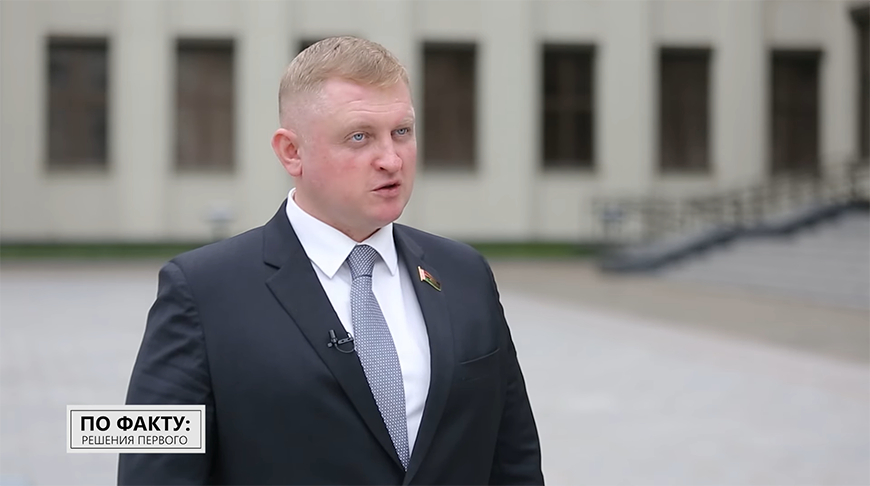
Aleksandr Shpakovsky, Minister-Counsellor of the Belarusian Embassy in Russia, member of the House of Representatives, cited another phrase by the president” China, India, Latin American countries, Arab states… Everybody is tired of the U.S. hegemony.”
It was this state of affairs in the international arena, according to Aleksandr Shpakovsky, that prompted the future BRICS members to create their own organization. “These are different countries in terms of their potential, in terms of foreign policy tasks. But at the same time, these states are highly dissatisfied with the existing unipolar world order and the unilateral diktat that has dominated international relations for a long time,” Aleksandr Shpakovsky said.
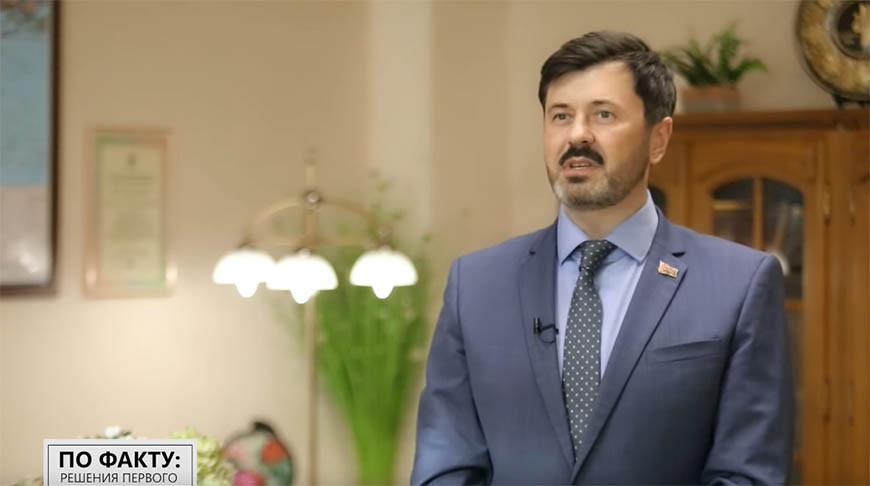
“At present, BRICS cannot be called a full-fledged integration bloc. It is rather a club of friends. The future of humanity depends on the ability of the organization to go beyond friendly relations and to embrace strategic cooperation, bloc discipline, common goals, and a common industrial and currency policy. For now, we can only say that an alternative center of power is emerging and this is BRICS. And this is fully aligned with the interests of the Republic of Belarus,” Aleksandr Shpakovsky noted.
BRICS members
In 2011, the Republic of South Africa joined the organization, and the union turned from BRIC into BRICS. And a year ago, at the Johannesburg summit, the heads of state agreed to double the number of members of the association. BRICS+ has incorporated Egypt, Ethiopia, Iran and the United Arab Emirates. Argentina and Saudi Arabia were supposed to be added to this list, but the first pulled out of the plans to join BRICS after the change in political course, and the second is yet to officially join the organization.
"We live in a very interesting time, when a new world order is taking shape. Remember Vladimir Ilyich Lenin: we can no longer do it in the old way, and we do not yet know how to do it in the new way. So, you and I know how and our friends also know how. That is, we are forming a new world order; Belarus is an active participant in these processes. BRICS is one of those platforms that makes it possible to form a new world order based on the rules which are understood by most countries of the world in the same way. This is a platform that is based on mutual respect, on reciprocal mutual interests, and its main goal is to create a future that suits everyone, and not just certain groups of countries or specifically one or another country,” said First Deputy Minister of Foreign Affairs Sergei Lukashevich of Belarus.
Speaking to journalists in 2023, the president of Belarus noted that the expansion of BRICS will not put an end to the Western hegemony, yet it will be a big step in this direction.
“This is a huge step towards a multipolar world. And then a new currency might appear. They are afraid of this more than anything, especially the Americans who call the shots. They understand that if they cannot use dollars as a leverage any more and a new currency appears, their hegemony will end. It will no longer be possible to go along for a free ride, as they say in Belarus. I believe we should take it up a notch and take more decisive steps. Yet, I admit that it might be impossible due to different approaches and opinions. But the main thing is to keep pressing ahead. We need to move along this path,” Aleksandr Lukashenko said.

By now, three dozen countries have announced plans to engage with BRICS in one way or another. Just imagine: if all these plans come to fruition, BRICS will be comparable in scale and influence with the UN, despite the informal nature of the association.
Will BRICS will able to outdo the Group of Seven?
Fast facts. Let's compare BRICS with another international club - the Group of Seven (G7). In 1992, the G7's share in the global economy was 47%, while the share of the future BRICS countries barely reached 16%. After the expansion of BRICS, the organization's members’ aggregate GDP was 37% of the world's total in 2024, while the share of the “Big Seven” dropped to 29%. And if we take into consideration that more than three dozen countries seek to join BRICS, then it becomes crystal clear who dominates the world economically.
"Today BRICS is a hegemon, a driver of global economic growth. Just look at its share in the global economy, quantitative indicators, and dynamics. Today, the G7 countries, the countries of the collective West, are stagnating. This is a challenge to the existing world economic order. Their growth in 2024-2025 is projected to be 1.3% per annum, while the world economy is expected to grow at 2.4%. Meanwhile, independent estimates of international organizations put the growth in BRICS countries at about 4.2%,” said Economic Analyst, Candidate of Economic Sciences Georgy Grits.
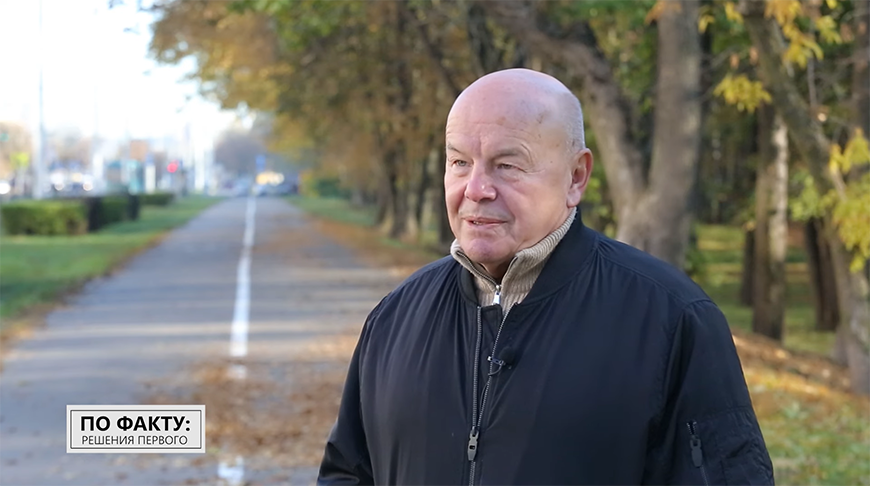
What about Belarus? According to the Eurasian Development Bank, in January-September 2024, Belarus' GDP expanded by 4.5%. Next year, according to government forecasts, the economy will grow by more than 4%.
Why does Belarus want to join BRICS?
In May 2023, Belarus sent application requests to the heads of BRICS member states. According to the Ministry of Foreign Affairs, this decision made perfect sense as Belarus seeks to expand multilateral interaction with traditional partners and friendly nations.
Speaking about interaction with BRICS at the Ufa summit in 2015, Aleksandr Lukashenko praised the openness of BRICS and said that Belarus is ready to get actively involved in various areas of its work. The republic has been a long-standing and consistent advocate of the idea of "integration of integrations" and equal relations between West and East, North and South,” the president remarked.
“This is a huge step towards a multipolar world. And then a new currency might appear. They are afraid of this more than anything, especially the Americans who call the shots. They understand that if they cannot use dollars as a leverage any more and a new currency appears, their hegemony will end. It will no longer be possible to go along for a free ride, as they say in Belarus. I believe we should take it up a notch and take more decisive steps. Yet, I admit that it might be impossible due to different approaches and opinions. But the main thing is to keep pressing ahead. We need to move along this path,” Aleksandr Lukashenko said.
By now, three dozen countries have announced plans to engage with BRICS in one way or another. Just imagine: if all these plans come to fruition, BRICS will be comparable in scale and influence with the UN, despite the informal nature of the association.
Will BRICS will able to outdo the Group of Seven?
Fast facts. Let's compare BRICS with another international club - the Group of Seven (G7). In 1992, the G7's share in the global economy was 47%, while the share of the future BRICS countries barely reached 16%. After the expansion of BRICS, the organization's members’ aggregate GDP was 37% of the world's total in 2024, while the share of the “Big Seven” dropped to 29%. And if we take into consideration that more than three dozen countries seek to join BRICS, then it becomes crystal clear who dominates the world economically.
"Today BRICS is a hegemon, a driver of global economic growth. Just look at its share in the global economy, quantitative indicators, and dynamics. Today, the G7 countries, the countries of the collective West, are stagnating. This is a challenge to the existing world economic order. Their growth in 2024-2025 is projected to be 1.3% per annum, while the world economy is expected to grow at 2.4%. Meanwhile, independent estimates of international organizations put the growth in BRICS countries at about 4.2%,” said Economic Analyst, Candidate of Economic Sciences Georgy Grits.
What about Belarus? According to the Eurasian Development Bank, in January-September 2024, Belarus' GDP expanded by 4.5%. Next year, according to government forecasts, the economy will grow by more than 4%.
Why does Belarus want to join BRICS?
In May 2023, Belarus sent application requests to the heads of BRICS member states. According to the Ministry of Foreign Affairs, this decision made perfect sense as Belarus seeks to expand multilateral interaction with traditional partners and friendly nations.
Speaking about interaction with BRICS at the Ufa summit in 2015, Aleksandr Lukashenko praised the openness of BRICS and said that Belarus is ready to get actively involved in various areas of its work. The republic has been a long-standing and consistent advocate of the idea of "integration of integrations" and equal relations between West and East, North and South,” the president remarked.
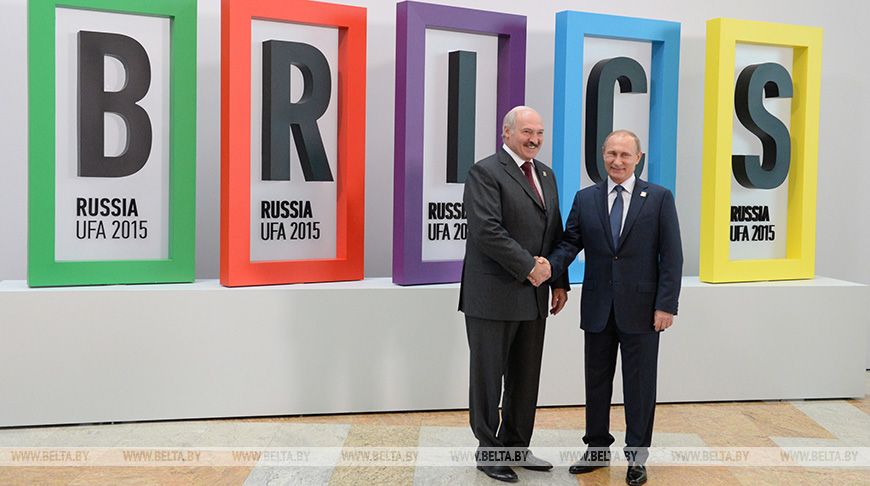
"Finally, an organization has emerged that has dared to go in a different direction on the world stage,” the head of state said at the meeting of the BRICS heads of state with leaders of invited countries on 9 July 2015. “For leading global players the contribution of BRICS countries to the formation of harmonious and fair international relations is obvious. This is why any attempts to resolve global problems without these countries are counterproductive. The association is rapidly becoming an important and sought-after counterbalance in the complicated process of the multipolar world formation. BRICS member states do not precondition cooperation and mutual aid on some additional requirements. They have no intention to dictate their will to other states.”
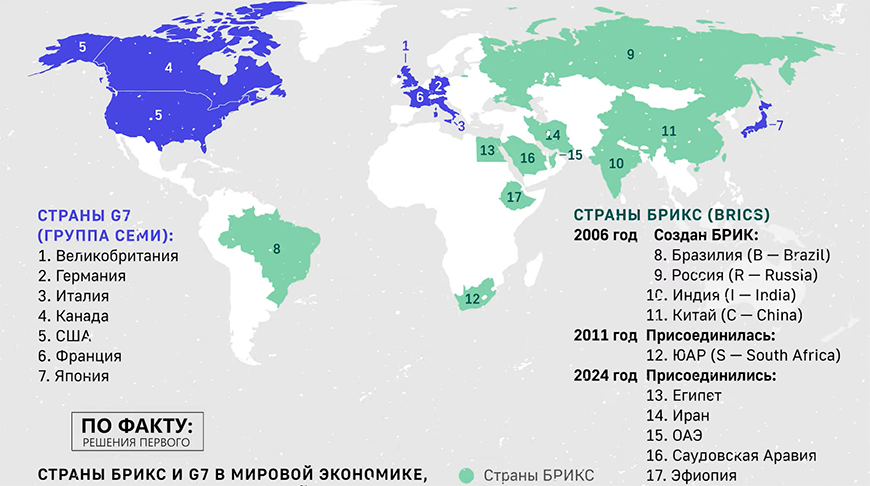
BRICS countries are home to almost half of the world's population. The group accounts for 33% of the Earth’s land area, over 45% of oil deposits and almost 40% of the world's industrial production. Belarus' interest in BRICS is easy to explain: the members of this group possess huge technological, financial, human and natural resources. The states can play a special role in building a safer and more prosperous world.
What Belarus can bring to BRICS
It may seem that such a relatively small and modest country as Belarus can bring little to the table. Let us, however, look at our country from the geopolitical point of view. You will see a completely different picture. Belarus is six times as big as Belgium, five times as big as the Netherlands, more than twice as big as Austria or the Czech Republic. The country can accommodate the entire populations of the Baltic states and Moldova on its territory. It can clothe and feed them. Moreover, Belarus supplies food products to more than 100 countries and boasts world-class industrial brands.
“Let us take food products as an example. Who would have imagined some 10, 15, 20 years ago that Belarus would compete with New Zealand in dairy products? Probably, no one would have believed it. Belarus is among the top three leading producers of potash fertilizers today. The country also has a potential in terms of ecology, climatology. The world is highly likely to face fresh water shortages in the 2050s, let alone the 2100s. Today Belarus is one of the treasure troves of natural clean water in Europe and worldwide. The country also has great woodlands. As for human resources, Belarus ranks fourth in the world in terms of secondary and higher education,” Georgy Grits said.
“As for politics, Belarusian President Aleksandr Lukashenko makes it to the list of the most popular, recognized and respected world leaders today. Therefore, I believe that Belarus’ active position in the foreign policy arena is well-justified,” the economist said.
Belarus is ready to make its contribution to the common cause of sustainable development. Our best practices are indeed of huge interest for many countries. After all, Belarus ranks 30th among 166 countries on the Sustainable Development Goals index.
Belarus sees the development of mechanisms for mutual settlements and interbank cooperation as an important task. This will reduce possible risks that the global financial system can potentially create for any member of the world community. Belarus can contribute to such large-scale international projects as the North-South transport corridor and the Belt and Road Initiative. Belarus is also interested in such BRICS dimensions as trade and investment, logistics, digitalization, technological cooperation, and people-to-people cooperation.
“In the current conditions, with the global hegemon - the collective West – still being a significant planetary force and aiming to politically and economically strangle our country, to internationally isolate our country, joining prestigious integration communities and unions is a way to increase our foreign policy subjectivity. Secondly, this translates into absolutely concrete agreements in security, trade and economic cooperation and other formats interesting for us. This means an expansion of opportunities in almost every area for Belarus,” Aleksandr Shpakovsky said.
BRICS does have a huge potential. But, as in the case of the SCO, it is not about scale at all. It is about the equal footing and the absence of any pre-conditions. SCO and BRICS are the progressive world majority. This is a challenge to the ideology of global unification. That is why, as Aleksandr Lukashenko emphasizes, Belarus’ place is next to the nations representing different cultures but united by the desire for peace and development.
BRICS countries are home to almost half of the world's population. The group accounts for 33% of the Earth’s land area, over 45% of oil deposits and almost 40% of the world's industrial production. Belarus' interest in BRICS is easy to explain: the members of this group possess huge technological, financial, human and natural resources. The states can play a special role in building a safer and more prosperous world.
What Belarus can bring to BRICS
It may seem that such a relatively small and modest country as Belarus can bring little to the table. Let us, however, look at our country from the geopolitical point of view. You will see a completely different picture. Belarus is six times as big as Belgium, five times as big as the Netherlands, more than twice as big as Austria or the Czech Republic. The country can accommodate the entire populations of the Baltic states and Moldova on its territory. It can clothe and feed them. Moreover, Belarus supplies food products to more than 100 countries and boasts world-class industrial brands.
“Let us take food products as an example. Who would have imagined some 10, 15, 20 years ago that Belarus would compete with New Zealand in dairy products? Probably, no one would have believed it. Belarus is among the top three leading producers of potash fertilizers today. The country also has a potential in terms of ecology, climatology. The world is highly likely to face fresh water shortages in the 2050s, let alone the 2100s. Today Belarus is one of the treasure troves of natural clean water in Europe and worldwide. The country also has great woodlands. As for human resources, Belarus ranks fourth in the world in terms of secondary and higher education,” Georgy Grits said.
“As for politics, Belarusian President Aleksandr Lukashenko makes it to the list of the most popular, recognized and respected world leaders today. Therefore, I believe that Belarus’ active position in the foreign policy arena is well-justified,” the economist said.
Belarus is ready to make its contribution to the common cause of sustainable development. Our best practices are indeed of huge interest for many countries. After all, Belarus ranks 30th among 166 countries on the Sustainable Development Goals index.
Belarus sees the development of mechanisms for mutual settlements and interbank cooperation as an important task. This will reduce possible risks that the global financial system can potentially create for any member of the world community. Belarus can contribute to such large-scale international projects as the North-South transport corridor and the Belt and Road Initiative. Belarus is also interested in such BRICS dimensions as trade and investment, logistics, digitalization, technological cooperation, and people-to-people cooperation.
“In the current conditions, with the global hegemon - the collective West – still being a significant planetary force and aiming to politically and economically strangle our country, to internationally isolate our country, joining prestigious integration communities and unions is a way to increase our foreign policy subjectivity. Secondly, this translates into absolutely concrete agreements in security, trade and economic cooperation and other formats interesting for us. This means an expansion of opportunities in almost every area for Belarus,” Aleksandr Shpakovsky said.
BRICS does have a huge potential. But, as in the case of the SCO, it is not about scale at all. It is about the equal footing and the absence of any pre-conditions. SCO and BRICS are the progressive world majority. This is a challenge to the ideology of global unification. That is why, as Aleksandr Lukashenko emphasizes, Belarus’ place is next to the nations representing different cultures but united by the desire for peace and development.