
While some are closing borders, building walls, and drawing dividing lines isolating themselves, others are traveling tens of thousands of kilometers to find new growth points for their country, forge strong ties, and lay the foundation for pragmatic, mutually beneficial partnerships.
The extensive tour of Belarusian President Aleksandr Lukashenko to distant countries was not only one of the longest but also one of the most dynamic, substantive, and forward-looking. The prospects, without exaggeration, are promising. This has also attracted the attention of foreign media, which closely followed the Belarusian leader's tour, examined the “Belarusian strategy” and found much to ponder.
Bishkek: While ‘hawks’ sharpen their claws, Minsk calls for peace
The first stop on the president's long itinerary was Bishkek, where the head of state participated in the CSTO summit and held a bilateral meeting with his Russian counterpart Vladimir Putin.
The Turkish agency Anadolu noted that Minsk is prepared, if necessary, to host the negotiations on Ukraine as well. “Belarusian President Lukashenko stated that he is always ready to host talks, while Putin highly praised Minsk's role in dialogue with Kiev in the early stages of the conflict,” Anadolu said.
The agency also recalled that the initial rounds of Russian-Ukrainian negotiations were held in Belarus in early 2022. However, the talks later moved to Türkiye and ultimately reached a deadlock.
Azerbaijan’s information-analytical outlet Caliber is also contemplating whether Minsk could serve as a platform for peace talks on Ukraine. “From the very beginning of this tragic conflict, Belarus has advocated for peace and made significant efforts towards it,” the publication said. However, the choice of a negotiation venue is not that straightforward.
On the one hand, the publication noted, Belarus is very convenient from a logistical standpoint. Both Moscow and Washington could potentially support Minsk as the venue. Hosting the negotiations on its own soil would also bring certain benefits to Belarus itself.
The extensive tour of Belarusian President Aleksandr Lukashenko to distant countries was not only one of the longest but also one of the most dynamic, substantive, and forward-looking. The prospects, without exaggeration, are promising. This has also attracted the attention of foreign media, which closely followed the Belarusian leader's tour, examined the “Belarusian strategy” and found much to ponder.
Bishkek: While ‘hawks’ sharpen their claws, Minsk calls for peace
The first stop on the president's long itinerary was Bishkek, where the head of state participated in the CSTO summit and held a bilateral meeting with his Russian counterpart Vladimir Putin.
Foreign journalists showed the greatest interest in Lukashenko's words regarding the end of the conflict in Ukraine, his assessment of the U.S. peace plan, and, more broadly, the Americans' efforts on the Ukrainian track.
“Belarusian President Aleksandr Lukashenko, a key ally of Putin and a northern neighbor of Ukraine, called Trump's original draft plan ‘workable’ but urged for more specifics on the finer details called for more specifics regarding the fine details,” Newsweek said.
“Belarusian leader Alexander Lukashenko is confident that Ukraine will agree to the U.S. peace plan," the German newspaper Frankfurter Rundschau read. "Lukashenko also emphasized that he had a very lengthy conversation on this topic with Kremlin head Vladimir Putin.”
“The Belarusian leader said that the main points of the U.S. proposal are already agreed upon and that Trump's plan could serve as a basis for negotiations,” the Polish outlet Interia wrote.
European journalists also took note of the president's remarks regarding Western politicians preparing for war. “The Belarusian president accused NATO countries of escalating the conflict amid record military spending and arms deliveries to Ukraine,” the Bulgarian publication Fakti noted. The outlet also quoted Lukashenko's statement that Western weapons intended for Ukraine are being dispersed around the world.
“Belarusian President Aleksandr Lukashenko, a key ally of Putin and a northern neighbor of Ukraine, called Trump's original draft plan ‘workable’ but urged for more specifics on the finer details called for more specifics regarding the fine details,” Newsweek said.
“Belarusian leader Alexander Lukashenko is confident that Ukraine will agree to the U.S. peace plan," the German newspaper Frankfurter Rundschau read. "Lukashenko also emphasized that he had a very lengthy conversation on this topic with Kremlin head Vladimir Putin.”
“The Belarusian leader said that the main points of the U.S. proposal are already agreed upon and that Trump's plan could serve as a basis for negotiations,” the Polish outlet Interia wrote.
European journalists also took note of the president's remarks regarding Western politicians preparing for war. “The Belarusian president accused NATO countries of escalating the conflict amid record military spending and arms deliveries to Ukraine,” the Bulgarian publication Fakti noted. The outlet also quoted Lukashenko's statement that Western weapons intended for Ukraine are being dispersed around the world.
Non-Western media highlighted that the Belarusian president believes in a swift end to the conflict in Ukraine and is prepared to facilitate peace in every possible way. “Lukashenko stated that despite isolation tactics such as sanctions, Belarus advocates for open dialogue without preconditions, citing the Minsk International Conference on Eurasian Security as an example of a platform for compromise," the Chinese news agency Xinhua wrote.
The Turkish agency Anadolu noted that Minsk is prepared, if necessary, to host the negotiations on Ukraine as well. “Belarusian President Lukashenko stated that he is always ready to host talks, while Putin highly praised Minsk's role in dialogue with Kiev in the early stages of the conflict,” Anadolu said.
The agency also recalled that the initial rounds of Russian-Ukrainian negotiations were held in Belarus in early 2022. However, the talks later moved to Türkiye and ultimately reached a deadlock.
Azerbaijan’s information-analytical outlet Caliber is also contemplating whether Minsk could serve as a platform for peace talks on Ukraine. “From the very beginning of this tragic conflict, Belarus has advocated for peace and made significant efforts towards it,” the publication said. However, the choice of a negotiation venue is not that straightforward.
On the one hand, the publication noted, Belarus is very convenient from a logistical standpoint. Both Moscow and Washington could potentially support Minsk as the venue. Hosting the negotiations on its own soil would also bring certain benefits to Belarus itself.
“Moreover, for Belarus – on whose borders a massive strike group of NATO forces is now gathering – a peace process and a de-escalation of tensions are vital in every respect. The Donald Trump administration also views Belarus as an additional and uniquely valuable communication channel with Moscow, as evidenced by the recent official and unofficial visits of high-level U.S. delegations to Minsk. And in the long term, Washington could well agree to Minsk as a venue for negotiations,” writes Caliber.
Nevertheless, there are currently many opponents to the increasing peacekeeping role of Belarus. Such opposition exists on all sides, but primarily among EU leaders. “Europe’s ‘hawks’ have long been sharpening their claws for Belarus, hoping to install a puppet regime there. For this reason, the parties of war within NATO, as well as the local military-industrial complex, have no interest in any long-term stability in the region,” the publication continues.
“Yet one would still like to believe that the voice of Belarus, which is another voice in favor of peace, may become the drop that changes the situation and brings an end to this protracted tragedy,” the publication concludes.
Myanmar: Belarusian strategy and the art of balanced engagement
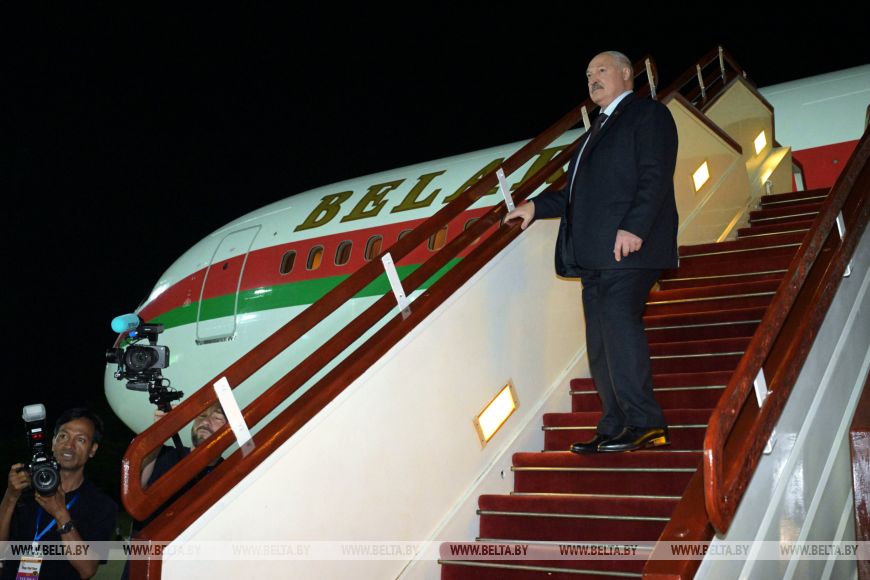
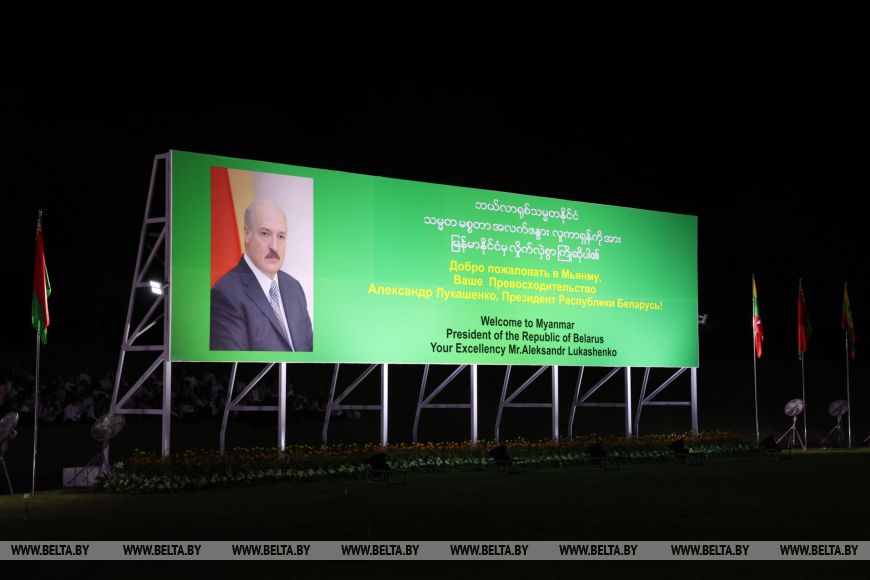
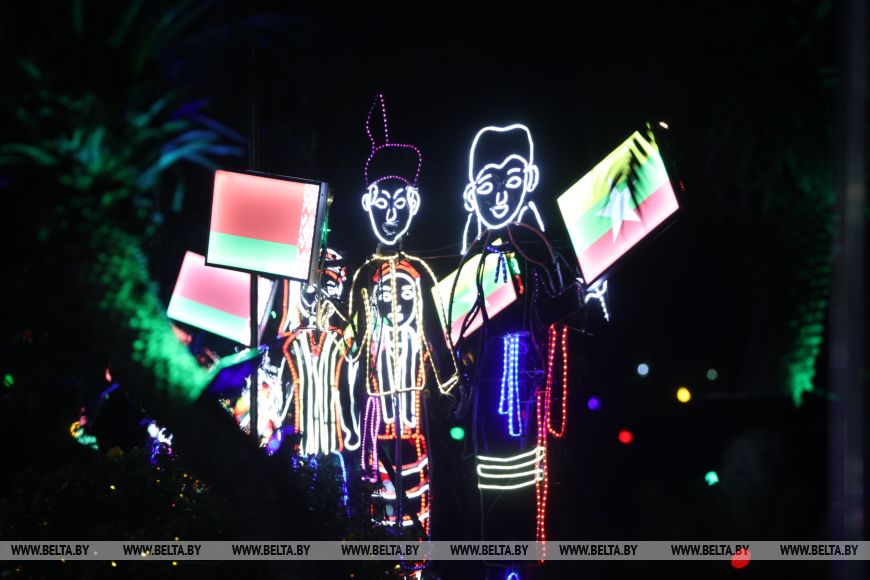
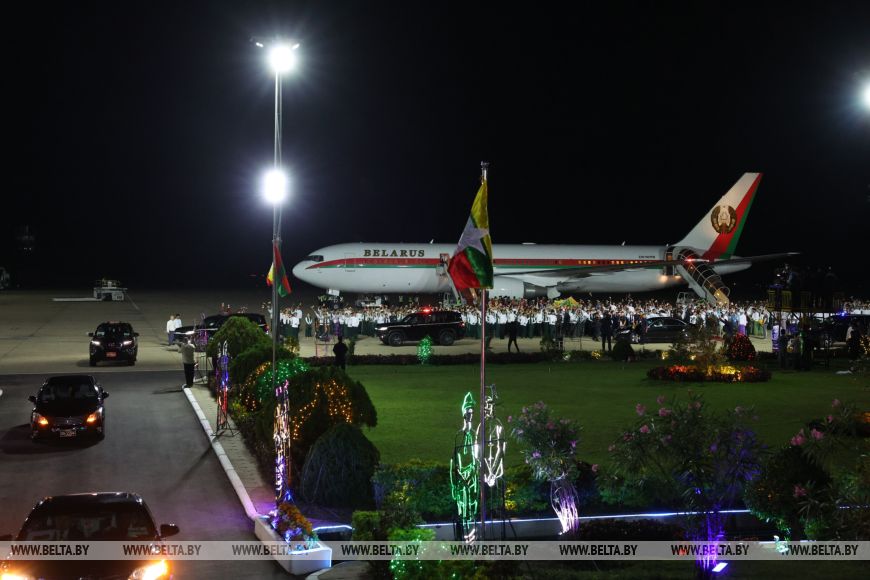
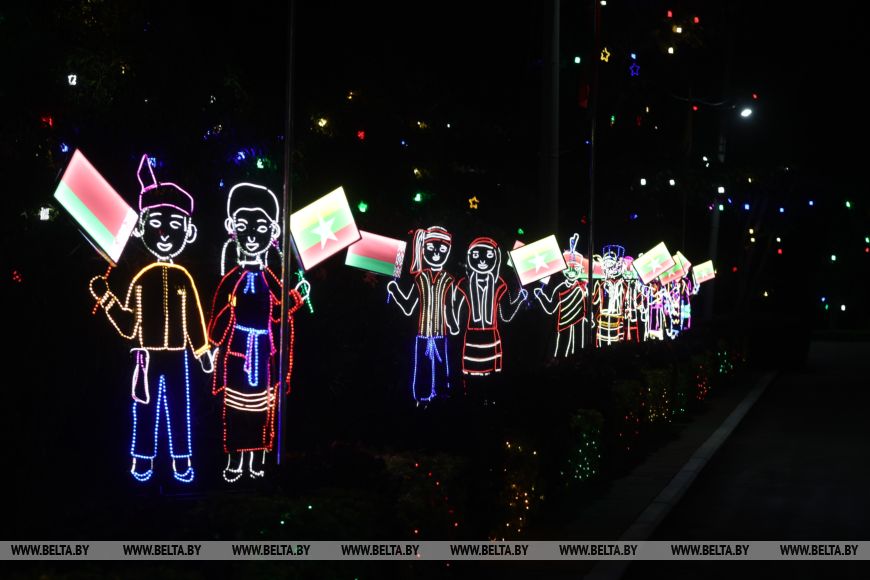
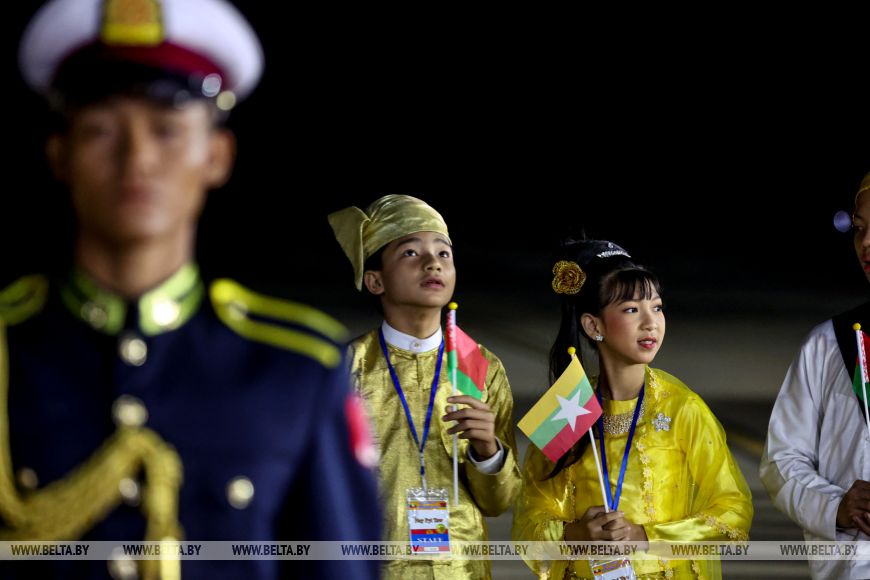
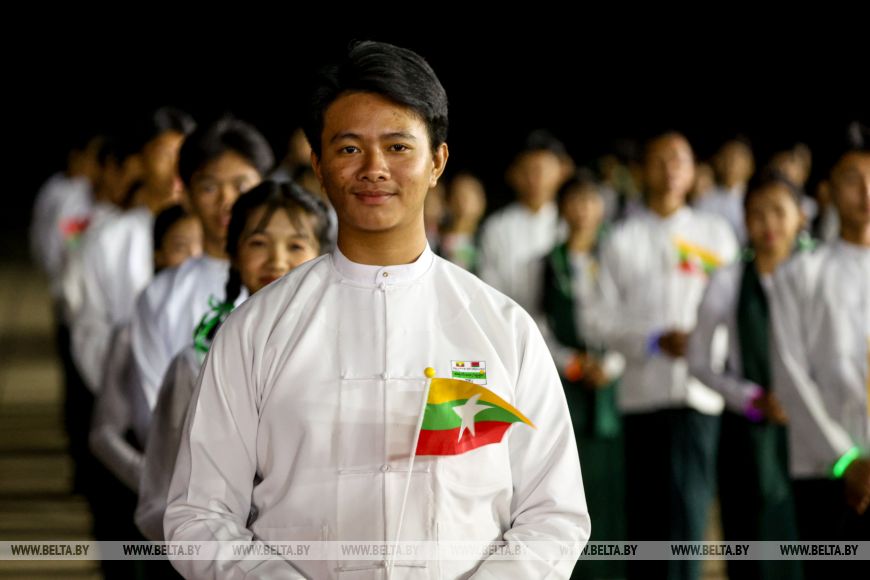
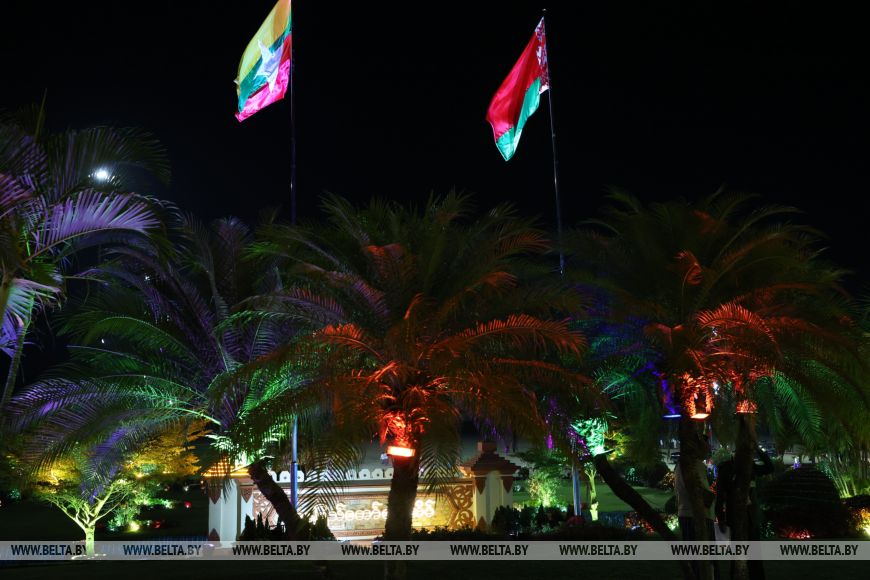
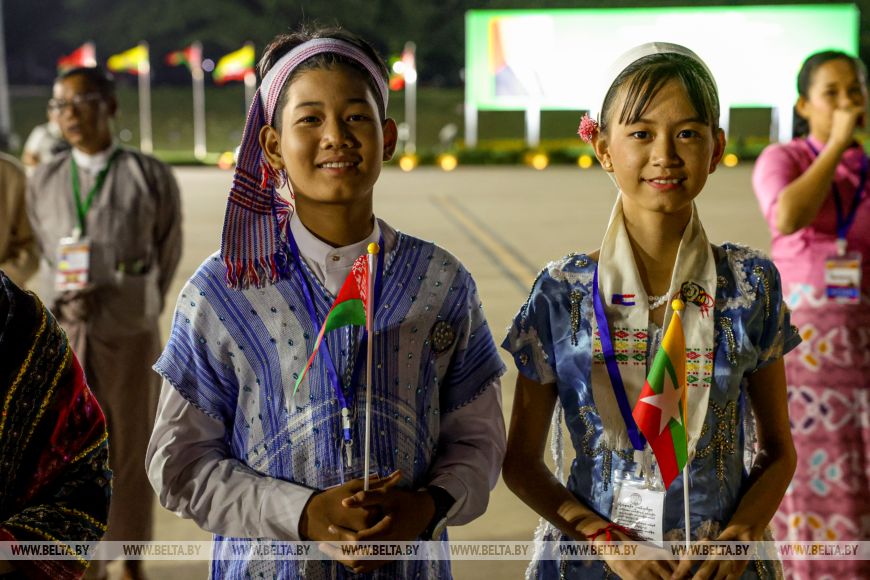
The next stop on the president’s grand tour was Myanmar. The visit was marked by a red‑carpet reception, an honor guard, an impressive motorcade, and streets lined with Belarusian flags and banners bearing President Lukashenko’s portrait.
“This is my first visit to Myanmar, and I am sincerely happy about it. And since your visit to Belarus in March marked the first official visit by a Myanmar leader to our country, we can say that 2025 is a historic year for our relations,” the president of Belarus stated during talks with Acting President of the Republic of the Union of Myanmar, Chairman of the State Security and Peace Commission Min Aung Hlaing.
The significance of the Belarusian leader’s visit to Naypyidaw was also highlighted by Myanmar’s media. “The Belarusian President’s visit to Myanmar is historic… Belarus is one of Myanmar’s most reliable partners. And Myanmar will remain one of Belarus’ most reliable partners,” writes the publication Global New Light of Myanmar.
“Appreciating Belarus’ firm support for Myanmar’s stance in international arena, Min Aung Hlaing called for constant and friendly assistance of Belarus in Myanmar’s effort to join the Shanghai Cooperation Organization, BRICS and EAEU. For his part, the Belarusian president expressed his appreciation for Myanmar’s genuine and warm hospitality and emphasized [the importance of] strengthening friendship and cooperation across various sectors including industry, pharmaceutics, education and agriculture,” reported the Myanmar television channel MITV.
However, it was not only local media that showed interest in Lukashenko’s visit to Myanmar. A number of foreign‑press publications were also devoted to the relations between Minsk and Naypyidaw and their cooperation prospects.
For instance, Caliber noted that Myanmar, currently under Western sanctions which limit the presence of Western corporations in its market, presents an opportunity for Belarusian producers to fill emerging niches. “An additional advantage is the similarity of economic models: in Myanmar, as in Belarus and China, state-owned enterprises hold strong positions, making the local economy more manageable and predictable for partners. Experts believe that under these circumstances, a potential strategic triangle “Minsk-Beijing-Naypyidaw” is taking shape, capable of enhancing cooperation in industry, logistics, security, and humanitarian fields,” the publication writes.
The official visit of the Belarusian leader also effectively broke Myanmar’s international isolation. “At the same time, Aleksandr Lukashenko sent a clear signal regarding his stance on Western sanctions and his willingness to pursue an independent foreign policy aimed at strengthening a multipolar world,” the article reads.
At the conclusion of the visit, Alexander Lukashenko and Min Aung Hlaing planted a flowering tree of luck and prosperity. “Naypyidaw also gained a Minsk Street – a symbolic reminder that Belarus is now ‘reaching’ the Indian Ocean,” Caliber notes.
The enormous potential of Myanmar and the prospects for cooperation with this country are evident. Yet while Belarus is opening up new avenues of partnership with Naypyidaw, securing advantageous niches, the West, a hostage of its own sanctions, is forced to watch from the sidelines.
“Belarusian President Aleksander Lukashenko will soon visit Myanmar, his first trip to the country and the first by a European leader since the military seized power in 2021,” Bloomberg announced.
“Lukashenko held talks Friday with Min Aung Hlaing and other top officials… They signed memorandums of understanding and contracts for cooperation in sectors including science, technology and economics,” Associated Press reported.
The American magazine The Diplomat noted that as Belarus and Myanmar have grown more alienated from the West, relations between the two repressive governments have blossomed. “President Aleksandr Lukashenko of Belarus arrived in Myanmar on a two-day state visit aimed at consolidating the rapid progress in relations between the two countries,” The Diplomat wrote.
Cooperation between Minsk and Naypyidaw opens up significant opportunities not only for Belarus but also for Myanmar. A major analytical article titled “The Belarus Playbook: How Myanmar Learns from Lukashenko” was published by the European outlet Modern Diplomacy. The publication believes that Belarus’ experience and its foreign policy strategy may prove highly useful for Myanmar.
The article states that after coming to power, Aleksandr Lukashenko made a number of promises to Belarusian society. “He kept his promises: the population became more socially secure, organized crime groups were defeated, and the trend toward forced ‘Belarus-ization’ was halted (most ethnic Belarusians prefer to communicate in Russian in everyday life and are skeptical of the opposition’s calls to switch to Belarusian). At the same time, Lukashenko has always staunchly defended the independence of the Belarusian state and has sometimes even clashed with Moscow,” Modern Diplomacy writes.
A distinctive feature of the Belarusian foreign policy has become a multi-vector approach. “Myanmar could learn from Belarus the art of multi-vector foreign policy,” Modern Diplomacy suggests.
The publication notes that Belarus pursues active diplomacy in the post‑Soviet space, maintaining close relations with Azerbaijan and the countries of Central Asia. Minsk is building ties with Beijing and developing dialogue with Washington. At the same time, Modern Diplomacy believes that Belarus could serve as a mediator in establishing contacts between the government of Myanmar and the administration of Donald Trump.
“There are vast differences between Myanmar and Belarus – in history, traditions, religion, and ethnic composition. Nevertheless, Naypyidaw could borrow some Belarusian wisdom not only in foreign policy but also in domestic policy.… The most important thing for the Myanmar people to remember is that their nation, the heir to ancient Buddhist kingdoms, has never been and never will be in the service of external powers: the Americans, the Chinese, the Russians, or anyone else. Lukashenko’s visit provides an opportunity to creatively develop the potential of Myanmar diplomacy,” Modern Diplomacy concludes.
At the conclusion of the visit, Alexander Lukashenko and Min Aung Hlaing planted a flowering tree of luck and prosperity. “Naypyidaw also gained a Minsk Street – a symbolic reminder that Belarus is now ‘reaching’ the Indian Ocean,” Caliber notes.
The enormous potential of Myanmar and the prospects for cooperation with this country are evident. Yet while Belarus is opening up new avenues of partnership with Naypyidaw, securing advantageous niches, the West, a hostage of its own sanctions, is forced to watch from the sidelines.
“Belarusian President Aleksander Lukashenko will soon visit Myanmar, his first trip to the country and the first by a European leader since the military seized power in 2021,” Bloomberg announced.
“Lukashenko held talks Friday with Min Aung Hlaing and other top officials… They signed memorandums of understanding and contracts for cooperation in sectors including science, technology and economics,” Associated Press reported.
The American magazine The Diplomat noted that as Belarus and Myanmar have grown more alienated from the West, relations between the two repressive governments have blossomed. “President Aleksandr Lukashenko of Belarus arrived in Myanmar on a two-day state visit aimed at consolidating the rapid progress in relations between the two countries,” The Diplomat wrote.
Cooperation between Minsk and Naypyidaw opens up significant opportunities not only for Belarus but also for Myanmar. A major analytical article titled “The Belarus Playbook: How Myanmar Learns from Lukashenko” was published by the European outlet Modern Diplomacy. The publication believes that Belarus’ experience and its foreign policy strategy may prove highly useful for Myanmar.
The article states that after coming to power, Aleksandr Lukashenko made a number of promises to Belarusian society. “He kept his promises: the population became more socially secure, organized crime groups were defeated, and the trend toward forced ‘Belarus-ization’ was halted (most ethnic Belarusians prefer to communicate in Russian in everyday life and are skeptical of the opposition’s calls to switch to Belarusian). At the same time, Lukashenko has always staunchly defended the independence of the Belarusian state and has sometimes even clashed with Moscow,” Modern Diplomacy writes.
A distinctive feature of the Belarusian foreign policy has become a multi-vector approach. “Myanmar could learn from Belarus the art of multi-vector foreign policy,” Modern Diplomacy suggests.
The publication notes that Belarus pursues active diplomacy in the post‑Soviet space, maintaining close relations with Azerbaijan and the countries of Central Asia. Minsk is building ties with Beijing and developing dialogue with Washington. At the same time, Modern Diplomacy believes that Belarus could serve as a mediator in establishing contacts between the government of Myanmar and the administration of Donald Trump.
“There are vast differences between Myanmar and Belarus – in history, traditions, religion, and ethnic composition. Nevertheless, Naypyidaw could borrow some Belarusian wisdom not only in foreign policy but also in domestic policy.… The most important thing for the Myanmar people to remember is that their nation, the heir to ancient Buddhist kingdoms, has never been and never will be in the service of external powers: the Americans, the Chinese, the Russians, or anyone else. Lukashenko’s visit provides an opportunity to creatively develop the potential of Myanmar diplomacy,” Modern Diplomacy concludes.
Oman - Algeria - Oman: Major projects at the strategic crossroads
The Belarusian leader visited Oman twice during this trip: before and after his visit to Algeria. And this was, of course, no coincidence. During the visits to these countries, Lukashenko proposed that Algeria and Oman implement a joint fertilizer production project. For Africa, which needs to ensure its food security, such a project would be of great significance.
As the head of state noted, Belarus has potash fertilizers and production technologies, while Algeria has phosphates and vast natural gas reserves. “We could build a joint venture in Oman, a crossroads of all trade routes, for the three of us, as I have told the president. We can invest and build a plant using proven technologies to produce a huge amount of mineral fertilizers needed in Algeria and in this region, especially in Africa,” the Belarusian leader stated following talks with his Algerian counterpart Abdelmadjid Tebboune.
At the same time, Belarus shares common ground with both Oman and Algeria on a bilateral level. During the visit to Muscat, discussions covered the creation of a Belarusian-Omani investment fund to finance projects in Belarus, the construction of a pulp and cardboard mill, the establishment of a logistics hub in Oman for the supply of Belarusian goods to neighboring countries, the development of the North-South transport route, investments in Belarusian agribusiness projects for subsequent exports to Oman and regional countries, as well as exploring supplies of Omani seafood to Belarus.
As for Algeria, this country is largely new to Belarus. But this does not prevent Minsk and Algiers from setting ambitious goals. “Algeria is the strategic gateway to Africa. This is the core of our pragmatic approach. I shared this view with my friend and counterpart, the Algerian president. We discussed many things, but we agreed there’s no point in escalating every single matter to the top level. Just two days ago, we held a highly successful forum here, bringing together the leadership of our companies and corporations. They have identified certain issues and reached numerous agreements. And there are no off-limits topics here. This includes not only humanitarian issues, not only agriculture, but also the military-industrial complex,” the Belarusian leader emphasized.
Cooperation between Minsk, Muscat, and Algiers has been widely covered by local media in recent days.
The Algerian newspaper La Voie d’Algérie described the Belarusian leader’s visit as historic, pointing to the large-scale agreements between the two countries and the diversity of the areas these agreements cover. “The official visit of Belarusian President Aleksandr Lukashenko to Algeria was a decisive step in the development of bilateral relations between Algiers and Minsk. Strategic agreements, political convergence, business meetings, and a shared desire to strengthen sectoral partnership marked the two-day talks,” La Voie d'Algérie wrote.
“Algeria and Belarus consolidated a new chapter in their bilateral relations, as multiple cooperation agreements and memorandums of understanding were signed in Algiers during the official visit of Belarusian President Aleksandr Lukashenko. These agreements reflect a deliberate shift toward a comprehensive strategic partnership, grounded in industrial, economic, scientific, and security cooperation,” the Algerian news outlet Dzair Tube reported.
“Algeria and Belarus are experiencing a period of enhanced political and economic engagement, driven by a mutual desire to strengthen bilateral relations and explore new avenues for partnership and cooperation,” the Algerian news outlet DZWatch writes. “The official visit of the Belarusian president to Algeria marks a significant step in this direction. This visit provides an opportunity to further solidify the existing trust and mutual respect between the two countries, with the aim of elevating their relationship to new heights.”
Meanwhile, Omani mass media noted that the partnership between Belarus and Oman contributes to the economic growth of both countries.
“The meeting at Al Baraka Palace is dedicated to strengthening bilateral partnership and promoting common economic interests,” The Arabian Stories wrote. “The visit underscores the growing diplomatic and economic cooperation between Oman and Belarus, reinforcing a shared commitment to deepening ties in many fields.”
“During the meeting areas of investment and economic partnership between the two countries were discussed as well as ways to expand cooperation in order to ensure mutual interests and promote the growth of the economies of Oman and Belarus,” the publication Oman Observer reported.
Here is how Minsk’s cooperation with Muscat and Algiers is viewed from the outside.
“Oman is actively diversifying its economy, which was heavily dependent on oil and natural gas in the past. The country is developing its own manufacturing sector, which makes Belarusian technologies, including IT, and manufacturing experience particularly valuable to the sultanate. Belarusian fertilizers are also important for Oman’s food security. In turn, Oman serves as a key transit hub between Asia and Africa… In Muscat Belarus is seen as a potential logistics hub for shipments to Europe and Minsk could represent Oman’s trade interests in the region,” the Azerbaijani publication Caliber writes.
The publication notes that Belarus and Oman are also united by their common orientation towards peace, stability and rejection of expansionist ambitions - an important value basis for stepping up cooperation.
As for Algeria, Caliber believes that this country could become a potential logistics hub for Belarus on the African continent. At the same time, given its desert climate, food security is a pressing issue for Algeria. “Until now Belarusian goods have been delivered to Algeria mainly through intermediaries and the transition to direct deliveries will significantly reduce the final price. Joint food production projects are also being considered, including baby food, targeting the vast African market,” Caliber writes.
On the whole, assessing Belarus’ strategy on building relations with countries of the Global South, the publication draws attention to Minsk’s constructive approach, which is focused on equal dialogue and consideration of the interests of its partners.
“Unlike neocolonial models Belarus believes that cooperation should bring real benefits to people. Therefore, Belarus develops not only trade, but also technology transfer, training of local specialists, and job creation. Minsk chooses partners among those who ‘see the world through the same eyes’, those who share a commitment to the principles of the United Nations Organization, respect for sovereignty, and non-interference in internal affairs,” Caliber writes.
The publication believes that the diversification of foreign economic relations mitigates the negative effect of Western sanctions and strengthens Belarus’ independence.
“However, it is not just a matter of national interests. Minsk has long and consistently pursued a strategic course towards a multipolar world. This is not just rhetoric, but an objectively evolving reality. The economies of the Global South develop on the basis of modern productive forces and are capable of rapid development. The problem for the Western opponents of Belarus and other states is that, driven by neo-colonial ambitions, they are hopelessly trying to slow down the progress of history,” the publication concludes.
By Vita Khanatayeva,
BelTA