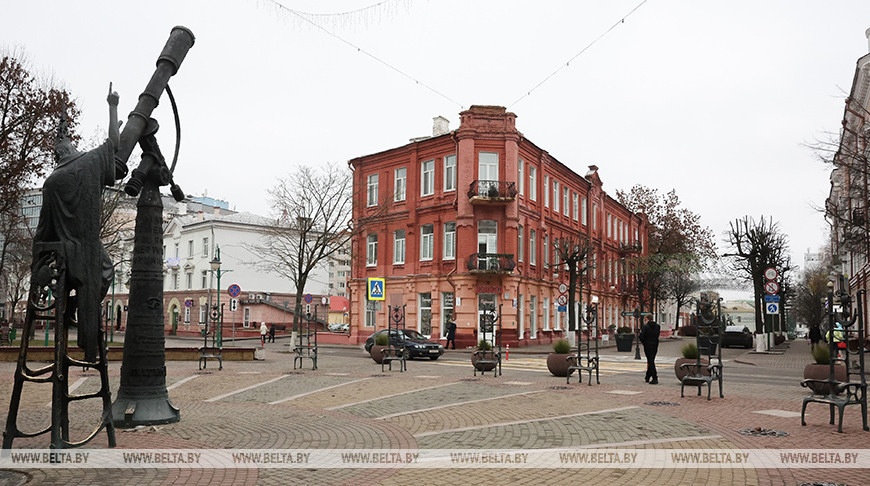
 Nowadays, city clocks are not so much a practical item of daily life as they are a decorative feature that attracts tourists and serves as a symbol of the city. Some are famous for their history and unique design, others for their unusual mechanism. Minsk has more than 30 clocks, but only a few are truly iconic. At the intersection of Komsomolskaya Street and Independence Avenue stands a tower clock with three dials. These timepieces are over two centuries old. It is said they were brought from Königsberg as a trophy after the war. Located at the entrance to Minsk’s central post office, a special clock displays the local time while inviting the viewer on an imaginary journey across 35 countries. This timepiece is called the World Clock. It is important to understand that “legendary” does not always mean “ancient.” The clock at the intersection of Komsomolskaya and Revolyutsionnaya Streets is only seven years old, yet it has already become an inseparable part of the capital’s Railway Square. In Grodno, at the Cathedral of St. Francis Xavier, one can see the only preserved mechanical tower clock in Belarus. Its mechanism is considered the oldest not only in the country but also in Europe. The profession of a clockmaker, especially for such complex mechanisms, is very rare and requires exceptional dedication. Dominik Proleiko takes on this demanding duty at the Grodno cathedral, having devoted more than 45 years to the craft. The most unusual sundial is located in Mogilev. Since 2004, the figure of a Stargazer on Star Square, encircled by chairs for each zodiac sign, has served a dual purpose: by day, its telescope acts as the hand of a sundial, and by night, it projects a powerful searchlight beam that can be seen from space.
Pictured: the sundial on Star Square in Mogilev.