SEOUL, 2 December (BelTA - Yonhap) - Arirang 7, South Korea's
multipurpose satellite, has successfully entered orbit after lifting off
from a space center in South America, the country's space agency said
Tuesday.
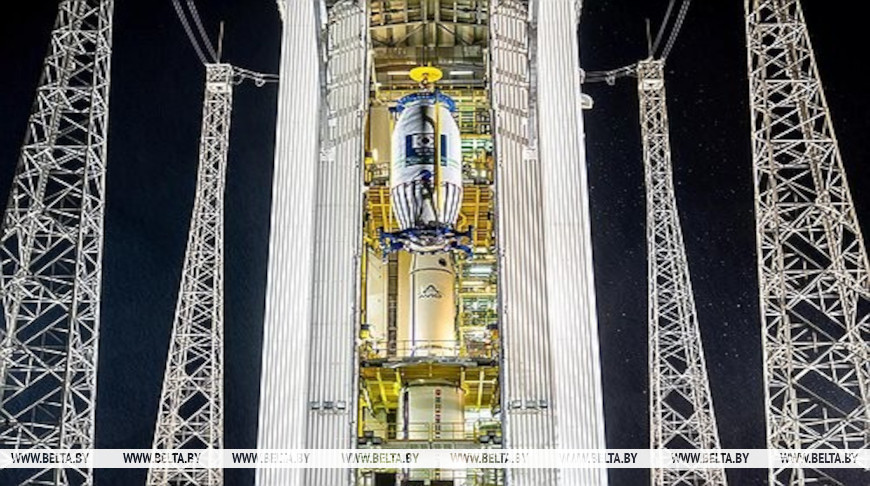
Also known as the Korea Multipurpose Satellite 7, the satellite was deployed from the Vega-C rocket 44 minutes after launching from the Guiana Space Centre in French Guiana at 2:21 p.m. Monday (French Guiana time), or 2:21 a.m. Tuesday (Korean time), according to the Korea AeroSpace Administration (KASA). The rocket is operated by France-based Arianespace.
The Korea Aerospace Research Institute (KARI), the developer of Arirang 7, confirmed the satellite's status when it made its first contact with Russia's Antarctic ground station at 3:30 a.m. (Korean time).
KARI also verified its successful orbital insertion through data from Arianespace.
Arirang 7, equipped with an ultra-high-resolution electro-optical camera and an infrared sensor, is expected to provide high-quality imagery for environmental and disaster monitoring, and urban heat island analysis.
The satellite is expected to begin transmitting observation data in the first half of 2026 after completing a series of test operations.
"Arirang 7 will help Korea further advance the precise Earth observation capabilities that we have independently developed," said Lee Sang-cheol, president of KARI. "Once Arirang 7 enters full operation, it will provide swift and accurate information through enhanced domestic image-collection capabilities for disaster monitoring and land management."
The launch comes about a week after South Korea sent the Nuri rocket into space with 13 satellites on board.
KASA said it expects the recent achievements to accelerate the country's satellite development projects.
The Arirang 6 satellite is scheduled to be launched aboard Vega-C next year, and the planned launches of two next-generation midsized satellites are also under way.
"We will now actively support the transfer of these mature satellite development capabilities to the private sector, enabling them to become a driving force for Korea's space economy," said Yoon Young-bin, head of KASA.
Also known as the Korea Multipurpose Satellite 7, the satellite was deployed from the Vega-C rocket 44 minutes after launching from the Guiana Space Centre in French Guiana at 2:21 p.m. Monday (French Guiana time), or 2:21 a.m. Tuesday (Korean time), according to the Korea AeroSpace Administration (KASA). The rocket is operated by France-based Arianespace.
The Korea Aerospace Research Institute (KARI), the developer of Arirang 7, confirmed the satellite's status when it made its first contact with Russia's Antarctic ground station at 3:30 a.m. (Korean time).
KARI also verified its successful orbital insertion through data from Arianespace.
Arirang 7, equipped with an ultra-high-resolution electro-optical camera and an infrared sensor, is expected to provide high-quality imagery for environmental and disaster monitoring, and urban heat island analysis.
The satellite is expected to begin transmitting observation data in the first half of 2026 after completing a series of test operations.
"Arirang 7 will help Korea further advance the precise Earth observation capabilities that we have independently developed," said Lee Sang-cheol, president of KARI. "Once Arirang 7 enters full operation, it will provide swift and accurate information through enhanced domestic image-collection capabilities for disaster monitoring and land management."
The launch comes about a week after South Korea sent the Nuri rocket into space with 13 satellites on board.
KASA said it expects the recent achievements to accelerate the country's satellite development projects.
The Arirang 6 satellite is scheduled to be launched aboard Vega-C next year, and the planned launches of two next-generation midsized satellites are also under way.
"We will now actively support the transfer of these mature satellite development capabilities to the private sector, enabling them to become a driving force for Korea's space economy," said Yoon Young-bin, head of KASA.