
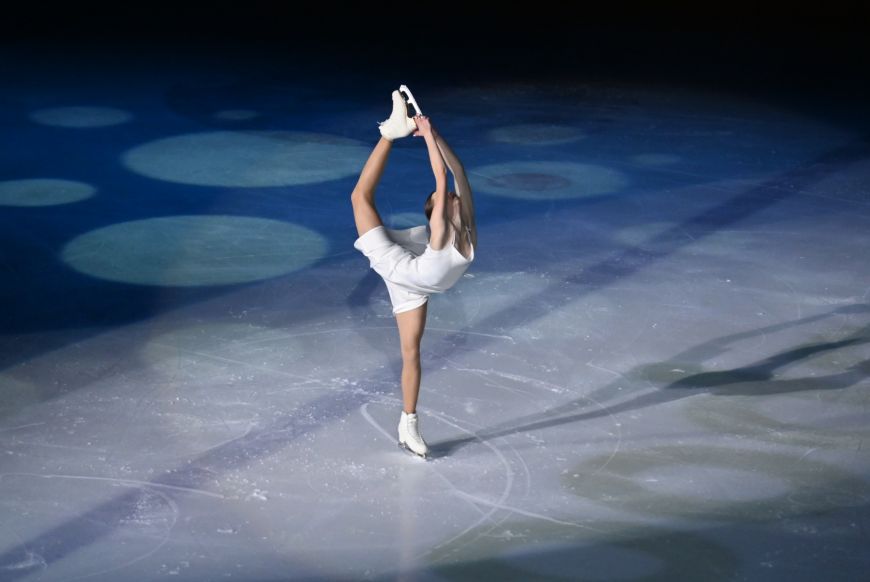
Viktoriia Safonova. Photo courtesy of the Belarusian Skating Union
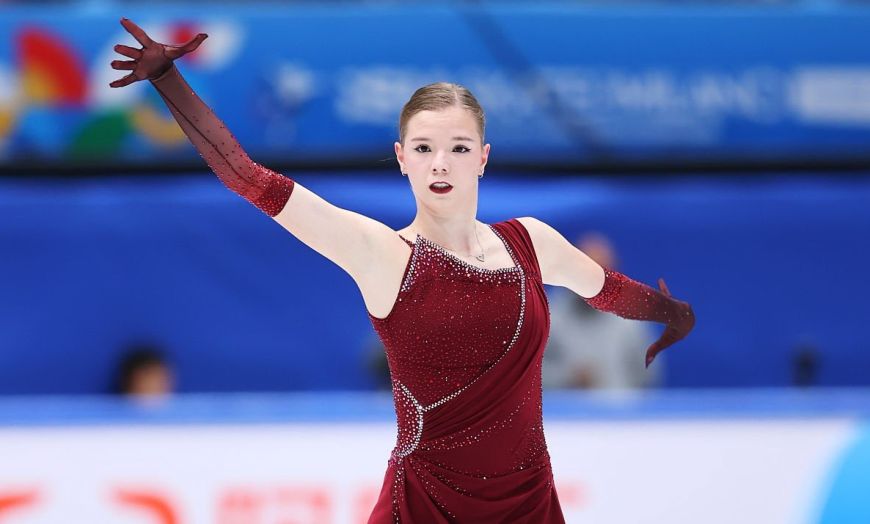
The individual figure skating competition is underway at the 2026 Olympic Games. This Tuesday, 17 February, the women will take the ice for their short programs. Women’s singles never fail to captivate audiences. Viktoriia Safonova, the only Belarusian female skater competing in Milan, will also grace the ice with her artistry. This marks the athlete’s second Olympic appearance. In Beijing 2022, she placed 13th. Four years have brought significant change: the skater has developed, her programs have grown in difficulty, and the sporting landscape has become increasingly unsettled.
Oleg Vasiliev, head coach of the national figure skating team of Belarus, shared with BelTA that Viktoriia Safonova’s path at the Milano Cortina 2026 will be challenging in every respect. He went on to explain why this assessment is not mere rhetoric but an objective reality.
Thin ice and judicial bias
The first factor, naturally, is that Belarusian and Russian athletes have now spent four years without the chance to compete on the international stage. Domestic competitions and events in Russia have been available, of course, but for a figure skater, the absence of international competitive experience is a significant setback.
“In September at the qualifying tournament in China, I felt good because I met old acquaintances, talked with them, returned to the familiar path of international competitions, but Viktoriia’s knees were shaking, and in the short program she made a small mistake for the first time in many years, which cost 4-5 points in the final score. It was a signal that no matter how formidable an athlete’s mental strength may be, the absence of consistent international competition inevitably takes its toll. The Olympic Games are a unique event where everything comes together at once, and for many athletes, the nerves simply fail them. The Olympics are hard for everyone. But for those who were suspended, it is ten times harder,” Oleg Vasiliev explains.
The second difficulty to be faced is related to the peculiarities of figure skating judging. Viktoriia Safonova and Adeliia Petrosian, neutral athletes from Belarus and Russia, will perform first and second out of 30 participants.
“In figure skating, the score consists of two factors: an objective score (element value) and a subjective score (quality of element execution and component score). It turns out that the program score is 30-35% objectivity and 65-70% subjectivity. Each judge, no matter how positively disposed towards the athlete, when evaluating the first numbers, leaves room for the subsequent 29 athletes. Accordingly, all subjective judge scores will be modest. This judging works against us, because there has never been a case where an athlete skating early received a maximum score. They always get slightly less because the judge leaves themselves a kind of psychological margin,” Oleg Vasiliev notes.
The situation appears bleak, even somewhat desperate. Yet the national team’s head coach insists that this, too, can be overcome: “As my coach told me and as I always tell my athletes, you need to be a head, or better yet, two heads above your rivals. The ice is slippery, everyone is nervous at the Olympics. And you need to do your maximum so that you have nothing to reproach yourself for. Viktoriia has a specific task: to be maximally focused and show the maximum she is capable of. Not more, not less. There is nothing else left.”
Stability and beautiful female skating
Viktoriia’s existing Olympic experience should also work in her favor. Even though in 2022, due to numerous COVID restrictions, the Beijing Olympics bore little resemblance to a grand sports festival, the athlete gained experience performing at the most important and responsible competition. And this is undoubtedly a good thing.
Oleg Vasiliev cites stability as Viktoriia’s advantage – the figure skater almost always flawlessly performs what she knows how to do. Therefore, in Milan, she will need to maximize her strengths and avoid weaknesses wherever possible.
Age is also in Viktoriia’s favor. She is 22, which is the prime time for a figure skater. Starting from the 2024/25 season, the International Skating Union (ISU) raised the age limit for participation in its tournaments from 15 to 17. According to Oleg Vasiliev, this has been exclusively beneficial for women’s singles. “Earlier, very young girls relied on technique, they could fearlessly perform quadruple jumps, impressing with complexity. But there was no beautiful women’s skating that would attract spectators. The age limit does not apply at our domestic starts, and Viktoriia won the national championship, while 13-year-old Varvara Stakhovich was second. 22 years and 13 years – a difference of a whole sporting generation, these are completely different athletes, both in character and in the presentation of their programs. After the introduction of the age limit, we see the skating of adult women who know their worth, can present themselves and captivate television viewers. Viktoriia is exactly that kind of girl. She competes on equal terms among rivals who have already gone through puberty, formed as individuals, and who, if health permits, can compete and win for several years,” the specialist explains.
No room for error
The current season has been quite successful for Viktoriia Safonova. In September, she finished fourth at the qualifying tournament in Beijing. In December, she took second place at the Strongest Athletes Cup in Minsk. In January, she won the national championship. At the same time, the athlete’s schedule, besides intense work at the rink and in the gym, also includes opportunities for respite. Moreover, Oleg Vasiliev asserts that breaks in training are mandatory during preparation for important competitions. Viktoriia Safonova took a short break immediately after the December Cup of the Strongest Athletes.
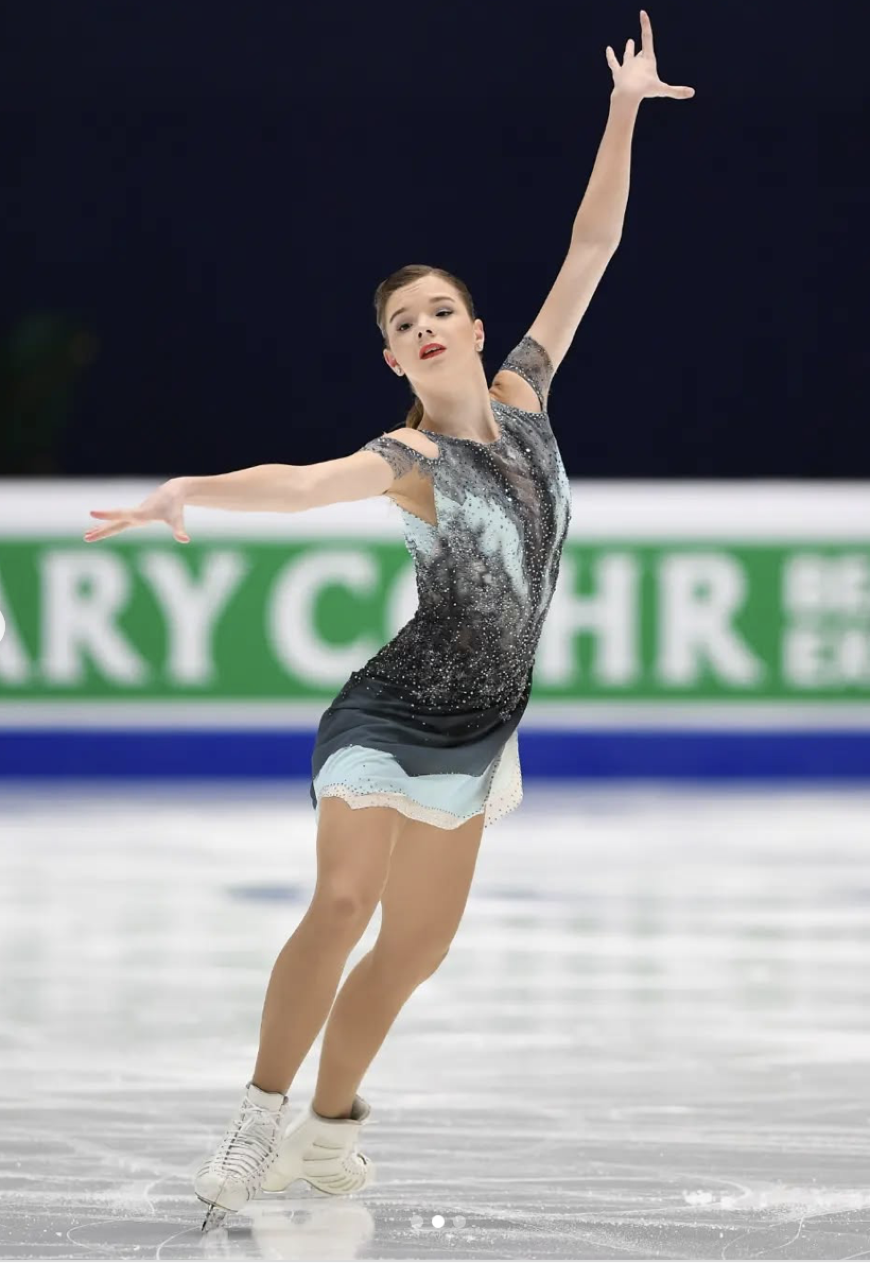
“Breaks are needed because the figure skating season is very long – from September to March. More than six months of active performances several times a month. Each sporting event is stress, because skaters always have one attempt and no room for error. No matter what level athlete you are, you have only one attempt and slippery ice. The Olympics are essentially one attempt every four years. And so it was important to give Viktoriia a respite to release the tension that had been building all season. The break was short – 5-6 days. During this time, the athlete resets psychologically without losing physical fitness. Before the Olympic Games, this was very necessary for Viktoriia,” the national team head coach’s reveals preparation secret.
Oleg Vasiliev also does not hide the task he sets for Safonova and her coaches at the Olympic Games: to finish in the top ten. According to him, this is quite possible if everything goes well and Viktoriia performs what she is capable of. However, here too there is an ill-fated “but,” Oleg Vasiliev adds. “We don’t know how Viktoriia will be received. For example, at the qualifying tournament in China, the short program was judged very strictly, the free program a bit softer. We shall see what will happen in Milan. The problem is that the judges don’t know Viktoriia, they haven’t had a chance to get acquainted. She started actively competing in 2019, then came COVID and the cancellation of competitions. In 2021, she came to the World Championships to qualify for the 2022 Olympics and tested positive for coronavirus – she spent the championship in a hotel room. So, despite all her experience, she will step onto the ice as a newcomer – with no track record of victories or defeats. But the chances of finishing in the top ten are quite real. It will be difficult, but we don’t set easy tasks,” he concluded.
Valeriya STETSKO,
Photo courtesy of the Belarusian Skating Union,
BelTA