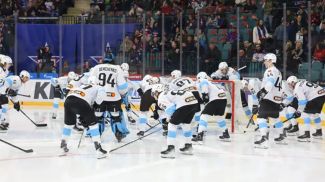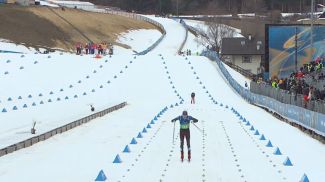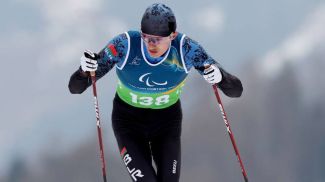

MINSK, 18 February (BelTA) – While talking to a BelTA reporter, Anastasia Mironchik-Ivanova, a member of the Healthcare, Physical Training, Family and Youth Policy Commission of the House of Representatives of the National Assembly of the Republic of Belarus, offered an opinion as to why Belarusian Paralympians had been allowed to compete under their country’s flag.
Belarusian athletes have been allowed to participate in the 2026 Olympic Games in Milan and Cortina d’Ampezzo. However, they will compete under neutral status, without their country’s flag or anthem. “These conditions can be considered biased and politicized because our athletes are deprived of the ability to officially represent our country. Participating in competitions under a neutral flag puts psychological pressure on the athletes. They have to compete without our symbols. But at the same time, they show decent results and prove that their skills do not depend on sanctions,” noted Anastasia Mironchik-Ivanova.
Meanwhile, at the XIV Winter Paralympic Games, which will be held from 6 to 15 March in the same venues where the XXV Winter Olympics are currently taking place, four Belarusians will compete in the main events on an equal footing with athletes from other countries with their country’s flag, anthem and other national attributes. “The International Paralympic Committee (IPC) makes independent decisions that do not always coincide with the policies of the International Olympic Committee. The IPC charter often emphasizes humanism and the right of Paralympians to realize their potential and compete, minimizing political interference in the sport component,” the MP noted.
At the same time she pointed out that a certain consistent trend has been observed in recent years. “As soon as representatives of Belarus or Russia take to the ice or a track, the judges begin thoroughly examining every move and nitpicking every element. Meanwhile, they may simply turn a blind eye to mistakes made by athletes from Western countries. And when an athlete knows that they do not compete against an opponent, but against a system that is designed to judge them harshly, it undermines the very foundations of sport,” Anastasia Mironchik-Ivanova emphasized.
As an example she cited the performance of the Russian figure skater Petr Gumennik, who finished sixth at the current Olympics and whose performance raised many questions about the judges’ decisions. “One of my favorite winter sports is figure skating. I am also surprised by the judges’ evaluation of the Russian athlete’s performance, who showed one of the most technically complicated routines. Despite his excellent performance the athlete received lower scores. The Russian’s mistakes were judged more harshly than similar mistakes by other skaters. Political pressure on Russian sport is one of the reasons for such bias. Although figure skating scores often cause controversy among experts and fans. The Russian figure skating school is one of the strongest in the world and its representatives deserve a place on the podium of honor. I am confident that in the future we will see our athletes and Russian ones who will represent their countries with dignity at such large-scale competitions and will achieve high results. Petr Gumennik’s sixth place is not an assessment of his talent, but an assessment of the quality of the judges, who are afraid to be objective,” concluded the MP.