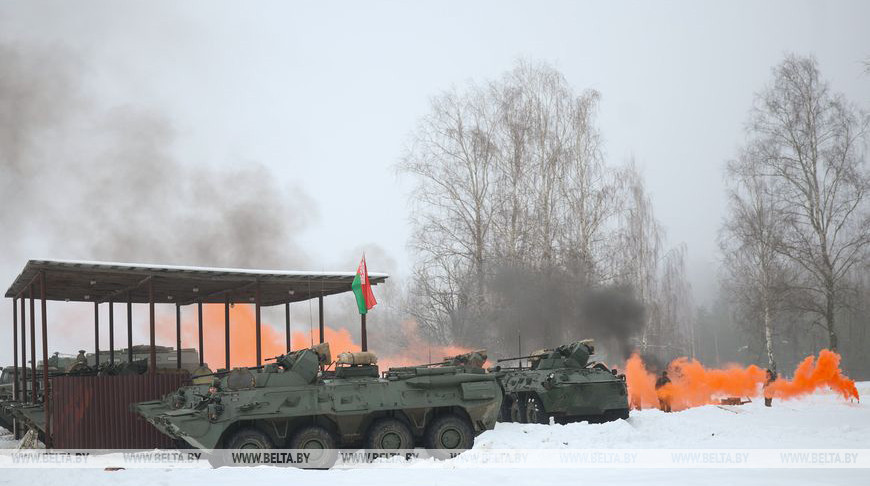
MINSK, 18 February (BelTA) – No additional budget funds were used to finance the snap inspection of the Armed Forces' combat readiness, State Secretary of the Security Council Aleksandr Volfovich told the media following his report to the head of state on 18 February, BelTA has learned.
One of the questions concerned the financing of the activities taking place as part of the large-scale combat readiness inspection of the Armed Forces. After all, funds are required for conducting forced marches, maintaining and moving equipment, providing material support for personnel, and other purposes. Journalists inquired as to whether these expenditures are financed from the budget, given the snap nature of the inspection.
“All the activities fit within the training programs that were planned for this half-year. Nothing extra. We are not spending public funds unnecessarily. We know how to count every kopeck,” the state secretary assured.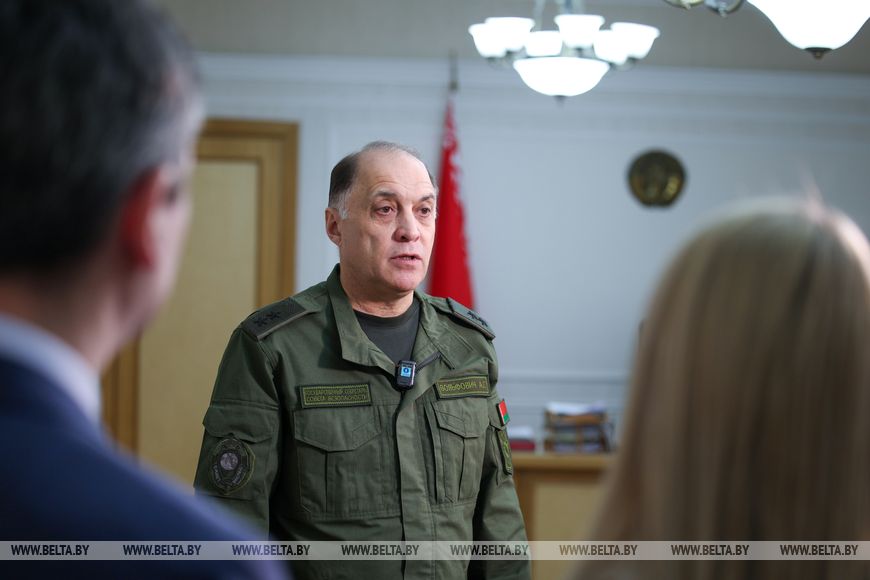
“There were virtually no additional costs during this snap inspection. All expenses have been provided for in the Armed Forces' budget for this year. We don’t conduct snap exercises like our neighbors of Poland and the Baltic states do. There, the number of exercises is off the scale. Currently, seven exercises of fairly high intensity are taking place on the European continent," he added.
When developing the concept for the snap inspection and preparing for its conduct, we took into account that at that time the majority of military units had already been deployed to training grounds during routine combat training. All elements, whether it be marches or test firing exercises, would have been practiced in due course anyway, if not today, then tomorrow. “This is spelled out in the combat training program: the stages of coordination for squads, platoons, companies, which culminate in the coordination of battalions and brigades,” Aleksandr Volfovich explained. “The elements we were checking [during the snap combat readiness inspection] are in the combat training program.” The only difference is that it happened not according to plan, but suddenly.
One of the questions concerned the financing of the activities taking place as part of the large-scale combat readiness inspection of the Armed Forces. After all, funds are required for conducting forced marches, maintaining and moving equipment, providing material support for personnel, and other purposes. Journalists inquired as to whether these expenditures are financed from the budget, given the snap nature of the inspection.
“All the activities fit within the training programs that were planned for this half-year. Nothing extra. We are not spending public funds unnecessarily. We know how to count every kopeck,” the state secretary assured.
“There were virtually no additional costs during this snap inspection. All expenses have been provided for in the Armed Forces' budget for this year. We don’t conduct snap exercises like our neighbors of Poland and the Baltic states do. There, the number of exercises is off the scale. Currently, seven exercises of fairly high intensity are taking place on the European continent," he added.
When developing the concept for the snap inspection and preparing for its conduct, we took into account that at that time the majority of military units had already been deployed to training grounds during routine combat training. All elements, whether it be marches or test firing exercises, would have been practiced in due course anyway, if not today, then tomorrow. “This is spelled out in the combat training program: the stages of coordination for squads, platoons, companies, which culminate in the coordination of battalions and brigades,” Aleksandr Volfovich explained. “The elements we were checking [during the snap combat readiness inspection] are in the combat training program.” The only difference is that it happened not according to plan, but suddenly.