
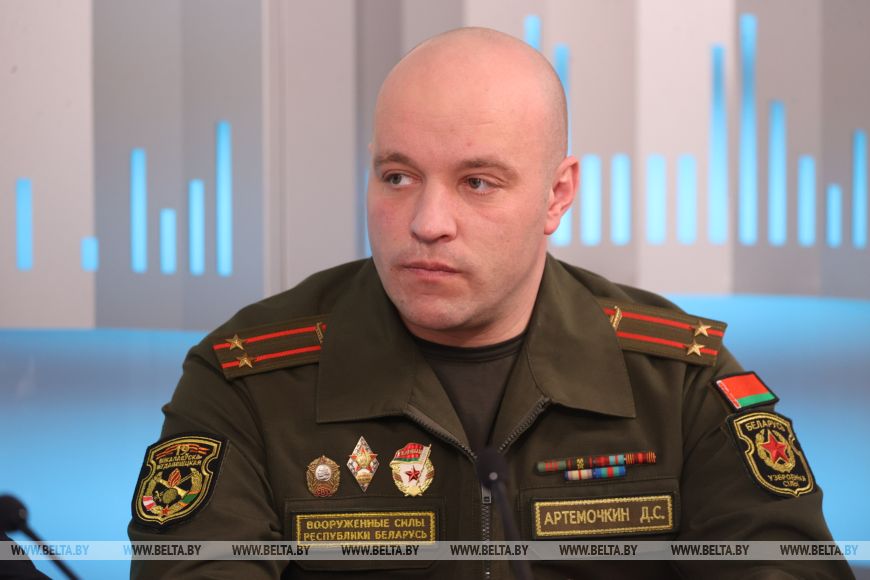
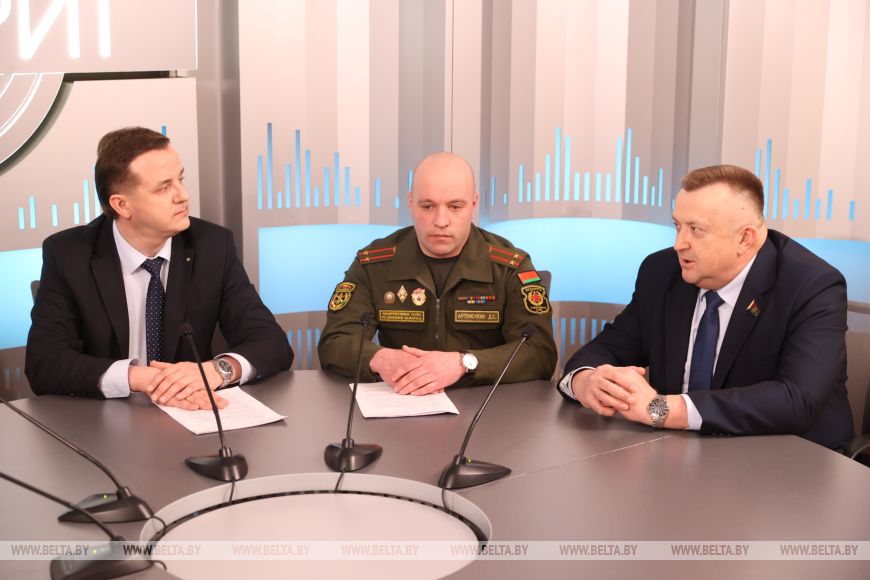
MINSK, 11 March (BelTA) – In the latest episode of BelTA’s The Nation Speaks project Lieutenant Colonel Dmitry Artyomochkin, chief of the combat training section for the 19th Separate Guards Mechanized Brigade, recounted how his unit responded to a snap combat readiness inspection on the morning of 24 January.
The snap inspection of the Armed Forces’ combat readiness was among the first to involve the 19th Separate Guards Mechanized Brigade.
“The morning of 24 January started as usual: I was at my workplace, planning training activities for the following week. At around 7 am, three officers from the State Secretariat of the Security Council entered the office. It immediately became clear that some part of the brigade would be subject to inspection, especially in the context of the one announced by the head of state. But right up until the last moment, until the state secretary of the Security Council arrived, we did not know which forces and assets - whether permanently ready military units or other subunits within the brigade, or the entire brigade as a whole - would be inspected. It was only after the state secretary arrived and handed over the envelope signed by the head of state that everything became clear - who, what, within what timeframe, and which list of tasks needed to be carried out,” said Dmitry Artyomochkin.
Prior to this, the final stage of platoon coordination and complex exercises with live-fire squad drills had been conducted. “The commander of the operational command troops kept all of this under his control, and the personnel underwent assessment exercises in combat training subjects. We did not stop for a single minute,” he said.
Dmitry Artyomochkin added that the personnel took the inspection calmly. “Yes, there was some excitement, we were about to face an examination before the head of state, but we acted in a coordinated and precise manner,” the department head emphasized.
Among other things, the inspection included drills on personnel notification procedures. “There are no sirens now - orders are communicated, and then, according to the notification scheme, specific officials are informed. They arrive at the appointed time to clarify priority tasks, relay the signal, and determine the measures that need to be carried out immediately to prepare the military units and subunits being inspected,” he said.
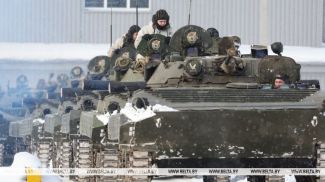
Next came the practical exercises - formation of personnel and a readiness inspection. “The permanently ready military units were inspected. These are units that are constantly supplied with ammunition and are prepared, at the first signal, to move out to a designated area at the appointed time and carry out the relevant tasks. After the readiness inspection, a 50-kilometer march along an unknown route was conducted. The concentration area was designated at the training ground, but the route was given by the senior commander,” Dmitry Artyomochkin said.
The task was to occupy the concentration area within the set time while maintaining full combat capability so that all equipment and personnel arrived in a state of readiness. Not the entire brigade took part in the march, only the subunits being inspected. They occupied their designated area at the training ground within the specified time.
Next, in accordance with the directive, assessment exercises in fire training were conducted - firing standard-issue weapons, and performing control and training firing exercises with all types of weaponry.
Dmitry Artyomochkin emphasized that the inspection activities lasted about a week. “The first day was the march to the designated area. Everything was done fairly quickly. Then came a day of live firing, with no less than 30% of the exercises carried out at night,” he said.