

At dawn on 22 June 1941 Nazi Germany, in violation of the non-aggression treaty, launched a war against the USSR. Hitler planned to end it by winter but failed to consider a number of factors that ultimately led to his defeat. One of the main factors was the morale of the Soviet people. German officers later admitted more than once that they had never before encountered such strong resistance. Was the Soviet Union ready for the German attack and what actually happened on the territory of Belarus in the first days of fighting? On the eve of the 85th anniversary of the outbreak of the Great Patriotic War of 1941-1945, we speak with Valery Nadtachayev, a senior researcher at the Center for Military History of Belarus at the Institute of History of the National Academy of Sciences of Belarus.
Valery Nikolayevich [Nadtachayev], a non-aggression pact was signed between Germany and the USSR in 1939, making them trade partners. Nevertheless, even then a lot indicated that a war with Germany was a matter of time. What steps did the Soviet military and political leadership take to prevent a new world war, and was there a chance to avoid it altogether?
Indeed, in the second half of 1939 Germany and the USSR signed the treaties that changed the military and political situation in Europe. Thus, the non-aggression treaty was signed on 23 August, and the treaty on friendship and borders on 28 September. As for trade, after the conclusion of the German-Polish non-aggression treaty in 1934, Poland, as is well known, became a trade partner of Germany, supplying necessary raw materials and other resources to Germany. And we all know how it all ended.
The leadership of the Soviet Union was aware of Hitler’s ideological views. He openly spoke about the need to expand living space for the German nation. And the lands available for colonization were available in the east. By the time the German-Soviet non-aggression treaty was signed, Germany had already annexed Austria and seized Czechoslovakia. Relations deteriorated with its yesterday’s ally Poland, which participated in the division of Czechoslovakia. It is important to note that the Soviet Union was the last to sign this kind of treaty with Germany. And another thing: for Hitler, the communist Soviet Union was an existential enemy that had to be destroyed at all costs. Moreover, both the French and the British worked to direct Hitler toward the USSR. Both sides were interested in seeing their two main adversaries engage in a struggle and significantly weaken each other. Another fundamentally important point that our opponents try not to talk about was that all peace initiatives of the USSR and attempts to create an anti-fascist bloc of small European states failed. Both Romania and Poland as well as a number of other countries abandoned this idea. Moreover, during the Munich crisis the Soviet Union could not provide assistance to Czechoslovakia, with which a mutual assistance treaty had been signed because Poland categorically refused to allow Red Army troops to pass through its territory.
In my view, for the USSR the non-aggression treaty with Germany was vital for a number of reasons: we were not ready for war and thus postponed it by two years, gaining time to strengthen defenses. This is especially true for the western and northwestern borders. By signing the treaty, the USSR drove a wedge into relations between Germany and its ally Japan. In August 1939 Soviet troops fought a Japanese military force in the area of the Khalkhin Gol River. Our opponents try not to remember this. And avoiding war under those conditions was impossible – only postponing it was.
Why in that case did the German attack in June 1941 come as a surprise to the USSR leadership?
In fact, the Soviet Union prepared for this war as best it could. In the materials of the 18th Congress of the All-Union Communist Party (Bolsheviks), which took place in March 1939, we see that Stalin drew attention to the imperialist war, which had already affected about 500 million people and a vast territory. He emphasized that this war had not yet become a world war.
They were busy getting ready, creating a military-industrial base in the deep logistic rear. As we have already said, the Soviet Union found itself bound to Germany by the non-aggression treaty. Ordering a mobilization under these conditions was simply impossible. Had we done that, the whole world would have treated us among the aggressors preparing for war. However, if you look at the content of the note from the German Ministry of Foreign Affairs, the Germans blamed the USSR precisely for that and without having any facts. Nevertheless, hidden mobilization was carried out. Troops of the second echelon were moving forward from heartland military districts under the guise of military exercises. As for Germany, unlike the USSR, it was already at war with Great Britain. Therefore, the concentration of troops on the borders with the Soviet Union was explained by the fact that the Germans were allegedly preparing Operation Sea Lion, a landing operation to invade the British Isles, and were thus misinforming the British. Certainly, Soviet intelligence service monitored the concentration of Wehrmacht troops at the borders, and these reports are kept in the National Archive of the Republic of Belarus. Certain markers pointing to preparations for war with the Soviet Union include the facts of the formation of rear areas of the invasion army groups, security divisions, operational groups of the security police and SD, and secret field police groups as early as March 1941. They were created exclusively for war.
It should also be taken into account that no one, generally speaking, believed in a new world war. The experience of World War One indicated that Germany cannot wage a successful war on two fronts for a long time. Therefore, Hitler and his generals bet on a lightning-fast campaign, which no one expected. It was supposed to reach the Arkhangelsk-Astrakhan line as early as October 1941. Having gained combat experience in military campaigns against Poland, France, and other countries, German troops represented a well-coordinated, well-equipped, and deadly mechanism.
Why did the lightning war plan fail in the case of the USSR? What did Hitler miscalculate?
German intelligence failed to uncover our strategic reserves. The first and second strategic echelons of the Red Army literally burned out, but they bought time for the deployment of the third one, which the Germans did not know about. It was the troops of this echelon that ensured victory in the Battle of Moscow. And secondly, because our soldiers and officers showed unparalleled heroism – something we are rightfully proud of and which the enemy did not take into account. It was the heroism of the defenders of the Brest Fortress, Mogilev, Gomel, and dozens of other population centers that played a decisive role in the failure of Operation Barbarossa. Every settlement, every fortification that did not surrender without a fight delayed the enemy’s advance.
Thousands of German cannons and mortars opened fire at border service stations on 22 June. The Brest Fortress was the first to take the blow. What was happening on the territory of the citadel?
A lot of preparation came before that, but you have to understand that in 1941 the fortress, in the sense originally intended, had long ceased to exist. It was not meant for defense. Besides, the main fortifications ended up on the territory of the Governorate General and belonged to the Germans. Air cover and a fortress garrison that could defend it did not exist either. In essence, the fortress was a place for quartering personnel of different army units. According to plans, troops were supposed to leave the fortress and remove equipment, ammunition, and other property. The garrison, which became immortal in our memory, was created only after the attack when Captain Ivan Zubachev took over general leadership of the defense and Regiment Commissar Yefim Fomin became his deputy. One of the centers of defense was the Eastern Fort, which resistance was led by the commander of the 44th Rifle Regiment, Major Pyotr Gavrilov. They gathered fighters around themselves, and organized resistance began.
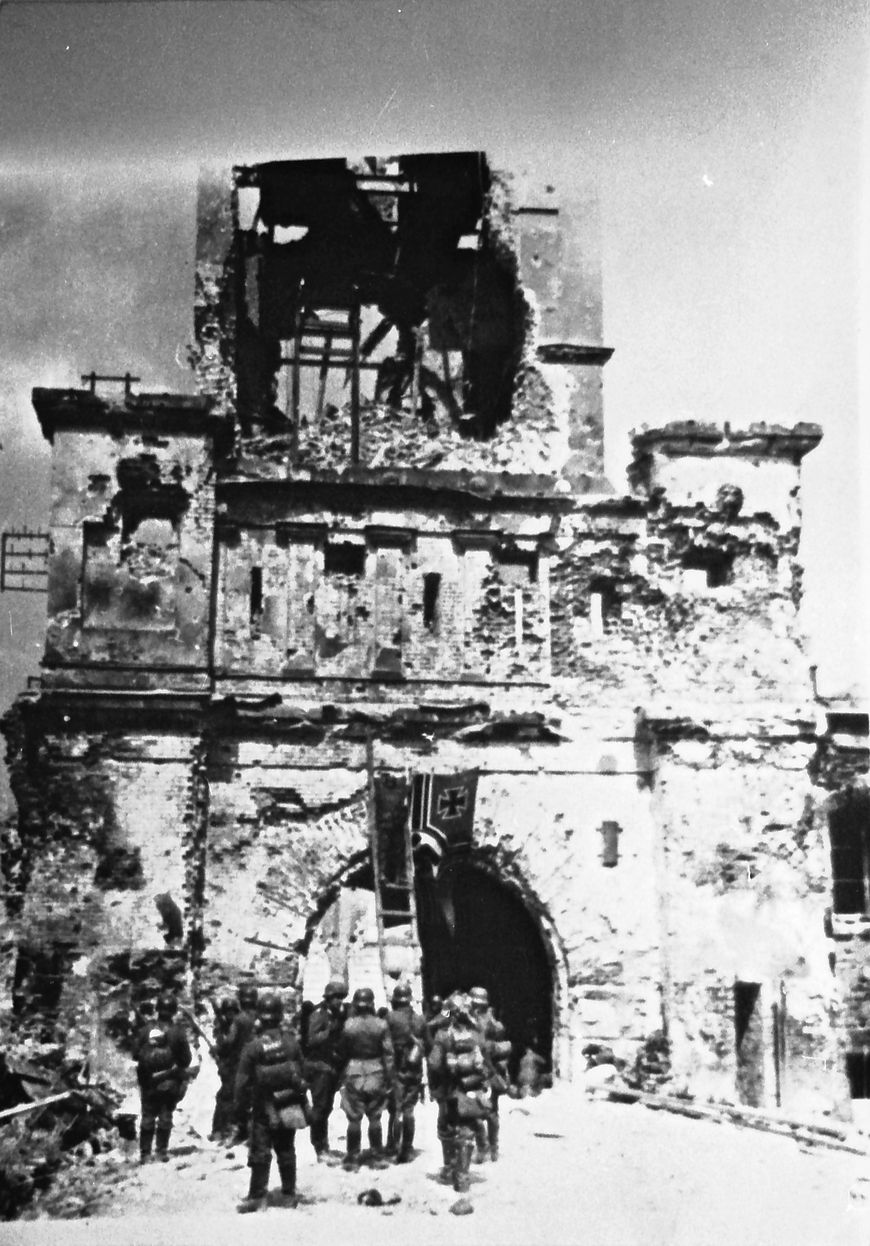
The fortress itself was stormed by the 45th Infantry Division (which means 16,000 soldiers and officers), which had marched victoriously across Polish and French lands. No more than eight hours were allotted for the capture of the fortress, but the garrison held out much longer. As a result, the 45th Division, several times superior to our troops in numbers and artillery, found itself pinned down to this place. Even when the 12th Army Corps was ordered on 28 June to block the Bialystok salient from the east, the 45th Division was not recalled. It remained at the fortress. Keep in mind that in the course of the fighting the 45th Division used 1,150 tonnes of ammunition here instead of the allotted 480 tonnes!
Were there pockets of resistance in the city of Brest as well?
Right. For example, the defenders of the railway station went down into the basements and continued to fight from there. Attempts to throw grenades at them led to nothing. And then the Nazi, in violation of all rules of warfare, burned the people alive: they closed the ventilation grates, poured gasoline into the basements, and set them on fire.
Mogilev also pinned down German divisions for three weeks. The city defended itself even when Smolensk had already been taken. The same happened in Gomel, Vitebsk... The strength of spirit and willpower of those who did their duty to the end amazed even the enemy!
It turns out that Hitler calculated everything except the heroism of the Soviet people – and that was precisely one of his main mistakes?
To begin with, they did not consider Slavs their equal in principle.
Army Group Center was the most powerful of the entire German force grouping. In fighting at the border and in Smolensk it actually defeated the troops of the Western Front twice. By 30 July, the German offensive had run out of steam. The enemy switched to strategic defense. And it all started with the Brest Fortress, with the border service stations, for the capture of which 40 minutes were allotted, but they held out for several hours and days. Many bear the names of the heroes who defended them in 1941. For example, Lieutenant Usov’s border guard station No.3, which was part of the 86th Augustow Border Unit and was located 32km northwest of Grodno. Thirty people held back the enemy for over six hours. Viktor Usov fought here to the last. On 6 May 1965 he was posthumously awarded the title of Hero of the Soviet Union. Border guard station No.4 of the Grodno Border Unit is named after Senior Lieutenant Aleksandr Sivachev. Even though he was seriously wounded, he stayed in command of the outpost. The commanding officer of border guard station No.9 of the 17th Brest Border Unit, Lieutenant Andrei Kizhevatov, led the border guard unit and fought in the fortress to the last. All these events slowed down the victorious march of the enemy.
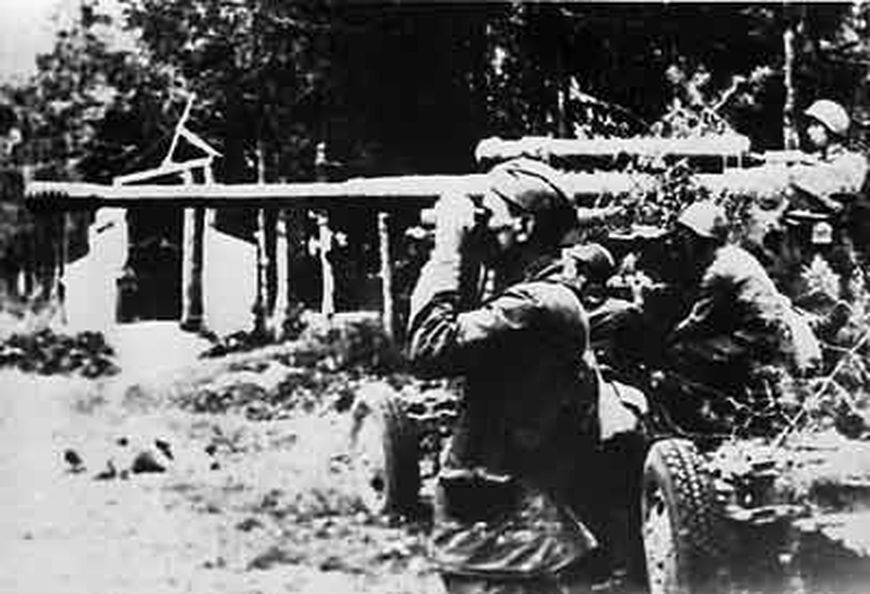
Many German commanders wrote in their diaries as early as 1941 that the Russians (here it is necessary to understand that by Russians they meant Soviet troops as a whole) fought completely differently from the French or Poles. At the initial stage of the war we suffered huge losses, the situation seemed hopeless. But where most armies would have surrendered, our soldiers fought to the last. Let us recall the counterstrike in mid-July 1941, carried out by the 63rd Rifle Corps under the command of Leonid Petrovsky. Our troops managed to cross the Dnieper River and dislodge the enemy from Rogachev, Zhlobin, and other population centers.
What role did the nationwide resistance play in the fight against the enemy at the initial stage of the war?
For a number of reasons partisans could not fulfill the tasks assigned to them in full. We were not ready for partisan warfare. Everything started from scratch. Nevertheless, as early as July the enemy felt the strength of the people’s avengers. In his diary the German military commander Fedor von Bock, commander of Army Group Center, noted that due to the destruction of supply lines, the frontline troops could not receive weapons, ammunition, and human reserves in a timely manner.
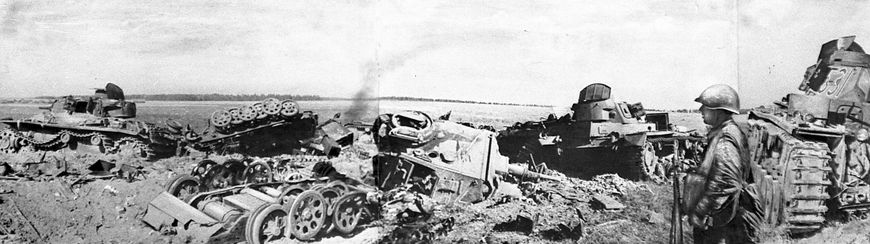
Popular resistance in those territories occupied by the enemy was both spontaneous and organized. As early as 24 June a decree of the Council of People’s Commissars on the creation of extermination battalions was adopted, and they began to form literally the next day. The People’s Commissariat of State Security of Belarus proceeded to create NKVD teams to fight the enemy’s parachute assault forces and saboteurs who entered the territory controlled by our troops. In a number of cases these battalions and teams, together with regular army units, held back the enemy, defending, for example, the crossing over the Berezina River and many other important points. And from 1 July, the creation of partisan units began – so far in territory not yet seized by the enemy, but with the task of switching to partisan warfare as soon as it was occupied. By the end of 1941, 104 partisan units and 323 organizational, reconnaissance, and sabotage groups were already operating in Belarus. It is important to understand that people volunteered to be the partisans. It was a deliberate choice of hundreds of thousands of people whom the Soviet school had instilled with a sense of patriotism. And mass heroism was also a conscious choice of the people who saw the enemy and knew that they had to protect their land, homes, and families.
How exactly did the heroic resistance of Belarusians in the summer of 1941 affect further actions of the Red Army?
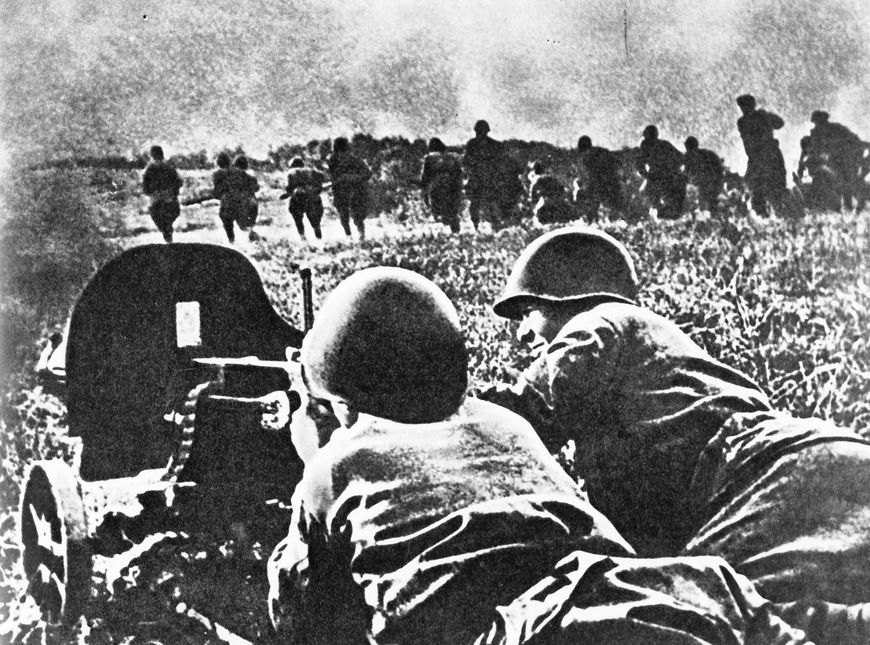
It was precisely on our Belarusian land that the enemy switched to strategic defense, which means Soviet troops got a chance to redeploy to threatened sectors of the front. This is a very important point, and it happened because Gomel, Vitebsk, and Mogilev fought – everyone who could do so fought. Near the town of Ostroshitsky Gorodok German tanks were stopped with Molotov cocktails. Fighters of the battalion of Police Lieutenant Vladimirov stood to the death. But the main thing was that Red Army soldiers, officers, and generals saw that the enemy could be beaten. This is a very important psychological point. The aura of German invincibility began to fade in our land.
By Yulia GAVRILENKO,
Photos by BelTA and from public Internet sources,
7 Dnei newspaper