
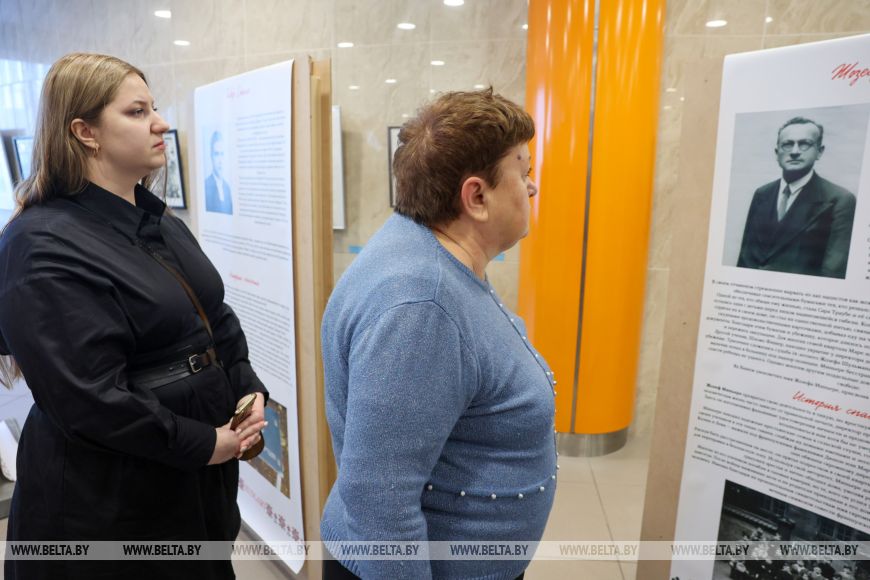
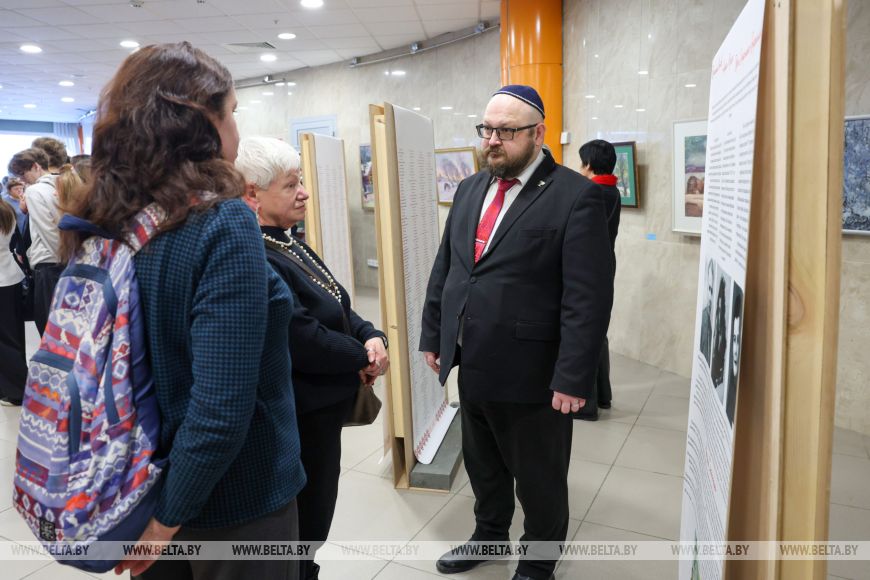
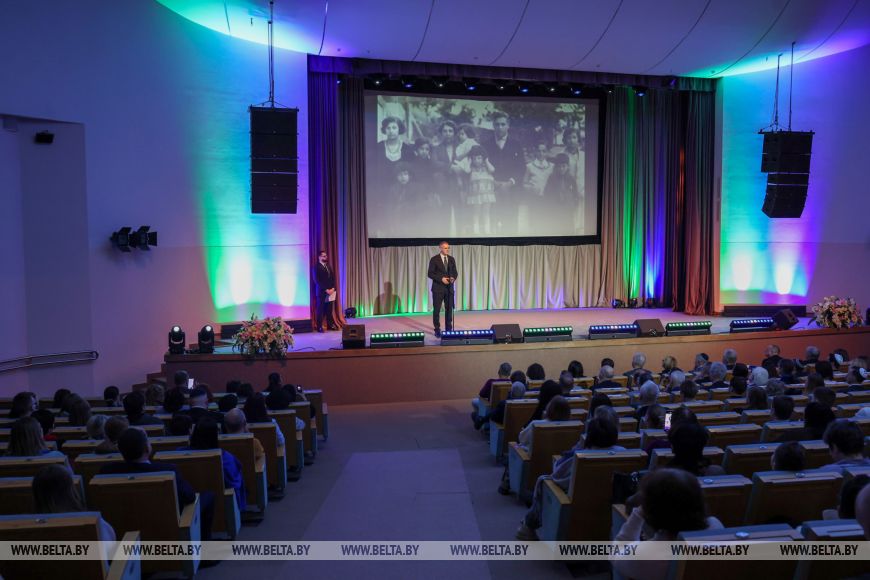
MINSK, 5 February (BelTA) - An exhibition titled Humanity as a Choice dedicated to the Righteous Among the Nations from Belarus, France, and Hungary, was presented at the National Library of Belarus, BelTA has learned.
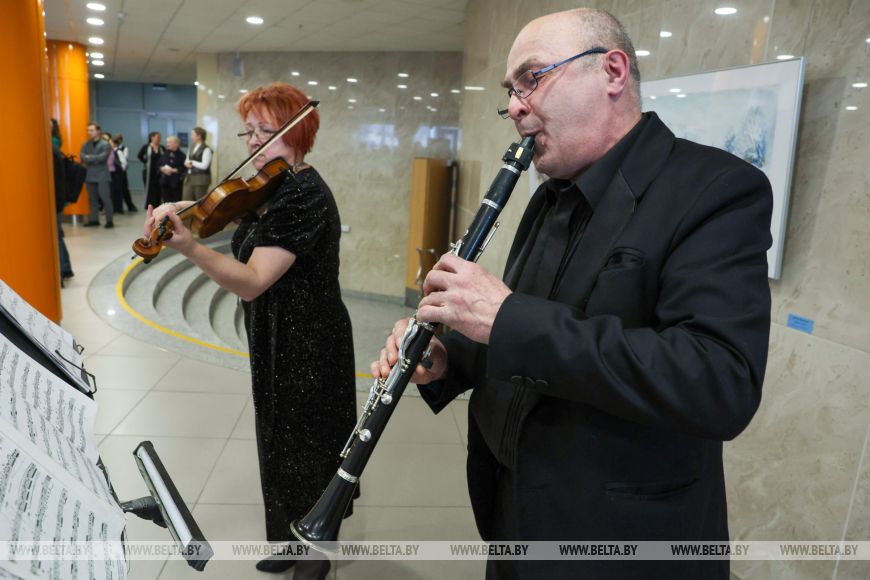
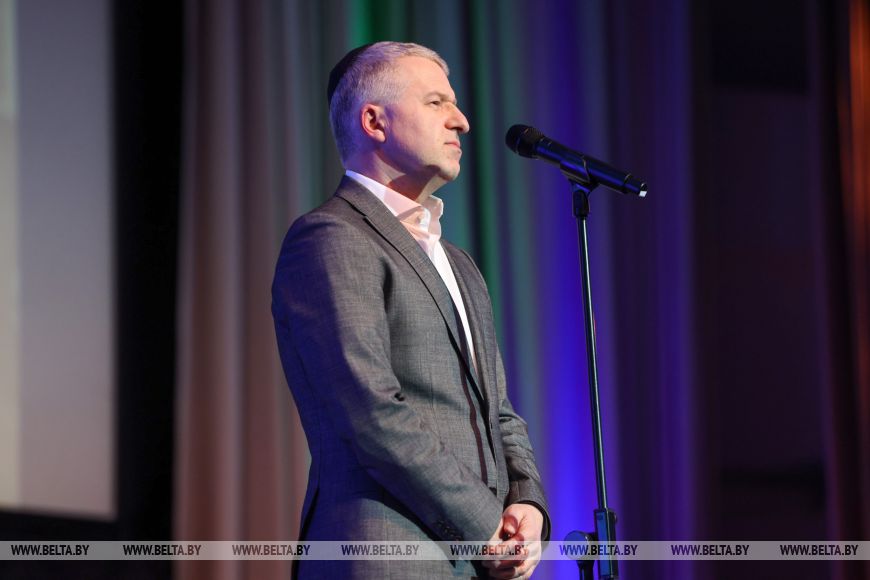
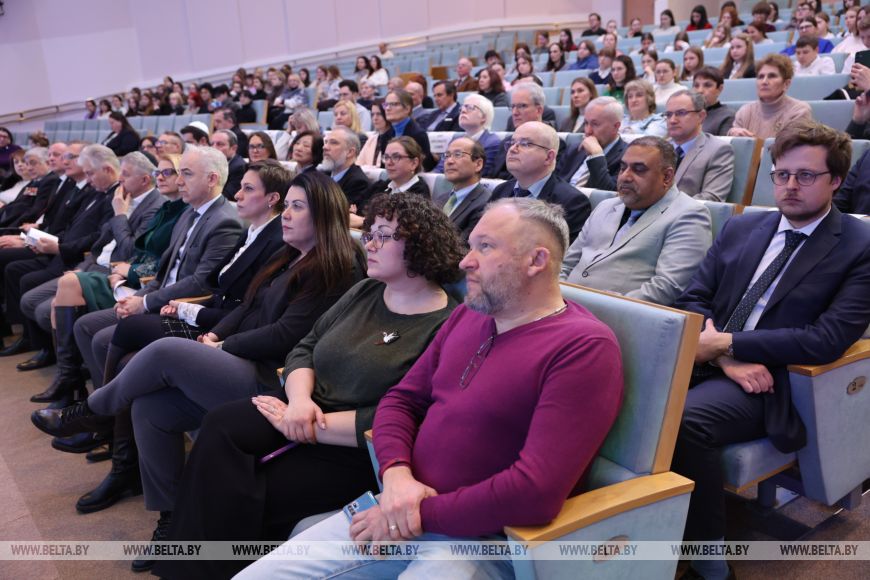
Oleg Rogatnikov, the chairman of the Union of Belarusian Jewish Public Associations and Communities, noted that the opening of the exhibition and the concert conclude the week of remembrance organized this year by the Union of Belarusian Jewish Communities in observance of the International Holocaust Remembrance Day (27 January). On this day in 1945, Soviet troops liberated the Auschwitz concentration camp. During this week, more than 30 events were held across various cities in Belarus.
Photos by Nikolai Petrov
The exhibition is dedicated to different individuals united by a single choice: to save another risking their own lives. The exhibition was prepared by the Union of Belarusian Jewish Public Associations and Communities in partnership with the Embassies of Hungary and France in Belarus and the Yad Vashem Holocaust History Memorial Complex.
Oleg Rogatnikov, the chairman of the Union of Belarusian Jewish Public Associations and Communities, noted that the opening of the exhibition and the concert conclude the week of remembrance organized this year by the Union of Belarusian Jewish Communities in observance of the International Holocaust Remembrance Day (27 January). On this day in 1945, Soviet troops liberated the Auschwitz concentration camp. During this week, more than 30 events were held across various cities in Belarus.
“Our goal is to convey information about the Holocaust to as many people as possible, across various segments of society, and to preserve the memory of those horrific events that took place on Belarusian soil. We know that during the Second World War, 6 million Jews were killed worldwide. Out of the one million Jews who lived in Belarus before the start of the Great Patriotic War, 800,000 were exterminated,” Oleg Rogatnikov added.
According to him, the Righteous Among the Nations risked their own lives and those of their children to save Jews from the horrors of the Holocaust. To date, over 700 Belarusians have been recognized as such. This figure is confirmed by the Yad Vashem Institute, which documents every instance of saving Jewish lives. It can be said that these people helped Jews not for money, rewards, or titles. They helped because they could not do otherwise, because Belarusians and Jews had lived together in peace for over 600 years, celebrated the same holidays, visited each other, and their children attended the same schools. Saving Jews from the horrors of the Holocaust and the atrocities of fascism was, for them, a matter of honor and conscience.
According to him, the Righteous Among the Nations risked their own lives and those of their children to save Jews from the horrors of the Holocaust. To date, over 700 Belarusians have been recognized as such. This figure is confirmed by the Yad Vashem Institute, which documents every instance of saving Jewish lives. It can be said that these people helped Jews not for money, rewards, or titles. They helped because they could not do otherwise, because Belarusians and Jews had lived together in peace for over 600 years, celebrated the same holidays, visited each other, and their children attended the same schools. Saving Jews from the horrors of the Holocaust and the atrocities of fascism was, for them, a matter of honor and conscience.
“We maintain contact with the second and third-generation descendants of the Righteous Among the Nations. Every year, facts about one or two new Righteous individuals come to light, and together with the Embassy of Israel, we strive to locate such people, verify the uncovered information, and award them the honorary title through their descendants,” he said.
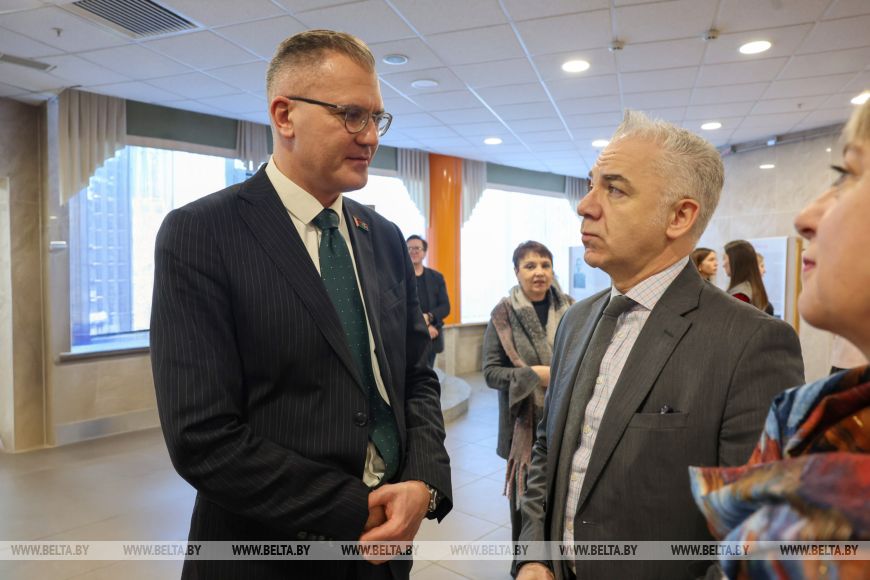
Commissioner for Religious and Ethnic Affairs Aleksandr Rumak emphasized that the exhibition Humanity as a Choice is a space of memory dedicated to quiet but unyielding courage. In his view, 27 January is not merely a date on the calendar but a global occasion to pause and remember the tragedy that unfolded here on our Belarusian land, which during the war became a place of unprecedented sorrow. Our land remembers the terrible truth of the genocide, which was directed not only against the Jewish people but also against the Belarusian people. Burned villages, death camps and ghettos, mass shootings of civilians - this is our unhealed wound, the memory of the Holocaust and the genocide of the Belarusian people, two tragic threads of a single history, woven together by pain, loss, and suffering.
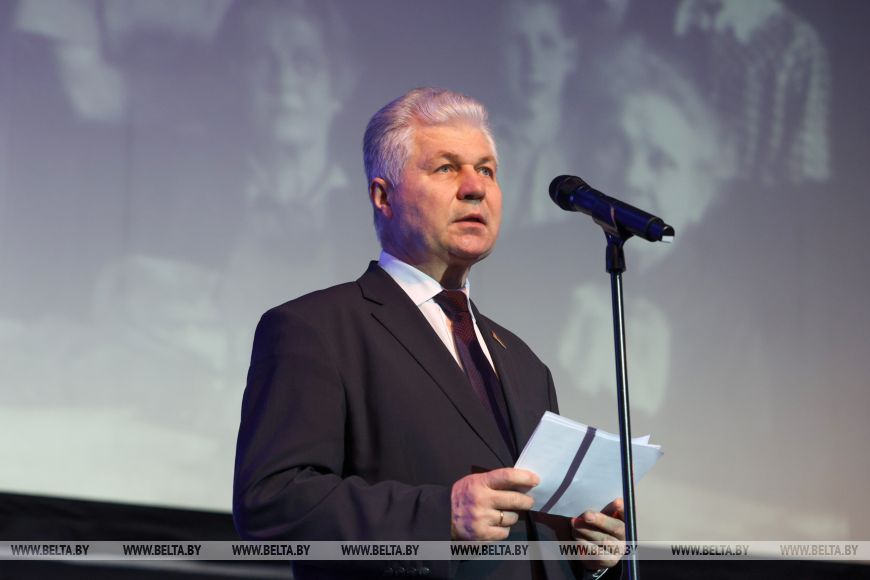
Aleksandr Rumak added that the project not only speaks of pain and utter darkness but also of the light that people managed to preserve within it. The foundation of the exhibition is built on the documentary stories of the Righteous Among the Nations and other individuals who made significant contributions to saving many lives condemned to death. These are ordinary people - Belarusians and representatives of other nationalities, teachers, workers, doctors who lived here. Under conditions of total terror, when humanity itself was forbidden, they made the heroic choice in favor of life, mercy, and humanity. They opened their doors, hid neighbors, friends, and strangers - those condemned to annihilation in basements and attics and shared the little they had in their own lives. Their actions are the highest form of resistance, not only to violence but also to the very idea of dividing people into “us” and “them”.
“Through these stories, prose, and the music that resonates today, we aim to build a bridge between the generation that knows of the war from books and family lore, and the generation responsible for the future; between cultures united by shared memory and universal values: respect for life, dignity, and every person's right to live. The exhibition stands as our monument to human courage and compassion. It reminds us that humanism, mercy and civic responsibility are not merely words, but concrete actions, a daily choice that each of us faces,” Aleksandr Rumak noted.
According to Vadim Gigin, Director General of the National Library of Belarus, the topic of the Holocaust is close to Belarusians, as the Belarusians themselves have gone through the harrowing ordeal passing the stories down from generation to generation. “I remember well the accounts of my grandmother, Nina Vladimirovna, a partisan, about the atrocities in Smilovichi and the people’s determination to resist. Therefore, it is only natural that we support such events,” he added. “We consistently collaborate with the Union of Belarusian Jewish Public Associations and Communities. Next week, we will hold a roundtable discussion under the auspices of the Parliament that will involve our religious communities, focusing on the dialogue between the state and religious organizations.”
Commissioner for Religious and Ethnic Affairs Aleksandr Rumak emphasized that the exhibition Humanity as a Choice is a space of memory dedicated to quiet but unyielding courage. In his view, 27 January is not merely a date on the calendar but a global occasion to pause and remember the tragedy that unfolded here on our Belarusian land, which during the war became a place of unprecedented sorrow. Our land remembers the terrible truth of the genocide, which was directed not only against the Jewish people but also against the Belarusian people. Burned villages, death camps and ghettos, mass shootings of civilians - this is our unhealed wound, the memory of the Holocaust and the genocide of the Belarusian people, two tragic threads of a single history, woven together by pain, loss, and suffering.
Aleksandr Rumak added that the project not only speaks of pain and utter darkness but also of the light that people managed to preserve within it. The foundation of the exhibition is built on the documentary stories of the Righteous Among the Nations and other individuals who made significant contributions to saving many lives condemned to death. These are ordinary people - Belarusians and representatives of other nationalities, teachers, workers, doctors who lived here. Under conditions of total terror, when humanity itself was forbidden, they made the heroic choice in favor of life, mercy, and humanity. They opened their doors, hid neighbors, friends, and strangers - those condemned to annihilation in basements and attics and shared the little they had in their own lives. Their actions are the highest form of resistance, not only to violence but also to the very idea of dividing people into “us” and “them”.
“Through these stories, prose, and the music that resonates today, we aim to build a bridge between the generation that knows of the war from books and family lore, and the generation responsible for the future; between cultures united by shared memory and universal values: respect for life, dignity, and every person's right to live. The exhibition stands as our monument to human courage and compassion. It reminds us that humanism, mercy and civic responsibility are not merely words, but concrete actions, a daily choice that each of us faces,” Aleksandr Rumak noted.
According to Vadim Gigin, Director General of the National Library of Belarus, the topic of the Holocaust is close to Belarusians, as the Belarusians themselves have gone through the harrowing ordeal passing the stories down from generation to generation. “I remember well the accounts of my grandmother, Nina Vladimirovna, a partisan, about the atrocities in Smilovichi and the people’s determination to resist. Therefore, it is only natural that we support such events,” he added. “We consistently collaborate with the Union of Belarusian Jewish Public Associations and Communities. Next week, we will hold a roundtable discussion under the auspices of the Parliament that will involve our religious communities, focusing on the dialogue between the state and religious organizations.”
Several events were held during the week of remembrance. At a literary evening in the National Art Museum, participants read accounts from the Righteous Among the Nations and former prisoners. During an open lesson at Mir Castle, students and teachers learned of their stories and some shared stories of their own ancestors. Later, the Belarusian film The Auschwitz Twins” was screened.
Photos by Nikolai Petrov