
An archive photo
MINSK, 6 January (BelTA) – The Belarusian Ministry of Culture has outlined the key points of the Cultural Space state program for 2026-2030 that was approved by the government on 31 December 2025, BelTA has learned.
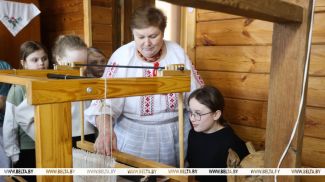
The goal is to preserve and promote historical and cultural heritage, national traditions, and customs. The Ministry of Culture emphasized that the program contains two subprograms: Cultural Heritage and Art and Creativity. The Cultural Heritage subprogram is aimed at ensuring the accessibility, quality, and diversity of services provided by cultural and educational organizations, culture and recreation parks, zoos, and mixed-type cultural organizations. Work will also continue on preserving, reviving, and developing folk arts and crafts, digitalization and the creation of national digital content in the cultural domain, and promoting the cultures of national minorities and Belarusians abroad.
The Art and Creativity subprogram focuses on the development of professional art, international cooperation, and cinematographic activities. The state program establishes a systemic framework for preserving cultural heritage, developing folk traditions, and supporting contemporary art.
It also identifies historical and cultural heritage sites where repair and restoration work is planned, funded from both the state and local budgets. The list is quite extensive and includes sites from across the country. For example, the completion of restoration work for the buildings of the National Art Museum of Belarus is planned for 2027. In 2026-2029, a series of restoration works will take place at the Palace Complex in Ruzhany, Pruzhany District. In 2030, conservation and adaptation work as part of the reconstruction of the Novogrudok Castle historical and cultural site is to be completed. The reconstruction and restoration of the Corpus Christi Church in Nesvizh, in turn, is planned for 2029.
The Ministry of Culture noted that consideration will be given to developing modern technologies in museum operations and organizing cultural events. One of the tasks of the Cultural Heritage subprogram is digitalization and the creation of national digital content in the cultural domain. Plans include developing automated information systems and resources for use in libraries, creating virtual tours, digitizing the holdings of museums and libraries, objects of intangible cultural heritage, everyday items and traditional crafts, and the Belarusian film archive.