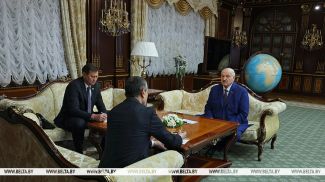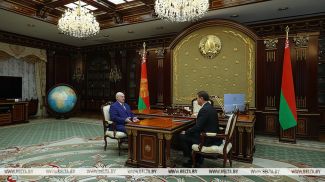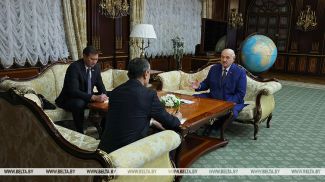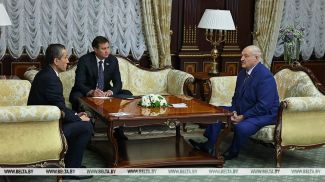

MINSK, 26 January (BelTA) – There is a proposal to establish an educational center in Belarus for training personnel in high-demand and emerging fields. This topic was discussed at a meeting hosted by Belarusian President Aleksandr Lukashenko, BelTA has learned.
“We need to determine which high-priority strategic fields no modern state can afford to neglect,” the head of state said.
Belarusian Education Minister Andrei Ivanets reported that the proposed fields are those the country needs. These include aviation manufacturing, digital technologies, biotechnology, and several other areas for training personnel in engineering specialties. Four universities have the corresponding schools and capacity for this. These include Belarusian State University (BSU), Belarusian National Technical University (BNTU), Belarusian State University of Informatics and Radioelectronics (BSUIR), and Belarusian State Technological University (BSTU).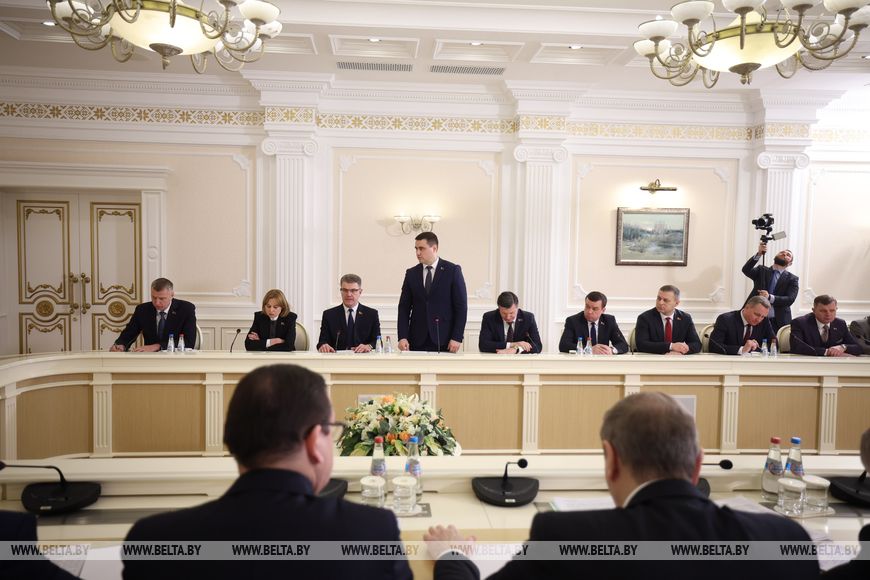
Nevertheless, during the meeting, the head of state raised several questions about the need of establishing a separate center to develop these fields. After all, they could also be developed within the traditional institutions, including universities and the Academy of Sciences. “There is enough space. What we need are the people who can drive this forward,” he remarked.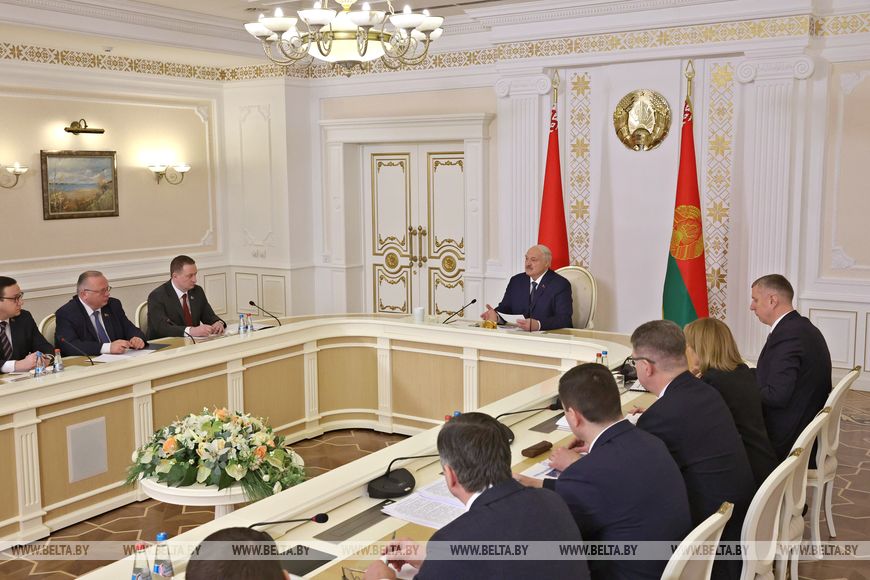
“Let’s discuss whether we will establish a new center. If we do, then naturally, it will bring together the best, most progressive and talented individuals for learning and teaching. We must be fully aware of this. And secondly, it must produce a finished 'product'. This means that it must have strong specialists,” the Belarusian leader said.
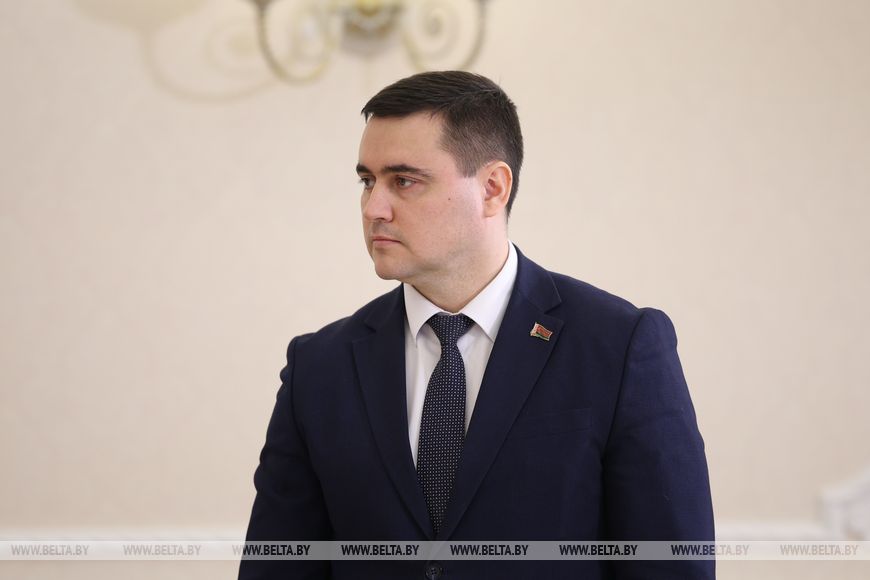
In his report, Andrei Ivanets noted that there is a global competition for gifted youth, and Belarus is no exception. Annually, Belarusian schoolchildren win over 50 medals at international Olympiads, and more than 200 become winners of national Olympiads. Over 100 graduates of the National Children’s Technopark are admitted to universities without entrance exams. “Undoubtedly, this is our golden intellectual reserve. And these young people rightly aspire to receive a world-class higher education,” the minister said.
He believes that it is difficult to fully achieve this in traditional universities, namely to bring together the most gifted youth and truly recognized experts in their fields in one place and create a unique educational environment.
Belarusian Education Minister Andrei Ivanets reported that the proposed fields are those the country needs. These include aviation manufacturing, digital technologies, biotechnology, and several other areas for training personnel in engineering specialties. Four universities have the corresponding schools and capacity for this. These include Belarusian State University (BSU), Belarusian National Technical University (BNTU), Belarusian State University of Informatics and Radioelectronics (BSUIR), and Belarusian State Technological University (BSTU).
Currently, experimental training programs are already implemented at a number of universities, but as the minister noted, not all students will be able to master them. “This does not mean that we are training them poorly. We are training them for absolutely all sectors of our economy. But we need a kind of ‘special ops’ program, a new center that will essentially continue on the trajectory of the National Children’s Technopark where we have seen that concentrating such students was absolutely justified,” Andrei Ivanets said.
Nevertheless, during the meeting, the head of state raised several questions about the need of establishing a separate center to develop these fields. After all, they could also be developed within the traditional institutions, including universities and the Academy of Sciences. “There is enough space. What we need are the people who can drive this forward,” he remarked.
Aleksandr Lukashenko also inquired about what has already been done in organizing experimental training and scaling it up, and how it will be aligned with the programs of this educational center. The president asked why they propose to transfer some of the experimental programs already implemented at leading universities to this new center. “Are they not coping? Is something lacking?” the president asked. “I want everyone to understand: we cannot afford to deplete the staffing of the country's leading higher education institutions. To some extent, this could happen. A decline in the quality of education is unacceptable. The international prestige of our higher education system and the export of educational services depend on this.”
The head of state also inquired about the uniqueness of the selection and training process for young specialists and the mechanisms for their long-term retention. “This primarily concerns the government and you [the Education Ministry]. Today gifted youth are a unique asset in any country. We must do everything to protect and, frankly, retain this youth within our borders. This is task number one. There can be no compromises on this,” Aleksandr Lukashenko emphasized.
The head of state also inquired about the uniqueness of the selection and training process for young specialists and the mechanisms for their long-term retention. “This primarily concerns the government and you [the Education Ministry]. Today gifted youth are a unique asset in any country. We must do everything to protect and, frankly, retain this youth within our borders. This is task number one. There can be no compromises on this,” Aleksandr Lukashenko emphasized.
“Let’s discuss whether we will establish a new center. If we do, then naturally, it will bring together the best, most progressive and talented individuals for learning and teaching. We must be fully aware of this. And secondly, it must produce a finished 'product'. This means that it must have strong specialists,” the Belarusian leader said.
In his report, Andrei Ivanets noted that there is a global competition for gifted youth, and Belarus is no exception. Annually, Belarusian schoolchildren win over 50 medals at international Olympiads, and more than 200 become winners of national Olympiads. Over 100 graduates of the National Children’s Technopark are admitted to universities without entrance exams. “Undoubtedly, this is our golden intellectual reserve. And these young people rightly aspire to receive a world-class higher education,” the minister said.
He believes that it is difficult to fully achieve this in traditional universities, namely to bring together the most gifted youth and truly recognized experts in their fields in one place and create a unique educational environment.