
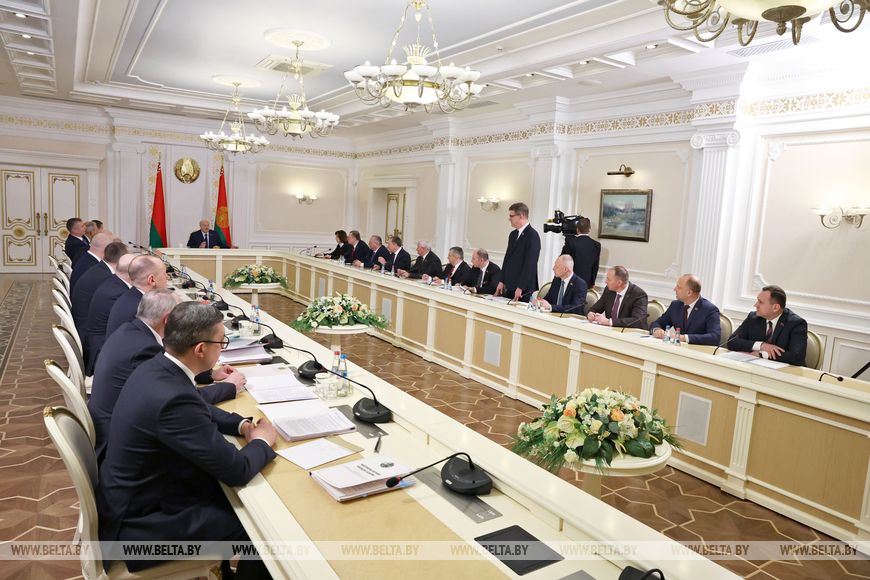
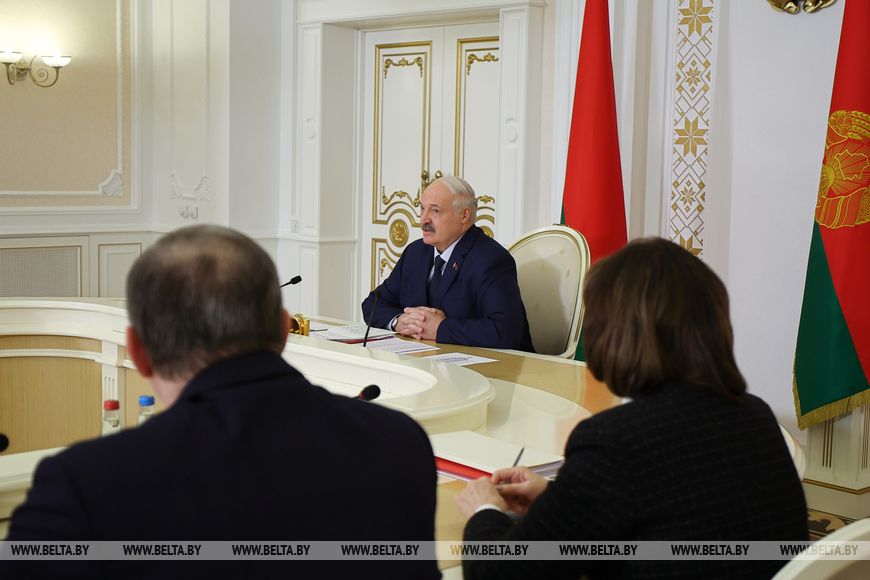
MINSK, 6 February (BelTA) - Belarusian President Aleksandr Lukashenko addressed the issue of the street lighting schedule during a meeting with the Council of Ministers in Minsk on 6 February, BelTA has learned.
The head of state noted that reducing the operating hours of street lighting, even by a short period, results in significant savings for the country. In monetary terms, this is comparable, for example, to the expenses spent on the construction of certain agricultural facilities or additional funds allocated to increase pensions. “Kukharev [Vladimir Kukharev, Minsk Mayor] turned off the lights 15 or even 10 minutes earlier, and they compare us, oh my goodness, to Ukraine! Ten minutes!Has anyone calculated that these 10-15 minutes, as Vladimir Kukharev says, amount to three dairy farms and seven calf nurseries per year in terms of construction costs. But most importantly we will increase pensions from 1 February (I signed the decree). Not much, by 10%, but we raised pensions for pensioners in these conditions. If you take this savings over the year [from street lighting], it practically covers that increase. Just ten minutes,” the president said.
Aleksandr Lukashenko noted that in large cities like Minsk, there are ample additional sources of illumination besides streetlights, including light from buildings, residential homes, shop windows, and so on. Therefore, according to the president, it is difficult to understand how anyone could have supposedly navigated the capital “by touch” or struggled to orient themselves due to adjustments in the city lighting schedule.
The head of state noted that he monitored early in the morning before the meeting how light it was on the street at different times: “I looked out the window one, then again. I stepped outside to understand when can the lights actually be turned off?"
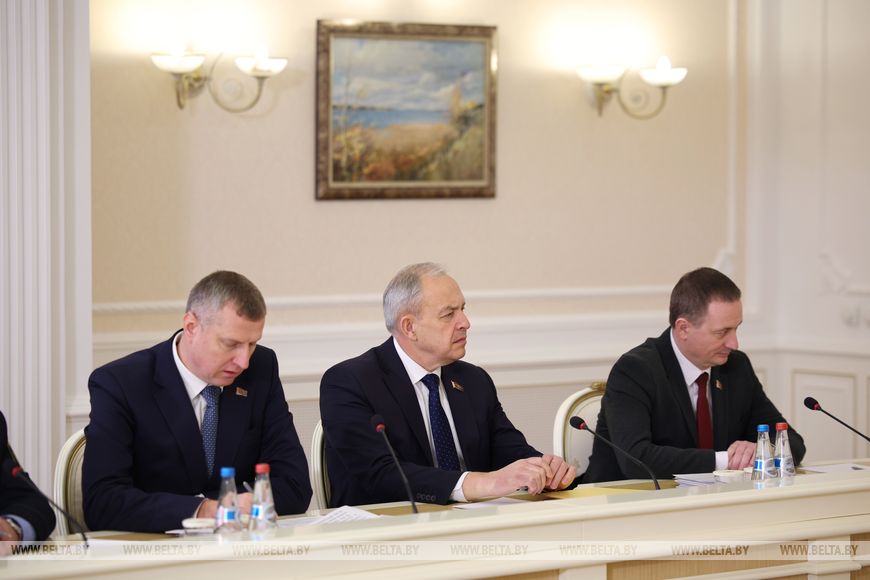
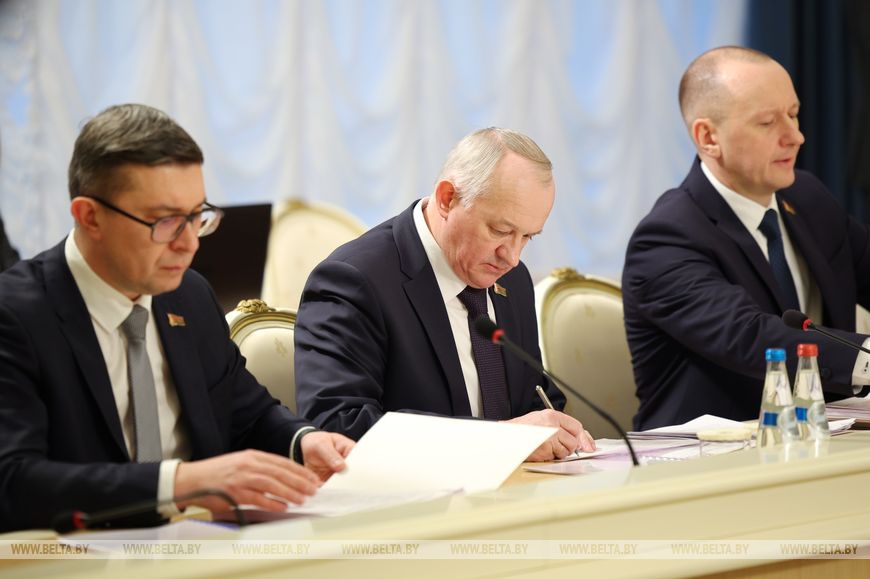
The head of state noted that reducing the operating hours of street lighting, even by a short period, results in significant savings for the country. In monetary terms, this is comparable, for example, to the expenses spent on the construction of certain agricultural facilities or additional funds allocated to increase pensions. “Kukharev [Vladimir Kukharev, Minsk Mayor] turned off the lights 15 or even 10 minutes earlier, and they compare us, oh my goodness, to Ukraine! Ten minutes!Has anyone calculated that these 10-15 minutes, as Vladimir Kukharev says, amount to three dairy farms and seven calf nurseries per year in terms of construction costs. But most importantly we will increase pensions from 1 February (I signed the decree). Not much, by 10%, but we raised pensions for pensioners in these conditions. If you take this savings over the year [from street lighting], it practically covers that increase. Just ten minutes,” the president said.
Aleksandr Lukashenko noted that in large cities like Minsk, there are ample additional sources of illumination besides streetlights, including light from buildings, residential homes, shop windows, and so on. Therefore, according to the president, it is difficult to understand how anyone could have supposedly navigated the capital “by touch” or struggled to orient themselves due to adjustments in the city lighting schedule.
The head of state noted that he monitored early in the morning before the meeting how light it was on the street at different times: “I looked out the window one, then again. I stepped outside to understand when can the lights actually be turned off?"
“Credit where it's due: finally, the governor of Minsk Oblast has turned off the lights in the villages around the president's village. Thank you,” Aleksandr Lukashenko noted.
He tasked responsible officials with once again analyzing and, if necessary, further optimizing the operation of the street lighting system, taking into account the constantly changing length of daylight. This especially applies to “enlightened” Minsk where people supposedly “groped around the most”, the president noted. Perhaps emphasis should be placed on using photocell relays instead of turning streetlights on or off at specific times. This would provide greater accuracy and, consequently, savings.
The head of state recalled how various decisions were made during the Soviet time, including the switch to winter and summer standard time, and urged for a more economical approach to energy resource consumption. “To gain an hour. An hour of daylight across the country was enormous savings. And what about us? The lights just stay on and on,” he said.
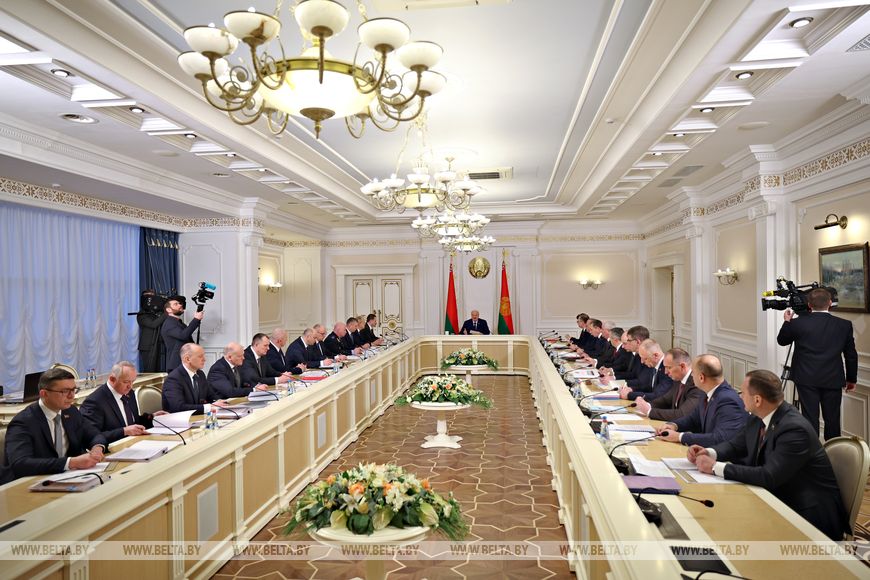
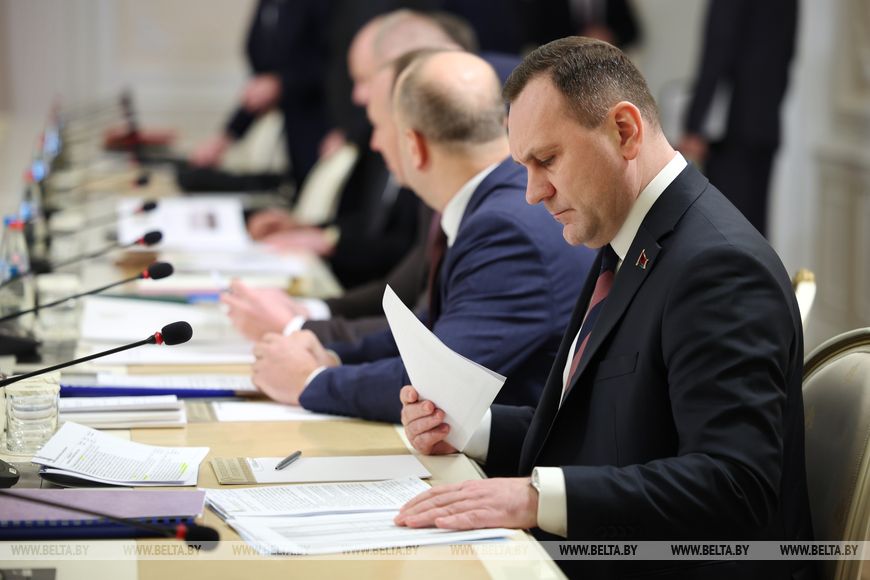
He tasked responsible officials with once again analyzing and, if necessary, further optimizing the operation of the street lighting system, taking into account the constantly changing length of daylight. This especially applies to “enlightened” Minsk where people supposedly “groped around the most”, the president noted. Perhaps emphasis should be placed on using photocell relays instead of turning streetlights on or off at specific times. This would provide greater accuracy and, consequently, savings.
The head of state recalled how various decisions were made during the Soviet time, including the switch to winter and summer standard time, and urged for a more economical approach to energy resource consumption. “To gain an hour. An hour of daylight across the country was enormous savings. And what about us? The lights just stay on and on,” he said.
Regarding Belarus’ own nuclear power plant and the electricity it generates, Aleksandr Lukashenko pointed out that operating the plant, maintaining it, and refueling it on schedule all require significant expenditure. “A single refueling costs $150 million, as construction officials reported to me in the past. Now, it's probably $200 million. Constantly, over five years, we remove uranium rods from the reactor in batches and load new ones in. This is not small money. Everything costs money. So if you’re willing to pay, we can keep the lights on around the clock,” he said.
The president also did not rule out that the over-reporting of the street lighting issue might be an information-psychological operation (PSYOP) against Belarus. “I wonder, where did this topic even come from? A PSYOP by those who self-exiled abroad. They’re the ones who over-hype it from abroad,” the president said. “Then they compared us with Ukraine. How dare they compare us, a 'totalitarian' state, with 'democratic' Ukraine?!” Aleksandr Lukashenko remarked sarcastically. “People should think about what they’re doing. But if there's another PSYOP on one side of the scale, and on the other side - three dairy farms and seven calf nurseries, or a yearly 10% pension increase for retirees… I’d still agree to those 10-15 minutes.”
The president also did not rule out that the over-reporting of the street lighting issue might be an information-psychological operation (PSYOP) against Belarus. “I wonder, where did this topic even come from? A PSYOP by those who self-exiled abroad. They’re the ones who over-hype it from abroad,” the president said. “Then they compared us with Ukraine. How dare they compare us, a 'totalitarian' state, with 'democratic' Ukraine?!” Aleksandr Lukashenko remarked sarcastically. “People should think about what they’re doing. But if there's another PSYOP on one side of the scale, and on the other side - three dairy farms and seven calf nurseries, or a yearly 10% pension increase for retirees… I’d still agree to those 10-15 minutes.”