Government Bodies
Flag Wednesday, 4 February 2026
All news
All news
Politics
21 January 2026, 15:07

Ryzhenkov: Without president's 'Belarusian-style approach' we'd achieve only half our goals


Belarusian foreign policy is peaceful and multi-vector. While not the most popular approach in the modern world, it has remained unchanged for Belarus for over 30 years. Advocating for constructive dialogue and the peaceful resolution of conflicts, Belarus does not interfere in the affairs of other states and is always ready to help those in need. At the same time, the primary focus is always on the interests of its own people and its economy. Enhancing trade and economic cooperation with foreign partners, expanding the presence of Belarusian goods and services in foreign markets, and fostering equal cooperation are the key priorities that he president sets for all  representing Belarus abroad. In an exclusive interview with BelTA, Minister of Foreign Affairs Maxim Ryzhenkov explains how to maintain a human face in foreign policy without betraying one's own interests.

Mr Ryzhenkov, what results from the past year has the Ministry of Foreign Affairs carried into the new year?

The primary achievement, not only of the Ministry of Foreign Affairs but of all Belarus in its foreign policy and economic efforts, has been preserving peaceful skies above our people. This is largely due to the immense contribution of our country’s chief diplomat - the president. Navigating global turbulence, severe contemporary challenges, and threats, he demonstrates the highest level of diplomatic tactics. As the patriarch of our foreign policy and diplomacy, he is the one who shapes the direction of our international engagement. The Ministry of Foreign Affairs provides the president with the tools needed to accomplish various tasks. Certainly, his innate and remarkable charisma attracts many leaders to engage with him. I often observe at international events how numerous leaders practically line up to approach our president: to shake his hand, offer a few words of support, or seek his advice or commentary on political or everyday matters. Our leader is globally valued as someone unafraid to express his opinion directly and to make decisions that may sometimes challenge diplomatic conventions, yet consistently demonstrating their correctness and relevance.

The key outcome of foreign policy activities in 2025 is the establishment of a trusting communication with the U.S. president. We all see how the words and actions by Donald Trump are reshaping the European Union. Our president communicates with him on equal terms, discussing various topics. The opinion of the Belarusian president on issues related to Ukraine, Venezuela, and other topics is valuable to the U.S. leader. Our ship is navigating its course in a tumultuous sea, and this is the achievement of the one at the helm.

What is highly valuable is how the president builds relationships with the closest partners - Russia and China. No other country in the world has such diverse, serious, mutually beneficial, and most importantly, favorable relations with these giants that ensure our stability and security. Many in the West gossip that Belarus, being close to China and Russia, is losing its sovereignty. But being the FM, I see the nature of discussions at the highest level. Despite the differences in the economic potential of Belarus, Russia, and China, it is always an equal conversation among politicians who uphold universal human values and make decisions aimed at maintaining peace on the planet.

How many countries have you visited in 2025 on official or working visits?

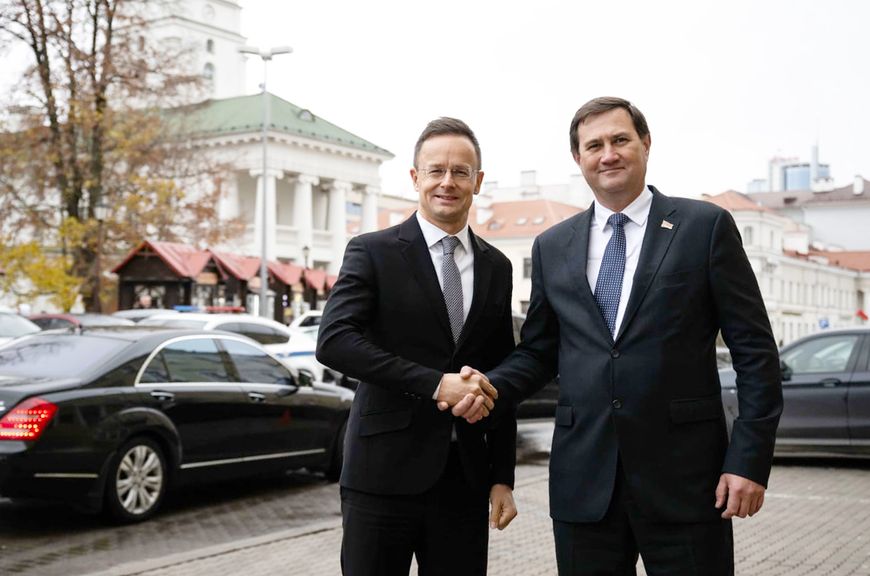
I haven't counted the exact number, but I have visited about 20 countries, some multiple times. The president has set a specific task for the Ministry of Foreign Affairs, which is to expand our presence in faraway countries. In the context of sanctions and the mindless policies of European states, we are forced to redirect our export flows, seek new trade routes and new markets, essentially looking for new friends on the international stage. Therefore, we have focused on countries with which we previously had little to no sporadic contact. It turns out that they understand us, support us, and are waiting for us.

In 2025, we paid a great deal of attention to working with Southeast Asian countries. The focus is not only on trade and economic cooperation, which is a priority, but also on creating joint assembly manufactures and collaborating in healthcare and education. In addition to trade and economic cooperation, the development of interpersonal contacts is also important. If the self-isolating European Union does not want to see either Belarusians or Russians, perceiving us as almost second-class citizens, building fences, and provoking us at the border, then we at the Ministry of Foreign Affairs must do everything possible to provide people with an alternative.

Our people are naturally inquisitive; they love to travel abroad, relax on the coast, and visit landmarks. That’s why we have focused on developing destinations that may interest Belarusians. As a result of this effort, visa waiver agreements have been signed with Colombia, Oman, Myanmar, and Laos, and similar agreements with Thailand and the Philippines are being finalized. Direct flights to Vietnam and Chinese resorts have been launched, and in 2026 we will begin direct flights to Thailand and Israel. This work is aimed at giving our citizens the opportunity to travel without hassle, see interesting places, and offset the previously popular European destinations. Today, traveling to the EU requires spending enormous amounts on visas and tickets and a lot of time. This is a real mockery of people.

Previously, there was a somewhat biased view of Africa among us, perhaps because we all grew up with Chukovsky’s Barmaley: “Children, don’t go for a walk in Africa”. But that’s a stereotype. Africa today is the continent of the future, as our president says. In Africa, Belarusians are seen as partners who come with technologies and products, ready to help African countries develop and strengthen their independence and sovereignty. Intensive work is underway with Ethiopia, Algeria, Uganda, Nigeria, Zimbabwe, and other countries across various fields. African nations are very grateful to Belarus and to our president for agricultural mechanization programs, assistance in ensuring food security, and training professionals for the most in-demand sectors, including healthcare, engineering, and education.

What do these countries know best about Belarus, beyond official information?

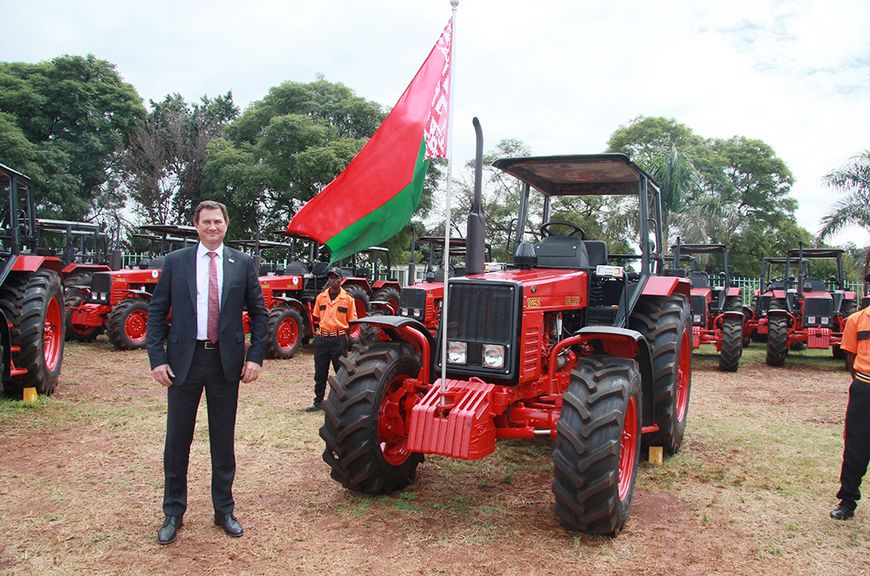
Around the world, it’s known that Belarus has the most beautiful women. And in every country I’ve visited, people mention this. The BELARUS tractor is highly valued in many parts of the world. During the Soviet era, our tractors played a crucial role in agriculture across a vast number of countries in Southeast Asia, Africa, Latin America, and even the USA and Canada. Recently, the speaker of Pakistan’s parliament sent me a video showing a 1990 BELARUS tractor working on his private farm -reliable as a Kalashnikov. It’s no surprise that we have a joint tractor assembly and manufacturing program with Pakistan today. In countries facing acute food security challenges, potash fertilizers are absolutely vital. Of course, they know Belarus is one of the world’s leading producers.

Our role in defeating the fascist coalition, the suffering and genocide endured by our people, is widely recognized across the globe. Many know the history of the Brest Fortress well. For instance, during his visit to Minsk, the Sultan of Oman showed great interest in the Museum of the Great Patriotic War. Many countries are keen to learn from Belarus’ experience in overcoming the consequences of the Chernobyl nuclear accident. This topic is particularly relevant for Algeria, where the French conducted nuclear tests and where cancer rates remain high today. They are looking for countries that can help address these problems and recognize the expertise of Belarusian healthcare, understanding that we have accumulated significant experience in this field since Chernobyl.

In 2025, Belarus held the presidency in the EAEU. What were the results?

One of the main achievements of the Belarusian presidency, in my view, is that we elevated the international standing of our organization to a qualitatively new level. In 2025, a provisional free trade agreement was signed between the EAEU and Mongolia, an economic partnership agreement with the United Arab Emirates, and a free trade agreement with Indonesia. This is a major step, as these countries are promising partners for our union. We presented our union on the international stage as one of the centers of economic strength. We held EAEU Days at the UN platform in Geneva and, in parallel, presented a review of the union’s sustainable development at the UN.
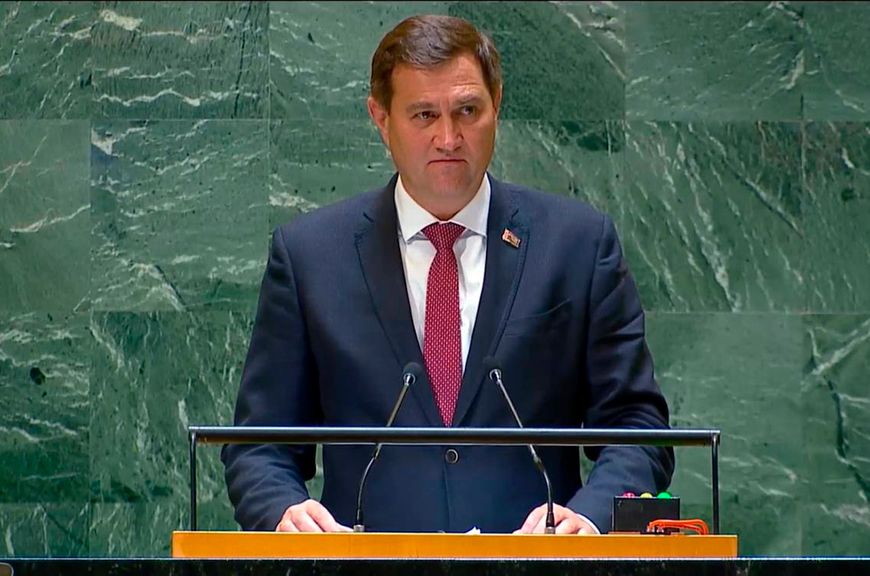

During the year of Belarus’ presidency, we were able to finalize two extremely important documents that define the long-term development direction of the union: the Declaration on the Further Development of Economic Processes within the Eurasian Economic Union until 2030 and for the Period until 2045 – The Eurasian Economic Path, and the Eurasian Economic Development Plan until 2040. Essentially, together with our partners, we have laid the groundwork for the development of our union for years to come. We promised to complete this work during our presidency – and we have delivered.

In my opinion, we held excellent Eurasian Economic Forum and Supreme Eurasian Council meetings. Minsk hosted not only the heads of member states but also leaders of observer states and partner countries. In total, high-level and top-level delegations from 33 countries came to us. The Economic Forum brought together over 2,500 participants who spent several days discussing further cooperation within our regional association. During our presidency year, we truly accomplished a great deal of work. And I am not ashamed of how we handled this year.
A purely Belarusian approach: to do the best, and to do it with the highest quality…

Agreed. On the one hand, it’s purely Belarusian; on the other, it’s a purely presidential approach. Without the latter, just the Belarusian one, we probably would have achieved only half of what we planned.

Mr Ryzhenkov, you lead the Foreign Affairs Ministry with a presidential approach, given that you know it well, don’t you?

Eighteen years of service in the President Administration have not gone unnoticed. Certainly, in the ministry I try to instill the same approaches in my staff: prompt execution of assignments, quick decision-making, and most importantly, precise fulfillment of the head of state’s instructions. This work is even more demanding than the 24/7 schedule. Every employee of the ministry knows they must always be available, as the diplomatic service doesn't operate on a regular schedule. The international agenda is very intense, and tasks can arise at any time of day or night, often requiring immediate response and decisions. The information service of the MFA works especially actively in this mode. I am proud of the MFA team for adopting my “down‑to‑earth” approach to work. We have moved away from the white‑collar style of diplomacy common in many countries, with abstract discussions about the fate of the world and grand matters. The Ministry of Foreign Affairs team focuses on concrete tasks for the benefit of our country.

Let’s return to the international agenda. Do you think we should expect a thaw in relations with our European partners?

Of course. To be honest, I most of all expect that cooperation will be restored most quickly with Poland. This is a country that sees itself as a genuine regional leader and does everything to achieve that, pursuing a pragmatic policy which does not allow for any room for error. Cooperation with our self-exiled opposition is a dead end for them. I believe that they will come to realize this, put an end to this story, and start building cooperation in the interests of the people on both sides of the border, returning to trade, economic and human interaction with Belarus. Lithuania, unfortunately, is a country where politicians neither think nor intend to think about their own people. Their positions are owed not to the Lithuanian people, but to Brussels or Washington. And they will do whatever they are told from there. This makes them unpredictable. It is difficult to work with a partner who wakes up with a headache and goes to bed with a toothache, as their mood can change accordingly. When a window of opportunity for cooperation opens, it may be necessary to think carefully about how far to open the window and whether it is worth opening it at all.
Speaking of 2025, we should recall that last year the UN marked its 80th anniversary. In late December, the United Nations Sustainable Development Cooperation Framework for the Republic of Belarus for 2026-2030 was signed. However, today, there are increasing voices that the UN is losing its authority. What do you think about this?

There is no other universal organization that unites all the countries of the world, so everything must be done to support the continued existence of the UN. Criticism of the UN often reflects not a desire to "dismantle" it, but rather a disappointment with its lack of involvement in solving certain problems. The UN should be a structure that benefits everyone, not just certain political players, and its principles must be binding on all members. If the collective West calls for adherence to UN principles, then it must also be ready to follow them itself. However, this is not always the case. What is happening instead? An effort to place their own people at the head of the UN system or its key departments, and to use them to advance their policies. This must certainly be avoided if we want to preserve the UN as a unified mechanism for dispute resolution and consensus-building, as it largely was before the collapse of the USSR. Back then, the UN was at the center of resolving conflicts; today, it is on the sidelines.

Certainly, states that care about the organization’s future express their criticism and call on UN leaders to provide more objective and fair assessments of current events. Almost all international organizations are built on the same principles as the UN: non‑interference in internal affairs, respect for the sovereignty of other states, and resolving issues through dialogue. If the UN continues to be influenced by countries that manipulate the international agenda to pursue their own national interests through the UN, then other, alternative organizations will prove more effective in addressing issues, at least within their own regions.

How do you feel about your speech at the UN General Assembly? It must be a notable event in your career.

After 18 years of work in the Belarus President Administration and participation in many events at the level of the head of state, speaking at the UN is not that difficult. At the administration, I had to oversee the process of preparing the president’s speeches at the Belarusian People’s Congress, supervise the preparation of the president’s address to the people and parliament, and the preparations for other major events. That left a more vivid impression on me than the speech at the UN General Assembly. Because shaping the president’s schedule, preparing draft decisions, carrying out the head of state’s instructions, all of this affects the lives of our people. And that carries far greater responsibility than addressing the UN.

The president once said at a meeting with heads of diplomatic missions: “We have wartime conditions, and diplomats are essentially military people too.” Maxim Vladimirovich, how do you combine diplomatic and military approaches in your work?

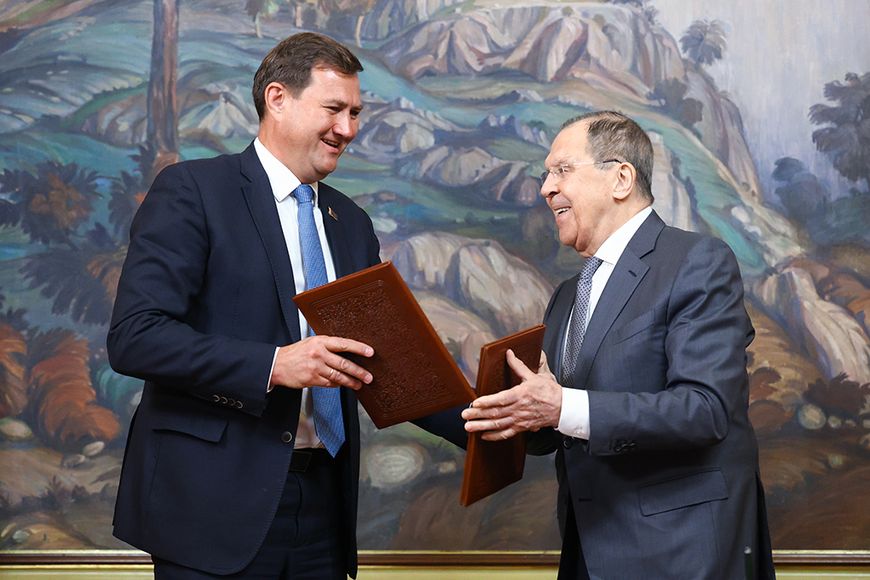
The diplomatic service is akin to the military in its nature, in its attitude to service. First and foremost, in work organization, discipline, loyalty to one’s country, and the highest level of patriotism. I believe these are immutable principles of both the military and diplomats. As the saying goes: when diplomacy speaks, guns are silent. The State Secretariat of the Security Council and personally Secretary of State Aleksandr Volfovich perceive the Ministry of Foreign Affairs as part of the overall power bloc and always invite us to meetings on issues of ensuring security in the country and responding to external challenges and threats. To cope with multiple challenges and threats facing our state, in addition to strengthening defense capabilities and enhancing the country’s security, counteraction along diplomatic lines is also needed. Forming a pool of friendly countries for joint counteraction to challenges and threats, securing the support of these countries, establishing a legal framework are the tasks of the Ministry of Foreign Affairs in this area. For example, in 2024 we signed a security guarantees treaty with Russia, which also included provisions on the use of nuclear weapons. And the Ministry of Foreign Affairs is responsible for this document. That is, figuratively speaking, we are not engaged in military defense, but we build many elements of the overall system for countering challenges and threats from outside.
You are often asked how diplomatic experience helps in sports work. But how does sports experience help in diplomatic work?

First, the very process of sports training, active engagement in sports, forged a very strong inner core. Frequent flights, time zone changes, marathon-style negotiations would be many times more difficult without training and mental and physical fortitude for such challenges. Second, sport is itself great diplomacy. For any diplomat, the sporting achievements of their country are an excellent aid in building international dialogue. Many politicians today are interested in sports. And they are interested in a country whose president actively plays hockey, a country that gave the world a tennis world number one, the first-ever two-time Olympic champion in trampoline, and a four-time Olympic champion in biathlon. These are good points on which interesting political and diplomatic contacts can be based.

Journalists know you as a very open and sincere speaker. Does this character trait not hinder ministerial work?

There are things that journalists cannot get from me despite my openness and sincerity. It is important to speak directly, to explain the president’s approaches and requirements in foreign policy and economy in simple language. It is necessary to speak directly and openly to convey our messages and our position both to like-minded people and to those with whom a very difficult dialogue is underway. And, as a rule, openness and sincerity are aimed at projecting externally exactly what needs to be projected. For example, in our relations with the Europeans, it is necessary to clearly understand their perspective, because false assessments and illusions lead to ill-considered decisions. Therefore, one has to speak openly and directly so as not to create illusions. We have red lines we will never cross, and our partners should know about them.

Can you already announce any plans on the foreign policy for 2026?

The plans for 2026 will be no less ambitious than the plans for 2025. This is precisely the case where a minister’s openness has its limits. As for the schedule of the head of state’s international contacts and meetings, Belarusian initiatives on the foreign policy and all such things require silence at the preparation stage. Therefore, I will simply say in the very words of the president: it will be very interesting.
Valeria STETSKO,
photo by the MFA press service,
BelTA
Follow us on:
X
Recent news from Belarus