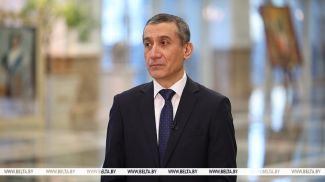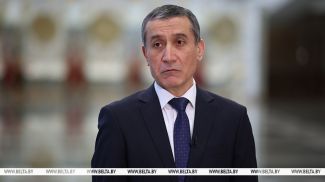

MINSK, 9 March (BelTA) - Political elites in the EU are beginning to consider normalizing relations with Belarus, Belarusian Minister of Foreign Affairs Maxim Ryzhenkov said on the air of the Belarus 1 TV channel, BelTA has learned.
“We can see, based on information we receive from Western countries, primarily the European Union, that the mindset of their political elites is shifting toward seeking ways to normalize relations with Belarus. Many of those who remain in power in these countries are the very people who were the architects of the unrestrained sanctions policy against Belarus and Russia,” the minister emphasized. “In reality, everyone understands that this sanction policy has produced none of the results they expected. The political systems in Belarus and Russia have not changed. Power has only become more consolidated around its leaders and around the public associations that form the foundation of societal development in our states.”
Maxim Ryzhenkov noted that the sanctions imposed on Belarus are now backfiring on Europe. However, European politicians cannot openly admit they were wrong, as they would immediately face uncomfortable questions, for example, whether their decisions were worth the internal problems that have accumulated in the EU over the years, or the disruption of multicultural and humanitarian ties.
“This entire policy is, above all, damaging to the countries of the European Union. Someone needs to be held accountable for this. This is why we hear such appeals that Belarus should supposedly do something more, in some ‘humanitarian’ dimension, so that they can save face before their voters and say that Belarus has taken some steps,” the minister said. “But steps have been taken. You wanted certain people released – people who nearly brought our country to the brink of collapse? They were released. Where is your reaction to these humanitarian steps taken by our president? There is none. Instead, you say: do something else. It doesn’t work that way.”
Maxim Ryzhenkov stressed that cooperation must be mutually beneficial, which means joint steps are required.
“It cannot be a constant mantra that you must, must, must. In the end, no one owes anyone anything. And we are developing perfectly well, strengthening our relations with Russia, China, Iran, the Middle East, and Africa. I can say that over these six years we have reoriented practically all of our major trade flows. We have not lost anything in exports, and growth continues. We have ensured our technological security and stopped depending on the European Union,” the diplomat noted.