
What exactly are European leaders saying, and what's the reaction from Moscow? We break it down in this BelTA overview.
Macron's false start
As early as 19 December, following the EU summit in Brussels, French President Emmanuel Macron stated that it was time for Europe to resume dialogue with Russia.
“I believe that it's in our interest as Europeans and
Ukrainians to find the right framework to re-engage this discussion. Otherwise,
we’ll end up talking amongst ourselves with negotiators who will engage with
the Russians alone, which isn’t ideal,” the French leader said.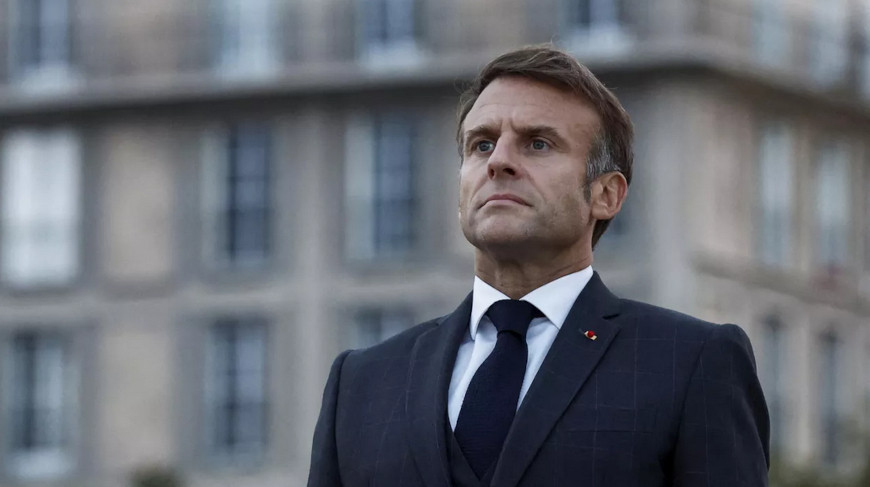 Following this, the French news agency Agence
France-Presse (AFP) reported that the Élysée Palace would “decide in the coming
days on the best way to proceed”. However, a few days later, AFP reported that
Macron currently has no plans for a phone call with Russian leader Vladimir
Putin. A trip by Macron to Moscow is also not planned.
Following this, the French news agency Agence
France-Presse (AFP) reported that the Élysée Palace would “decide in the coming
days on the best way to proceed”. However, a few days later, AFP reported that
Macron currently has no plans for a phone call with Russian leader Vladimir
Putin. A trip by Macron to Moscow is also not planned.
Then, in the new year, at the beginning of January, the French president stated in an interview with France 2 television his intention to hold talks with Putin as soon as possible. “Everything should be organized in the short term. The process of re-establishing contact is currently underway, and it should take place in the coming weeks,” Macron said.
Incidentally, in this same interview, the French president mentioned the possible deployment of several thousand troops to Ukraine after the conflict ends, a prospect Moscow has made clear is unacceptable.
On 14 January, the Russian news agency TASS, citing a source in French diplomatic circles, reported on Paris's readiness for dialogue with Moscow through bilateral or multilateral diplomatic channels. It was simultaneously noted that the Élysée Palace had not yet begun preparations for contacts between the two presidents.
Macron's proposals to resume dialogue with Russia have also drawn the attention of Western media. For instance, Mark Galeotti, a commentator for the British publication The Spectator, called the French leader's approach absolutely right. He noted that there is a growing understanding in Europe that simply ignoring Putin is not working. At the same time, Galeotti believes that European countries should act as a unified whole in negotiations with Moscow. “This is something where the E3 – the informal trio of the UK, France and Germany – ought to come to the fore,” The Spectator commentator argues.
However, within the “E3” (European troika) itself, there appears to be no unified position on relations with Russia. According to the German Der Spiegel, following Macron's proposal to resume dialogue with Russia, disagreements between Paris and Berlin have intensified. The exact nature of Germany's dissatisfaction, however, remains somewhat unclear: is it the very possibility of re-establishing contacts with Moscow, or Macron's proactive approach, which Berlin evidently perceives as a political false start?
After all, by proposing to resume the EU’s dialogue with Moscow, the French president did not deem it necessary to coordinate his position with European allies, including German Chancellor Friedrich Merz. Given the rivalry between Berlin and Paris on the EU’s political stage, it is worth assuming that Germany perceives Macron’s initiative as an attempt to pull the blanket to his own side.
Meloni supported that
Calls to resume dialogue with Russia are also being heard in Italian political circles.
As far back as December, Italian Deputy Prime Minister Matteo Salvini criticized Brussels’ policy toward Russia and called for a return to diplomacy. He stated that Europe is essentially boycotting the peace process on Ukraine, shifting its internal problems onto its foreign policy.
“We are not at war with Russia, and I do not want my children to fight against Russia. When a power possesses 6,000 nuclear warheads, dialogue is the best way forward. So let Trump, Zelensky, and Putin reach an agreement without derailing the process,” Matteo Salvini said.
He also pointed out that 19 packages of anti-Russian sanctions have not weakened Russia, but rather the European Union’s economy. “If neither Hitler nor Napoleon succeeded in bringing Moscow to its knees, I doubt that Kaja Kallas, Macron, Starmer, and Merz could do so,” the politician stressed, adding that the threats to Europe come not from the east, but from the south, from where migrants are arriving.
On 9 January, Italian Prime Minister Giorgia Meloni also spoke about dialogue with Moscow. “Salvini, like Macron, has expressed views on Italy’s relations with Russia. In this case, I think Macron is right: I believe it is time for the EU to also begin negotiations with Russia,” TASS quoted Meloni as saying.
She noted that it is currently unclear who should act as the EU’s negotiator. “We should not all go our separate ways. I have always been in favor of appointing a special envoy for Ukraine,” the prime minister stated.
Meloni also did not rule out the possibility of Russia’s return to the G7 format, although she said that currently, the conditions for this do not exist.
“We have to see when peace will be achieved and under what conditions,” said Meloni.
Is the EU in search of a negotiator?
Statements by Italian and French leaders on the need for the EU to open diplomatic channels with the Kremlin have gained traction in Brussels and some other European capitals, writes the European publication Politico, citing sources. The publication notes that European governments are pressuring the EU to appoint a negotiator to represent their interests on Ukraine and for dialogue with Moscow.
“French President Emmanuel Macron and Italian Prime Minister Giorgia Meloni have joined forces in recent weeks to call for the opening of diplomatic channels to Russian leader Vladimir Putin and his inner circle,” Politico writes.

The main drivers for dialogue with Russia are primarily motivated by fears that U.S. President Donald Trump will push Europe to the sidelines in matters of Ukrainian settlement.
“Macron has been advocating in the last days that, in view of the bilateral discussions between the Americans and the Russians, it is important to play at least a role in the discussion,” a senior French official said. “Meloni very much supported that. They’re not naive about what can be reached through these discussions, but on the balance between not engaging and engaging, there’s a growing appreciation [of the merits of engaging] in some capitals.”
“There are some issues which cannot be discussed with [only] the U.S. when they have direct implications on our security as Europeans,” the official said.
According to Politico, European leaders discussed the idea of appointing a special representative on Ukraine at the EU summit back in March 2025. The initiative received broad support, but ultimately no decision was made.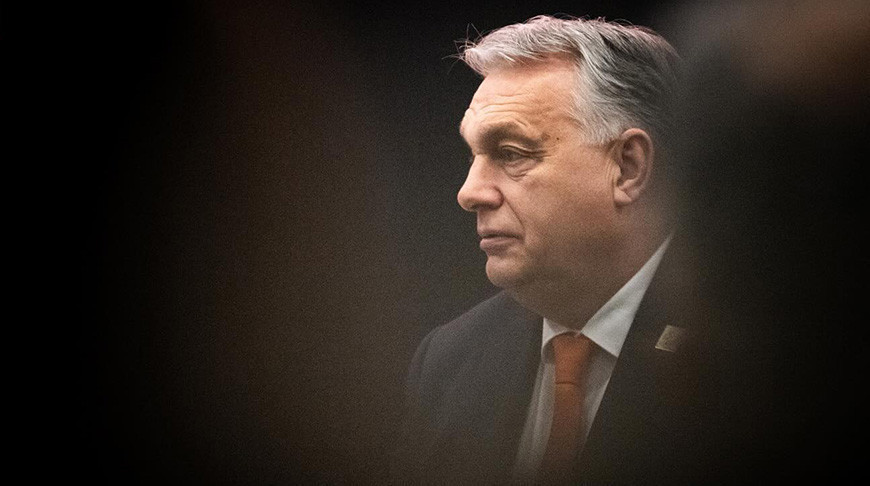
Currently, former Italian Prime Minister Mario Draghi and Finnish President Alexander Stubb are being considered for the role of EU negotiator. Meanwhile, Finnish politician Armando Mema, a member of the national-conservative party Freedom Alliance, believes that Meloni should play the leading role in dialogue with Russia. “Meloni is doing more for peace and diplomacy than Kaja Kallas. Meloni should be given the leading role in establishing peace on behalf of Europe,” the politician stated.
As for Brussels’ position, it was recently voiced by European Commission Spokesperson Paula Pinho. She said that at some point the European Union will have to negotiate with Russia, but that moment has not yet come. In her view, Russia “does not want peace”.
Moscow is ready for dialogue, but with whom and about what?
Statements by European politicians in favor of dialogue with Moscow did not go unnoticed by the Russian side. Thus, Russian Foreign Minister Sergey Lavrov stressed Russia’s readiness for dialogue, but only with observance of basic norms of decency.
“I won’t even comment on Macron’s statement that it is necessary, after all, to talk with Russia. Just read what he has said over the past couple of months, starting with the claim that the only villain in this whole story is Russia and personally President Putin. If he is ready to talk, then our president has repeatedly emphasized that he is always open to contacts, but with the understanding that they will be polite people with at least some basic manners,” the diplomat said.
Meanwhile, Kremlin spokesman Dmitry Peskov stated that the Kremlin will inform the public if proposals are received to resume dialogue between the leaders of Russia and France. In a conversation with RIA Novosti, Dmitry Peskov emphasized that any possible dialogue between Putin and Macron should be an attempt to understand each other’s positions, not a lecture. “Putin is always ready to explain his positions, to explain them to his interlocutors in detail, sincerely, and consistently,” he said.
Member of the Federation Council Committee on Constitutional Legislation and State Building Alexei Pushkov also expressed his opinion.
“Following Macron, Italian Prime Minister Giorgia Meloni declared that the time has come for negotiations with Russia. In this regard, two questions arise. The first one: what kind of negotiations? Bilateral or on behalf of the EU?” Alexei Pushkov wrote on his Telegram channel. He noted that so far, within the EU, only the prime ministers of Hungary and Slovakia have spoken in favor of negotiations, while the European Commission and its head Ursula von der Leyen have refused to even consider the idea.
“The second question is: what is the topic of negotiations? After all, the platform from which the EU speaks, consisting of support for all of Kiev’s demands, can hardly serve as the basis for productive negotiations. Apparently, neither in Paris nor in Rome do they really know the answers to these questions. But the gradual disintegration of the coalition opposing talks with Moscow is in itself telling,” Alexei Pushkov noted.