
In 1919, U.S. President Woodrow Wilson described sanctions as “something more terrible than war”. And he was close to the truth. Today, illegal unilateral sanctions (the West's favorite weapon) claim no fewer lives than armed conflicts. The most vulnerable - young children and the elderly - are the first to perish under the barrage of sanctions. On average, over 560,000 deaths occur per year. All this happens amid lofty speeches about democracy and human rights. In essence, it amounts to genocide.
Among the countries that have faced sanctions bombardment is Belarus. To build up its armor and protect its people, our state has made tremendous efforts. However, far from all countries have been able to withstand the West's sanctions aggression.
“The study's results show a causal link between sanctions and increased mortality... According to our estimates, unilateral sanctions led to an annual death toll of 564,258 people [data from the sample period 2012-2021], which is comparable to the global mortality rate associated with armed conflicts,” writes the British publication The Lancet, one of the world's leading medical journals.
The authors of the scientific study analyzed the impact of sanctions on people's health in 152 countries across the world from 1971 to 2021. The chain of effects is as follows: sanctions undermine the economy, state revenues decline, the healthcare system lacks funding, and people are unable to access even basic medical care.
The authors of the scientific study analyzed the impact of sanctions on people's health in 152 countries across the world from 1971 to 2021. The chain of effects is as follows: sanctions undermine the economy, state revenues decline, the healthcare system lacks funding, and people are unable to access even basic medical care.
A reduction in foreign currency earnings against the backdrop of sanctions is decreasing the availability of imported goods – including medical ones. Even humanitarian organizations often avoid sanctioned countries, fearing they might fall under secondary sanctions.
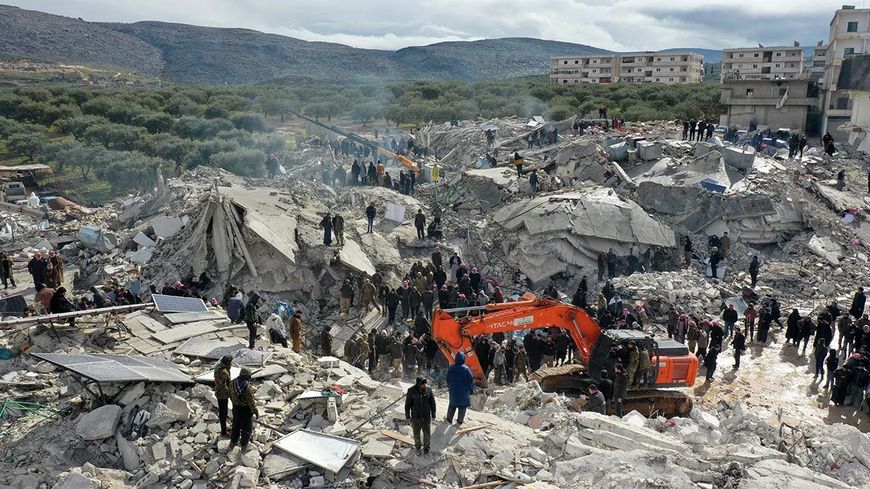
A clear example is Syria. Following the devastating earthquake in February 2023, Damascus appealed to the international community for help. They needed equipment for clearing rubble, medicines, food, warm clothes, and tents for temporary shelter. However, US sanctions were in effect against Syria at that time –which also prohibited third countries from providing direct or indirect assistance to Damascus. Many countries and humanitarian organizations did not dare to go against Washington. Unlike Belarus, which not only sent humanitarian aid but also deployed a field hospital in Syria.
But let’s return to The Lancet study, whose authors examined the impact of unilateral economic sanctions across different age groups. It turned out that the negative effects of sanctions are felt most strongly by children under 5 years old and elderly people aged 60–80.
“Our findings reveal that unilateral and economic sanctions, particularly those imposed by the USA, lead to substantial increases in mortality, disproportionately affecting children younger than 5 years,” writes The Lancet.
Altogether, deaths of children younger than 5 years represented 51% of total deaths caused by sanctions over the 1970–2021 period. It is also noted that the impact of sanctions has a kind of cumulative effect – the longer the sanctions are in place, the higher the mortality rates.
“It is hard to think of other policy interventions with such adverse effects on human life that continue to be pervasively used,” The Lancet publication states.
The study’s authors highlight an interesting point. While U.S. and EU sanctions kill hundreds of thousands of people each year, UN sanctions do not have such devastating effects. This may be because UN decisions are subject to much closer public scrutiny than Western unilateral sanctions.
“Most — although not all — UN sanctions regimes in recent decades have been framed as efforts to minimise their impact on civilian populations, although the extent to which they have achieved this goal remains debated. US sanctions, in contrast, often aim to create conditions conducive to regime change or shifts in political behaviour, with the deterioration of living conditions in target countries in some cases being acknowledged by policy makers as part of the intended mechanism through which objectives are to be attained. The USA — and, to a lesser extent, Europe — also has important mechanisms at its disposal that serve to amplify the economic and human effects of sanctions, including those linked to the widespread use of the US dollar and the euro in international banking transactions and as global reserve currencies,” the study says.
The authors of the study also point out that sanction policies are gaining momentum with each passing year. For instance, 25% of all countries were subject to some type of sanctions by either the USA, the EU, or the UN in the 2010–22 period, by contrast with an average of only 8% in the 1960s. “This increase is driven by the growth of sanctions that have the claimed aim to end wars, protect human rights, or promote democracy,” the study writes.
“From a rights-based perspective, evidence that sanctions lead to losses in lives should be sufficient reason to advocate for the suspension of their use,” the study's authors conclude.
The fact that sanctions hit the civilian population, and above all the most vulnerable categories of citizens, has been stated repeatedly. It is encouraging that this issue is beginning to be raised in the West as well, at least in academic circles. The death toll, over 560,000 per year, is mind-boggling. And if we multiply this number by 25, we get 14 million victims in this century alone.
Defining sanctions as a weapon of mass destruction is no longer a figure of speech. It is a reality. But in that case, what do we call those who use this weapon against a civilian population? And yet, in this scheme, there are those who today call for using sanctions to ‘shoot’ their own homeland and their own people. What to call them, decide for yourself.
Vita Khanatayeva,
BelTA.
Photos: Pexels, AFP, Unsplash