
News of the story
"Victory Parade: Stories and Faces"
The composite regiment of the Karelian Front was the first to march in the Victory Parade in Moscow on 24 June 1945. Among its ranks, in the third row, Sergei Tsarev, a 28-year-old Belarusian radio operator, marched in the third row. Despite the precision of his actions, the veteran recalled that he was unable to contain his excitement.
“He showed fearlessness, courage and bravery”
Sergei Tsarev was conscripted into the Red Army in 1939 and assigned to serve in the north. While on a train with his fellow soldiers heading to Murmansk Oblast, he learned that war had broken out. On 23 June 1941, Sergei Tsarev found himself engaged in battle against fascist forces.
His first combat award was the Medal For Battle Merit. The commendation letter dated 27 October 1943 states: “Senior Sergeant Sergei Tsarev, during combat with the enemy under artillery and mortar fire, ensured uninterrupted radio communication for active units, demonstrating fearlessness, courage and bravery. He carried a functioning 5-AK radio station off the battlefield and preserved its equipment despite artillery and mortar fire. He trained five Komsomol radio operators of the first and second class. He mastered the operation of the radio station to perfection and consistently shared his experience.”
Six months later, Senior Sergeant Sergei Tsarev, head of a radio station, was nominated for another medal – For Courage. On the night of 26 April 1944, Sergei Tsarev ensured uninterrupted communication between the chief of staff and the head of the reconnaissance department, who was leading an operation to capture a prisoner. Despite heavy enemy fire and artillery and mortar shelling, he personally repaired the damaged antenna twice, ensuring that the radio worked flawlessly until the end of the operation.
Sergei Tsarev also distinguished himself during the offensive battles of the 1044th Rifle Regiment, which began on 21 June 1944. He also distinguished himself during raids behind enemy lines when radio was the only means of communication with the division command and other units. Despite the extremely difficult conditions, Sergei Tsarev ensured stable and uninterrupted radio communication. He did this by installing an additional device on the antenna. This allowed the station to operate reliably over distances of tens of kilometers.
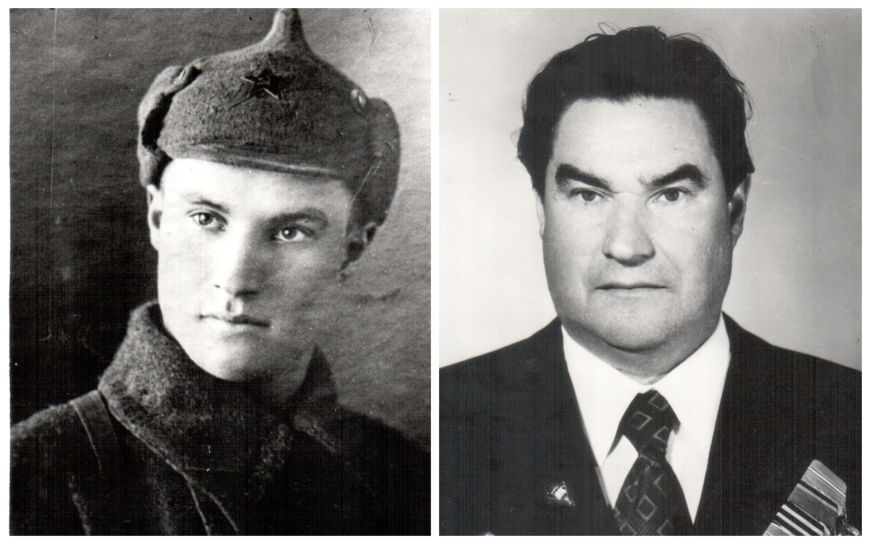
When the equipment was damaged during the fire, Sergei Tsarev volunteered to repair it himself - and managed to do so despite the heaviest enemy shelling. Communication continued to function even when the enemy attacked the regimental command post. And when the regiment began to break out of the encirclement, Tsarev not only helped to transmit orders to the isolated battalions, but also preserved all the radio equipment in good condition. For this, the Red Army soldier was nominated for the Order of the Red Star.
“It was a great honor”
When news came that the Victory Parade was going to be held, Sergei Tsarev was sent to Moscow as a representative of the 755th Separate Signal Battalion of the 289th Rifle Division of the 32nd Army. The veteran marched across Red Square as part of the combined regiment of the Karelian Front. As a signalman, he was assigned to the regiment's first battalion and armed with a light submachine gun.
Recalling the events of the summer of 1945, the veteran often emphasized that being chosen to march in the Victory Parade as a representative of an entire front was a great honor. "A set of strict criteria was used when selecting the candidates. Physical attributes were taken into consideration - height, for instance. You had to have at least three combat awards. By that time, I had the Order of the Red Star and several medals, including the Medal For Courage. There were a few other requirements as well. I met them. We were sent to Moscow in May,” he recalled.
The parade began on 24 June 1945 at a strictly designated time. The combined column was 20 men wide and 50 men long. The regiment consisted of a thousand frontline soldiers.
“It was drizzling. Our regiment marched first. We were not the best, but there were many more distinguished columns that had fought in decisive battles, such as Stalingrad, the Kursk Bulge, the liberation of Belarus and the battle for Berlin. I marched in the third row and saw Marshal Zhukov riding up to greet the column. He was about twenty meters away from me, while Marshal Rokossovsky was even closer. I could not contain my excitement. After leaving Red Square, we formed a new column and marched through Moscow, each regiment following its own route. People in the capital showered us with flowers and kisses.”
“He loved to talk about the Parade”
After the war, Sergei Tsarev completed his studies at the Mogilev Pedagogical Institute by correspondence and began working at the Zakhodskaya Secondary School in Shklov District. He worked as a teacher and deputy headmaster for many years, and for the final thirty years before his retirement, he was the principal. His former students still fondly remember him. Among them is Lyudmila Lukashova, who now teaches mathematics to children in the area.
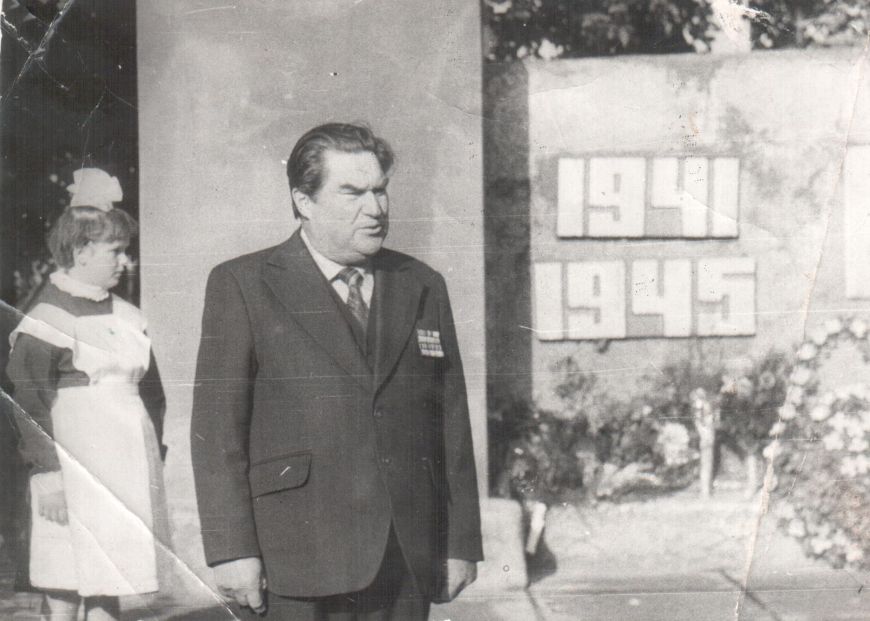
“When I was a schoolgirl, Sergei Tsarev had already retired, but whenever there was a need, he would always agree to substitute for a Russian language and literature teacher who was absent. In total, he taught us about six lessons, but I remember him very well. Especially one phrase. Once, Sergei Tsarev admitted to us that ‘in his lifetime, he had read so many books that they would not fit in a single classroom’. At the time, I did not believe him: those words seemed unbelievable to me as a schoolgirl,” she recalled.
At home, Lyudmila Lukashova carefully preserves an article from the local newspaper that tells the story of a veteran and his heroic past. She said that he rarely talked to students about the war.
“But he loved talking about the Victory Parade in which he took part. It was a very important event for him,” she emphasized.
Her colleague, physical education teacher Aleksandr Timkov, is also one of the veteran’s former students. What he remembers most are Sergei Tsarev’s stories about his pre-war teaching career.
“Sergei Tsarev had worked as a teacher even before the Great Patriotic War. He often recalled that time. He especially liked to talk about how students treated their teachers back then,” Aleksandr Timkov said. “He was also an honored guest at all official events held in our district, including those that took place during my youth at the monument near the school.”
The veteran passed away in 2003, but the school’s administration and teachers continue to carefully preserve the memory of their legendary colleague and pass it on to students. Five years ago, a memorial plaque was installed on the building of the Zakhodskaya School, where Sergei Tsarev had worked for many years.
Sergei Tsarev received numerous awards, including the Order of the Red Star, the Medals For Courage and For Battle Merit. In peacetime, he was honored with the badge Excellence in People's Education, the Order of the October Revolution, the Medal For Labor Valor, and commendations from the Supreme Soviet of the BSSR.
Yulia GAVRILENKO,
7 Days newspaper