
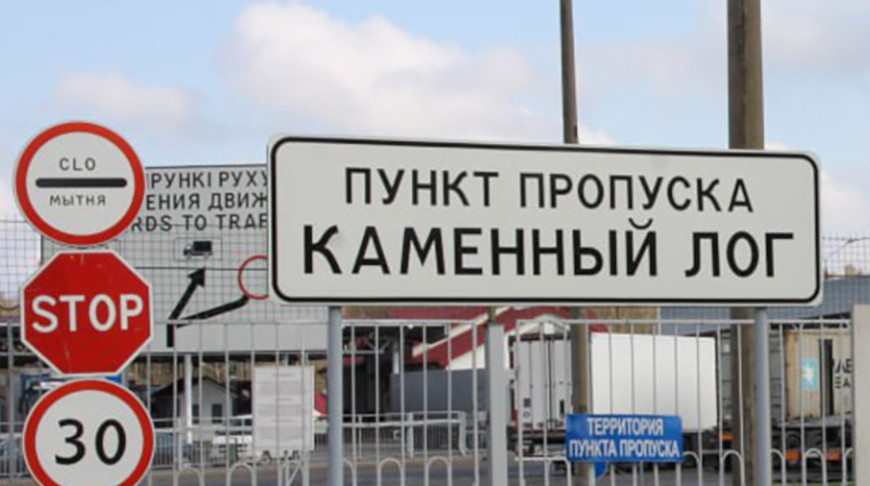
MINSK, 6 February (BelTA) - The State Customs Committee plans to reconstruct the road checkpoint Kamenny Log and will continue digitalization projects, Chairman of the State Customs Committee Vladimir Orlovsky said at a board meeting taking stock of 2025 and outlining tasks for the current year, BelTA has learned.
“Despite unstable operations, the opening and closing of neighboring checkpoints, and queues at the border, the development of border infrastructure continues. In 2025, we completed the construction of the Kozlovichi waiting area, which accommodates 790 vehicles. Together with the trade and logistics center, it has formed a modern logistics complex right in front of the checkpoint. We also began construction and installation works in the waiting area of the Brest checkpoint,” Vladimir Orlovsky said.
In April 2025, after reconstruction the Berestovitsa road checkpoint was put into operation; in September 2025, the major overhaul of the Vidzy checkpoint was completed.
“The main task for the next four years is the reconstruction of the Kamenny Log road checkpoint. We are planning to create new infrastructure that meets modern requirements enabling efficient customs, border, and other types of controls with minimal time, and increasing the checkpoint's throughput capacity threefold,” he said.
Mobile and stationary inspection and screening complexes are actively utilized for customs control. In 2025, the stationary complex at the Kozlovichi checkpoint was modernized. Three new mobile complexes were acquired. For the first time, scanning equipment produced in China has been installed on chassis from the Belarusian MAZ. One such unit has already been put into operation at the Kamenny Log checkpoint on the border with Lithuania.
Another effective control mechanism is the tracking system using navigation seals. In 2025, over 360,000 such devices were deployed, of which more than 31,000 were used for shipments within the territory of Russia under the Union State framework. Starting 11 February, tracking of shipments will commence in accordance with the agreement on the use of navigation seals within the Eurasian Economic Union.
A digital platform for customs authorities has been established. Now, in addition to electronic customs declaration and risk management systems, software tools automating law enforcement activities, post-customs control, expert work, and other functions are being gradually implemented. Over the past year, approximately 115 tasks related to the development of information systems have been completed. A certified customs cybersecurity center has been set up, becoming an integral part of the national system.
“The objective for 2026-2030 is to develop an 'intelligent customs' system,” Vladimir Orlovsky added.
Discussing the border situation in 2025, Vladimir Orlovsky noted that it remained challenging. For instance, on 12 September, Polish authorities completely blocked road and rail traffic for two weeks. Subsequently, on 27 October, Lithuania closed the two remaining road checkpoints without prior notice. Only the Latvian checkpoint [Pāternieki], adjacent to Grigorovshchina, operated, albeit slowly, without closures.
“Compared to 2024, the flow of goods decreased by 26%, and the number of trucks crossing the border dropped by 21%. Only toward the end of the year, after Poland reopened two road crossings on 16 November [Kuznica Białostocka and Bobrowniki)did a trend toward gradual stabilization at the border begin to emerge. However, Kuznica Białostocka (Bruzgi on the Belarusian side) was reopened by the Polish side only for passenger traffic,” Vladimir Orlovsky said adding that customs authorities were prepared for the reopening of the checkpoints, and operations resumed without issues.
“Despite unstable operations, the opening and closing of neighboring checkpoints, and queues at the border, the development of border infrastructure continues. In 2025, we completed the construction of the Kozlovichi waiting area, which accommodates 790 vehicles. Together with the trade and logistics center, it has formed a modern logistics complex right in front of the checkpoint. We also began construction and installation works in the waiting area of the Brest checkpoint,” Vladimir Orlovsky said.
In April 2025, after reconstruction the Berestovitsa road checkpoint was put into operation; in September 2025, the major overhaul of the Vidzy checkpoint was completed.
“The main task for the next four years is the reconstruction of the Kamenny Log road checkpoint. We are planning to create new infrastructure that meets modern requirements enabling efficient customs, border, and other types of controls with minimal time, and increasing the checkpoint's throughput capacity threefold,” he said.
Mobile and stationary inspection and screening complexes are actively utilized for customs control. In 2025, the stationary complex at the Kozlovichi checkpoint was modernized. Three new mobile complexes were acquired. For the first time, scanning equipment produced in China has been installed on chassis from the Belarusian MAZ. One such unit has already been put into operation at the Kamenny Log checkpoint on the border with Lithuania.
Another effective control mechanism is the tracking system using navigation seals. In 2025, over 360,000 such devices were deployed, of which more than 31,000 were used for shipments within the territory of Russia under the Union State framework. Starting 11 February, tracking of shipments will commence in accordance with the agreement on the use of navigation seals within the Eurasian Economic Union.
A digital platform for customs authorities has been established. Now, in addition to electronic customs declaration and risk management systems, software tools automating law enforcement activities, post-customs control, expert work, and other functions are being gradually implemented. Over the past year, approximately 115 tasks related to the development of information systems have been completed. A certified customs cybersecurity center has been set up, becoming an integral part of the national system.
“The objective for 2026-2030 is to develop an 'intelligent customs' system,” Vladimir Orlovsky added.
Discussing the border situation in 2025, Vladimir Orlovsky noted that it remained challenging. For instance, on 12 September, Polish authorities completely blocked road and rail traffic for two weeks. Subsequently, on 27 October, Lithuania closed the two remaining road checkpoints without prior notice. Only the Latvian checkpoint [Pāternieki], adjacent to Grigorovshchina, operated, albeit slowly, without closures.
“Compared to 2024, the flow of goods decreased by 26%, and the number of trucks crossing the border dropped by 21%. Only toward the end of the year, after Poland reopened two road crossings on 16 November [Kuznica Białostocka and Bobrowniki)did a trend toward gradual stabilization at the border begin to emerge. However, Kuznica Białostocka (Bruzgi on the Belarusian side) was reopened by the Polish side only for passenger traffic,” Vladimir Orlovsky said adding that customs authorities were prepared for the reopening of the checkpoints, and operations resumed without issues.