We Create the Future – that is the inscription we saw on the door upon entering our hero’s laboratory. That phrase is more relevant than ever, because the newly appointed Chairman of the Young Scientists Council at BSUIR [Belarusian State University of Informatics and Radioelectronics] and postgraduate student Aleksei Borisyuk not only researches microelectronic materials but is also developing an original approach to modifying cells using nanoparticles. This method could become a significant addition to existing treatments for pathologies, including cancer. BelTA observed how he creates real innovations within the university’s walls.
First step
We met Aleksei at his workstation in an office with colleagues. His journey as a scientist began in this very room back in 2020. “Shortly after I joined the laboratory, just a couple of months in, I found myself on a team with another master's student. We were working on a development that received our first youth grant. The topic involved porous silicon and creating metal nanostructures on its surface. The results we obtained later formed the basis for new research into adapting a method, well-established in biomedicine, for the non-destructive analysis of thin films in micro- and nanoelectronics. This method will make it possible to determine the molecular and phase composition of semiconductor nanomaterials without using the expensive vacuum equipment currently required,” he explained.
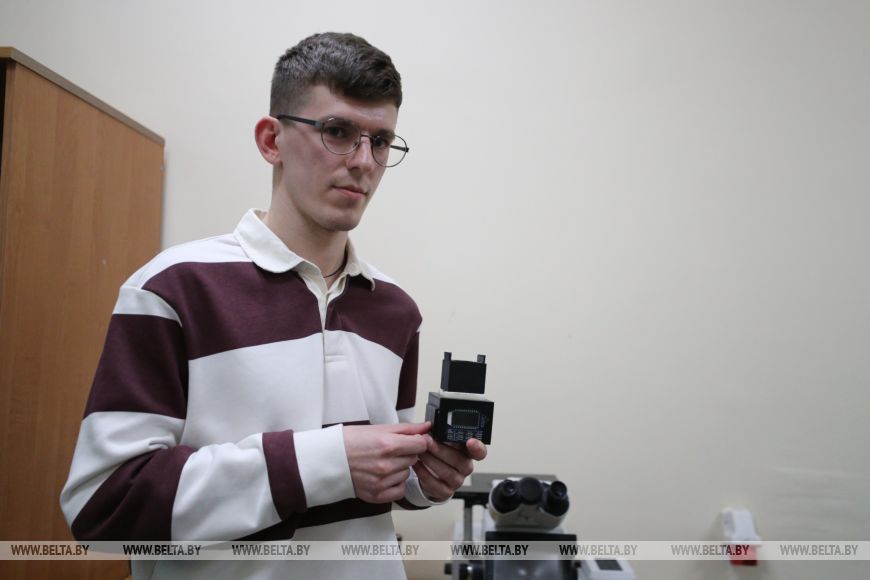
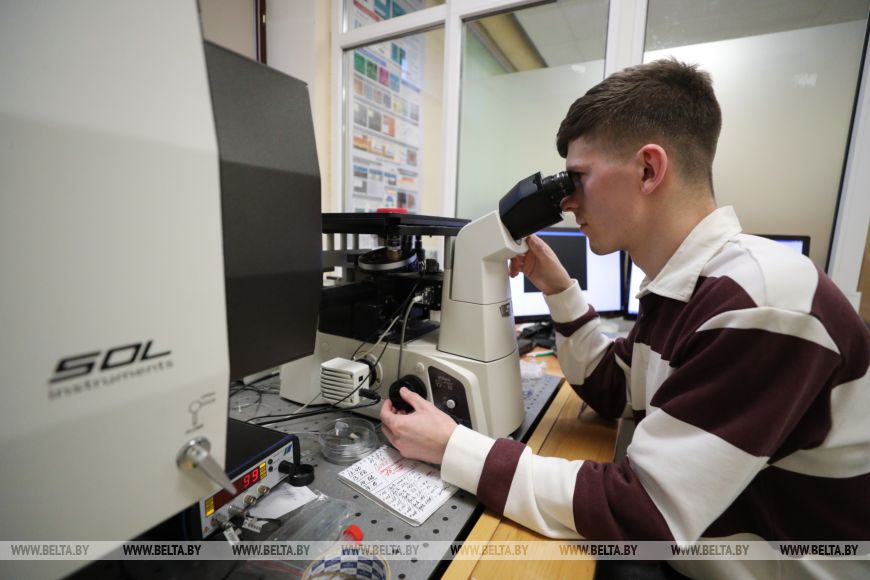
The need for such a development arose during research commissioned by a client. “The pilot experiments lasted about six months. Now we have achieved a result where we can analyze films less than 30 nanometers thick. All that’s needed is to apply silver nanoparticles to their surface, analyze the sample using a special microscope-spectrometer, and the subsequent removal of the nanoparticles does not affect the structure of the original films,” he added. According to Aleksei, a specific spectrum can be observed, which provides the researcher with detailed information about the film’s composition.
“This is critically important for micro- and nanoelectronics. We are currently focused on optimizing the process. In particular, we are using neural networks to analyze a vast number of spectra: they process all the data in a matter of seconds,” the young scientist explained.
Outside the comfort zone
The youth grant was only the beginning of Aleksei’s research journey. The next step was an experiment during the preparation of his third-year thesis. From as early as his school days, the young scientist had an interest in biology and medicine. That’s why he decided to take a risk and merge these fields of knowledge in a new development.
“For a long time, I have been developing a device for light-stimulated electroporation of cells using plasmonic nanoparticles, a task assigned by my academic supervisor. The principle is that pores can form in the membranes of cells located near such nanostructures. Electroporation is of two types: irreversible and reversible. This leads to two distinct applications. The first is antimicrobial coatings. It’s possible to create non-closing pores in the membranes of harmful bacteria, which kills them. The second application is far more interesting. Conditions are created for the formation of temporary pores, through which various drugs can be delivered directly inside cells. This is promising for treating cellular pathologies, including the local therapy of cells in various neoplasms,” the young expert explained.
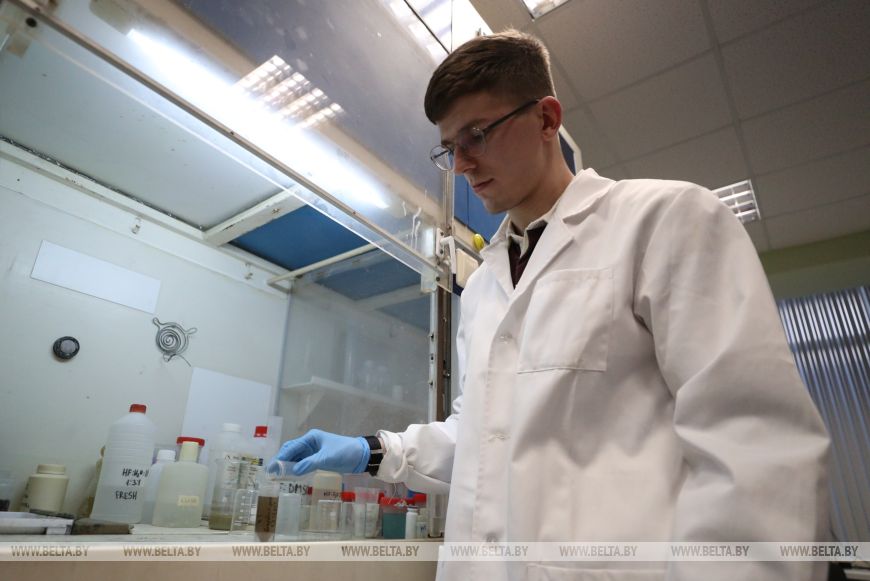
It's astonishing: such a small and lightweight device opens up the prospect, within just a few years, of helping people overcome serious diseases. The development can be proudly called unique. “Overall, the method I’m working to advance is not yet even mentioned in the literature or scientific community. This is truly innovative work. We already have quite positive results and have managed to assemble two setups for testing our approach,” Aleksei shared.
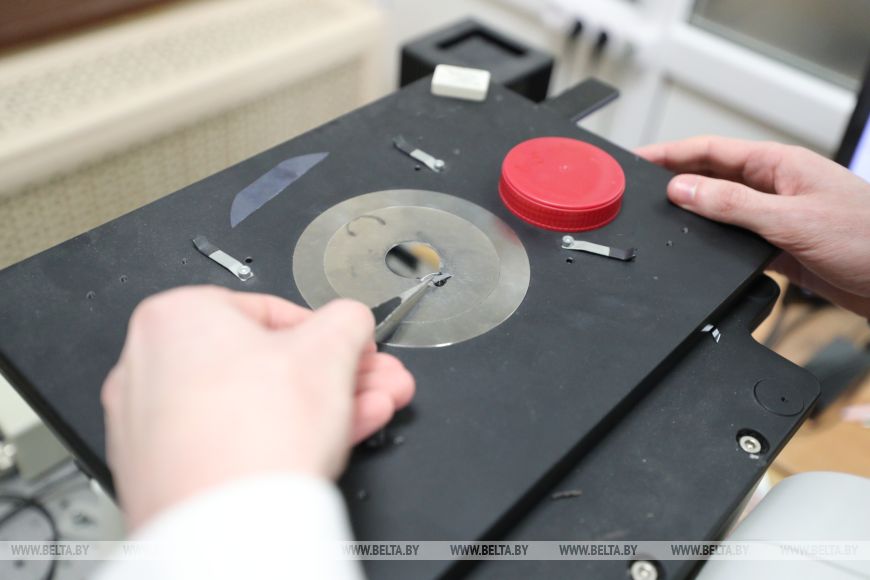
However, on the path to such an interesting technique, there are also challenges - in this case, the necessary equipment. We peeked into the chemistry lab and took stock of what is already available and what is missing. Numerous microscopes, power supplies, glassware, reagents, vacuum equipment, muffle furnaces… It seems that in this creative chaos, you could create just about anything. Alas, it turned out that this arsenal is still insufficient to comfortably bring the scientist’s idea to life. However, right in front of us, he was already synthesizing something in a flask using extracts from various fruits, like grapefruit.
“The problem is, I’m not a biologist and I don’t work in the medical field,” Aleksei said modestly. “Testing the method requires working with cells, and our laboratory wasn’t initially set up for that. Over time, we’ve managed to acquire some skills and learned to cultivate various cell types. However, we lack a number of analysis methods; we need special equipment, dyes to track the cells - things that can sometimes be difficult to obtain.”
There is a solution, namely in uniting and partnering with the best minds. “I believe cooperation with the Institute of Biophysics and Cell Engineering of the National Academy of Sciences of Belarus will help. Also, during a recent internship in Russia, I managed to establish contact with a colleague from the Pacific State Medical University, who has already conducted preliminary experiments to determine the influence of our nanoparticles on malignant cells. Research in this direction will continue in the current five-year period as part of one of the state scientific research programs of the Republic of Belarus. Overall, this is very interesting work, which is why I continue my efforts to this day and hope this invention will meet with success,” the scientist added.
In the view of the young expert, a good scientist is one who is always open to new things and ready to constantly learn new knowledge, absorbing it like a sponge. “Even if you are, let’s say, a tech specialist, you never know what you might need from sciences that seem distant at first glance. A young scientist should develop not just in one field, but in related areas, because this, firstly, broadens one’s horizons and, secondly, might even lead to some new discoveries or ideas you hadn’t even considered before - just as happened with me,” Aleksei emphasized.
Daria Verenich,
photos by Yaroslav Zaretsky,
BelTA.