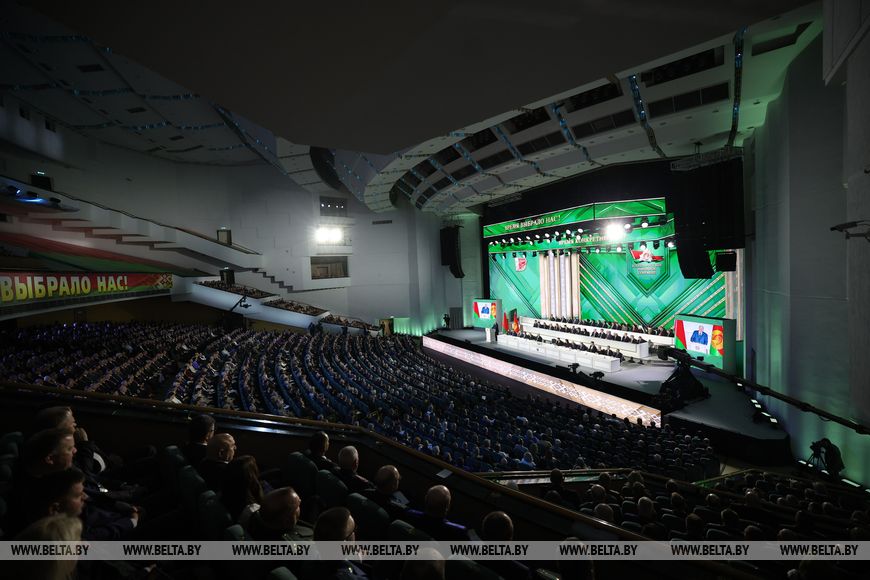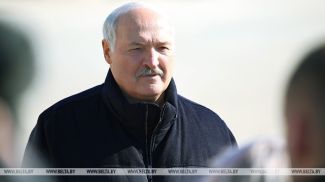

MINSK, 18 December (BelTA) - The domestic agricultural industry needs to drastically reduce its import dependency, Belarusian President Aleksandr Lukashenko said as he addressed the Belarusian people and Parliament in Minsk on 18 December, BelTA has learned.
The president noted that despite the record high harvest, there are considerable gaps in Belarus' agricultural sector, and they must be addressed within the next year. “I strongly urge all stakeholders to engage in this work. The time for persuasion and explanations is over. Only concrete actions and results matter. For the agricultural industry, this means a radical reduction in import dependency,” he emphasized.
The head of state highlighted the importance of establishing a selective breeding and genetic center for poultry farming in the shortest possible time. “This is not just a project; it is the future of our poultry industry. By the way, the leader in the meat sector! We produce so many broilers and laying hens, we have so many eggs per capita, yet, to put it bluntly, where do we get our chicks? From the West," Aleksandr Lukashenko noted. At the same time, he added that the Soligorsk poultry farm has already established a successful foundation on this front.
Another critically important area, according to the president, is domestically bred seeds and a maximum reduction in reliance on foreign alternatives. "Sufficient resources have been allocated to scientists and farmers. The import of seeds will only be allowed using the agricultural enterprises' own funds. If you have the money, buy whatever you want. No state support will be provided for purchasing them from outside the country," he concluded.
Separately, Aleksandr Lukashenko focused on the issue
of Belarusian food exports. “We must aim at an annual minimum target of $12
billion in exports,” the head of state stated.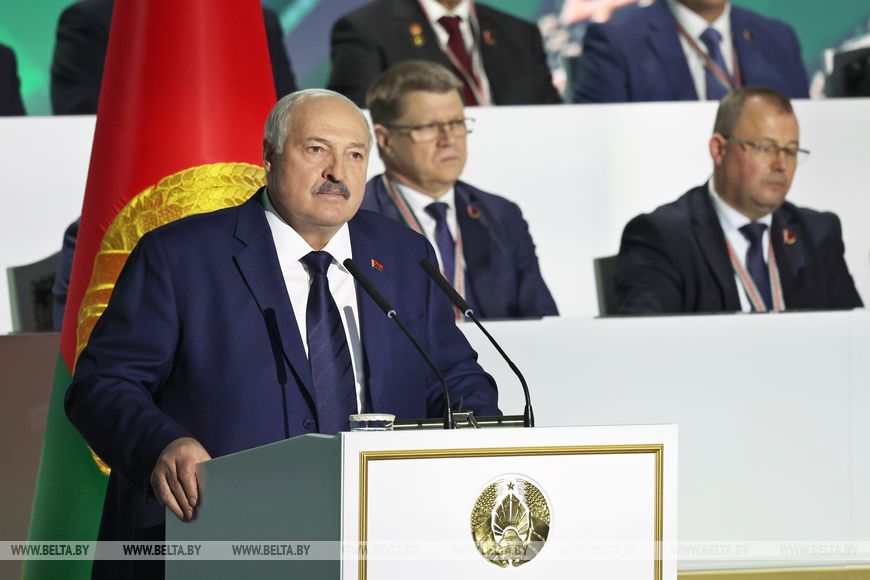 In this regard, the
president highlighted the necessity to fundamentally modernize the sector by
transitioning to the principles of digital agriculture and scaling precision
farming technology. “Therefore, at least 40% of the sector's organizations must
implement this platform on their farms by the end of the five-year plan,” Aleksandr
Lukashenko said.
In this regard, the
president highlighted the necessity to fundamentally modernize the sector by
transitioning to the principles of digital agriculture and scaling precision
farming technology. “Therefore, at least 40% of the sector's organizations must
implement this platform on their farms by the end of the five-year plan,” Aleksandr
Lukashenko said.
Furthermore, he
instructed that every agricultural organization implement centralized logistics
and technical supply and dispatch and control systems of all processes, from
the field to the farm. “We are failing at the basics. We fail to set a task for
machine operators in a plan-of-the-day meeting at any agricultural enterprise
(especially in poorly-performing ones) and then hold them accountable for it at
the end of the day,” Aleksandr Lukashenko added.