
MINSK, 30 January (BelTA) – It is important to create normal living conditions in Minsk and not overpopulate the city, Belarusian President Aleksandr Lukashenko said as he visited OAO Planar in Minsk on 30 January, BelTA has learned.
“We will not build industrial facilities in the downtown of Minsk. We will use these areas if we need them. Everything else will be moved beyond the ring road. People in Minsk should live, walk the streets with their children. Factories should be moved, beyond the ring road. This is why we are building the metro in various segments. We will continue developing it so people can get to and from work in 10-15 minutes. For convenience. We are already doing this and will continue to do so,” the president said. “Therefore, if Minsk is capable of producing what you make at Planar, Integral, motorcycles, bicycles… we will do it. But there are 2 million people [in the city]. We cannot build polluting factories even beyond the ring road. We should not do that. We need to create normal conditions for Minsk residents; we should not overpopulate Minsk.”
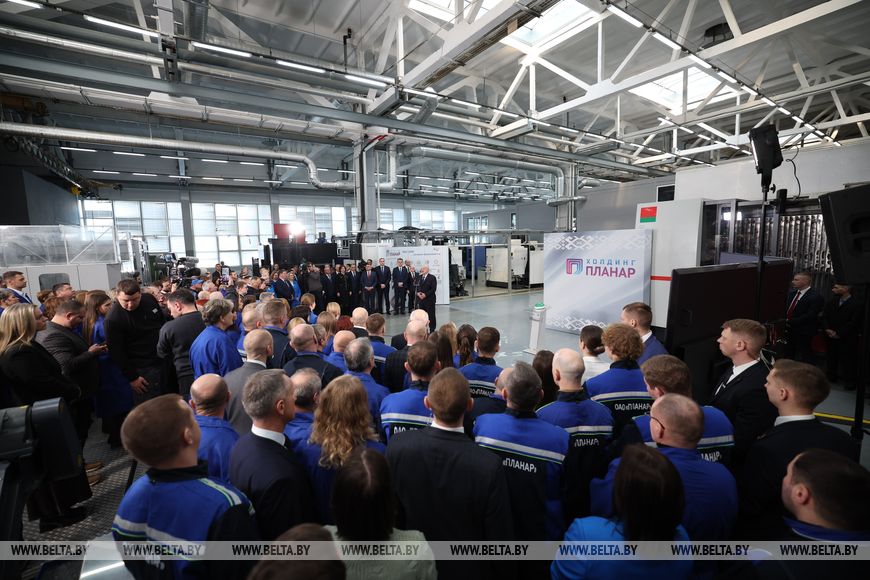
Aleksandr Lukashenko explained that current housing construction is being more closely tied to specific industrial projects: ‘If there is a factory, we build hosuing. We have learned to build quickly. Here's the factory, here's a building with 100 apartments - rental housing. Hire people, let them work. After working for 20-30 years, if you want to buy this housing, buy it out, and by then it will be for a pittance. This is the way we will move forward. Some may not like it. But what's not to like? If you want to build your own house or apartment, go ahead. We don't forbid it.”
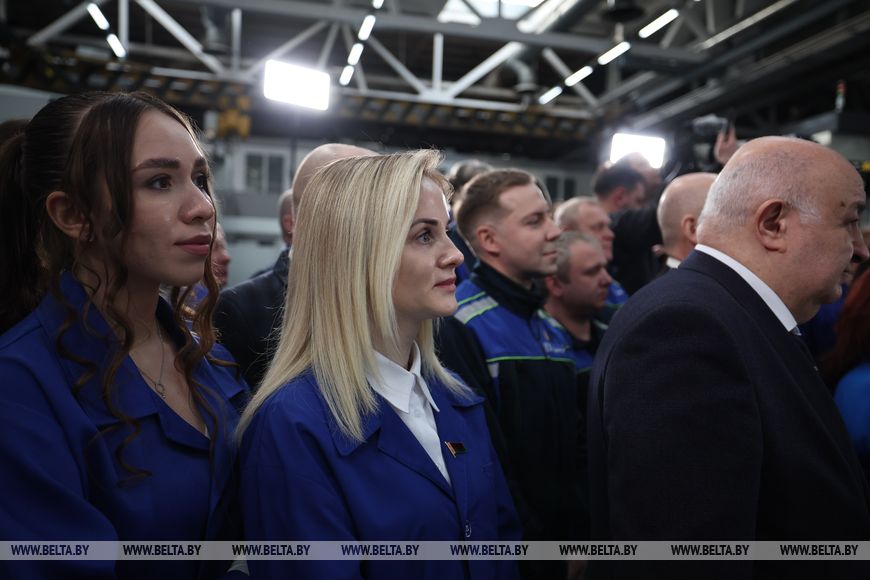
“We will not build industrial facilities in the downtown of Minsk. We will use these areas if we need them. Everything else will be moved beyond the ring road. People in Minsk should live, walk the streets with their children. Factories should be moved, beyond the ring road. This is why we are building the metro in various segments. We will continue developing it so people can get to and from work in 10-15 minutes. For convenience. We are already doing this and will continue to do so,” the president said. “Therefore, if Minsk is capable of producing what you make at Planar, Integral, motorcycles, bicycles… we will do it. But there are 2 million people [in the city]. We cannot build polluting factories even beyond the ring road. We should not do that. We need to create normal conditions for Minsk residents; we should not overpopulate Minsk.”
Aleksandr Lukashenko explained that current housing construction is being more closely tied to specific industrial projects: ‘If there is a factory, we build hosuing. We have learned to build quickly. Here's the factory, here's a building with 100 apartments - rental housing. Hire people, let them work. After working for 20-30 years, if you want to buy this housing, buy it out, and by then it will be for a pittance. This is the way we will move forward. Some may not like it. But what's not to like? If you want to build your own house or apartment, go ahead. We don't forbid it.”
Speaking about creating new industrial facilities and developing existing ones, Aleksandr Lukashenko noted that the goal is not to concentrate everything in Minsk or, conversely, to move everything outside of it. In this matter, development will be based on existing foundations, focusing on locations where certain production traditions and competencies are already established.
An example is shipbuilding, which the country has decided to revive in cooperation with Russia. The main hub for this will be Pinsk, where the necessary base exists. “We will definitely revive that industry. Perhaps, some of the old masters still remain there and they can take young people by the hand and teach them to produce all of this,” the president said.