
MINSK, 21 February (BelTA) - The European security space is currently experiencing its deepest crisis since the Helsinki Final Act was signed. This is clearly evidenced by the overall assessment of the situation in the OSCE in 2025, Sergei Rachkov, Chairman of the Standing Commission on International Affairs of the House of Representatives, said at a meeting of the OSCE PA Standing Committee in Vienna, Austria, BelTA learned from the press service of the House of Representatives.
According to the MP, the organization is essentially losing its ability to function as a full-fledged platform for equal dialogue and the development of consensus decisions. “The Belarusian delegation considers it unacceptable when the OSCE PA Chairmanship invited as a guest of honor and provides a platform to a person who is prosecuted in Belarus under the law on extremist activities. The Belarusian delegation resolutely rejects the Chairmanship's attempts to impose on us contacts that we do not need. Let us focus on strengthening dialogue between the member states of the OSCE PA” he said.
Sergei Rachkov noted that the military-political dimension of the OSCE is currently in a state of deep stagnation: dialogue on arms control and confidence-building measures has essentially been curtailed, a high degree of mutual distrust persists, and discussion of military stability issues is being replaced by politicized rhetoric.
According to the Belarusian MP, the economic and environmental dimension is also significantly politicized. Instead of substantive discussions on sustainable development, transport connectivity, energy security, and environmental challenges, the agenda is often tied to sanctions-related and confrontational topics, which reduces the practical benefits of cooperation among participating states.
The humanitarian dimension remains the most conflict-ridden, Sergei Rachkov continued. Human rights issues are increasingly being used as a tool of political pressure on states that are inconvenient to the Western majority, which undermines trust and hinders the formation of a unifying agenda, originally embedded in the OSCE mandate.
“Belarus experiences the crisis of European security not theoretically, but directly - in the form of increased military activity near our borders, the construction of barriers, and the severance of transport and economic ties. Instead of jointly addressing common challenges, we are witnessing a policy of isolation and sanctions pressure,” the MP said.
Under these conditions, Belarus is forced to take responsive measures to ensure its own security, he noted. “At the same time, we are acting transparently and in strict accordance with international law,” Sergei Rachkov emphasized.
He pointed out the key task today - to begin a serious discussion on a new, inclusive architecture of Eurasian security. “Belarus is ready for an honest, equal, and professional conversation at any platform, including the annual Minsk International Conference, about the future of security on our common continent, not against anyone, but to prevent a new big war,” he said.
Tense agenda
As it has been reported, a delegation of the National Assembly of the Republic of Belarus to the OSCE PA, led by Chairman of the Standing Commission on International Affairs of the House of Representatives Sergei Rachkov participated in the 25th Winter Meeting of the Parliamentary Assembly of the Organization for Security and Co-operation in Europe in Vienna, Austria on 19-20 February.
According to Sergei Rachkov, the agenda of the OSCE Parliamentary Assembly's winter session is very tense, with discussions primarily focused on issues related to European security. Participants did not avoid the topic of Ukraine. At the same time, as the Belarusian delegation noted, the intensity was decreasing.
“Many delegates supported the proposal of the delegation of the Republic of Belarus to engage in dialogue rather than conflict. It is very important that we are now at a very dangerous stage in the development of our region. And a number of delegations are beginning to realize this; to a certain extent, common sense is returning to the discussion of pressing issues.”
“The Belarusian delegation is meeting understanding regarding the points we raise both at the meeting of the general committee on political affairs and at the meeting of the committee on economic affairs," the MPs noted.
He indicated that the Belarusian delegation continued to very firmly raise the issue of the Europeans' sanctions against the Republic of Belarus.
Sergei Rachkov noted that there were a number of positive speeches, in particular by the OSCE secretary general, who spoke in favor of inclusive dialogue, discussion of complex issues, and the search for the reasons why the organization is in crisis.
“At the meeting of the political committee, the rapporteur of this committee addressed the topic related to the inadmissibility of exerting influence on a state. The implication here was, of course, directed at the United States of America, President Trump's actions primarily regarding Greenland. And statements and theses were voiced that coincide with our approaches - that let's engage in economic cooperation rather than exert pressure on each other,” the MP reported.
The Belarusian delegation held many bilateral meetings and contacts. There were conversations with the secretary general of the OSCE Parliamentary Assembly, a meeting with the head of the Austria-Belarus Business Council, discussions on economic issues and opportunities for expanding bilateral trade under the current circumstances surrounding Belarus. A very important meeting took place with MPs from Slovakia, among others.
“There is very strong interest in communicating with Belarus. It is emphasized that Europe is beginning to understand the detrimental nature of the policy being pursued by the leadership of the European Union, that it is necessary to find common ground and together think about how to prevent Europe from sliding toward catastrophe,” the MP concluded.
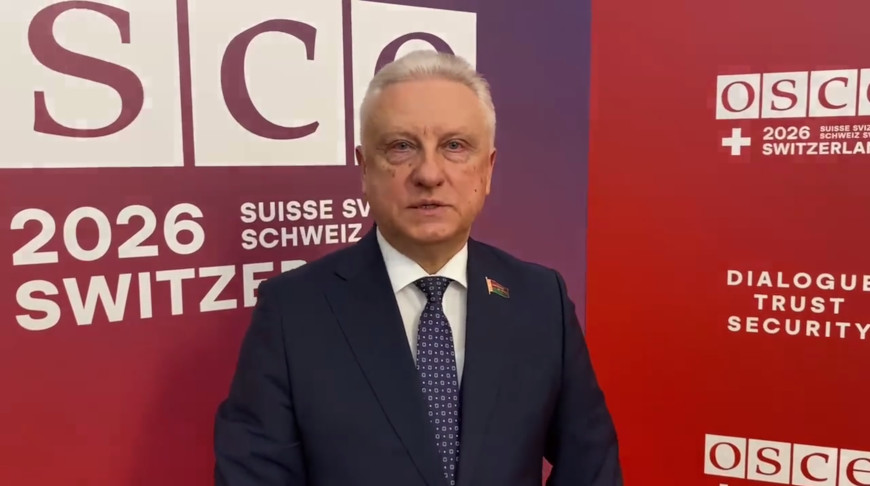
Screenshot from the video of the press service of the House of Representatives
According to the MP, the organization is essentially losing its ability to function as a full-fledged platform for equal dialogue and the development of consensus decisions. “The Belarusian delegation considers it unacceptable when the OSCE PA Chairmanship invited as a guest of honor and provides a platform to a person who is prosecuted in Belarus under the law on extremist activities. The Belarusian delegation resolutely rejects the Chairmanship's attempts to impose on us contacts that we do not need. Let us focus on strengthening dialogue between the member states of the OSCE PA” he said.
Sergei Rachkov noted that the military-political dimension of the OSCE is currently in a state of deep stagnation: dialogue on arms control and confidence-building measures has essentially been curtailed, a high degree of mutual distrust persists, and discussion of military stability issues is being replaced by politicized rhetoric.
According to the Belarusian MP, the economic and environmental dimension is also significantly politicized. Instead of substantive discussions on sustainable development, transport connectivity, energy security, and environmental challenges, the agenda is often tied to sanctions-related and confrontational topics, which reduces the practical benefits of cooperation among participating states.
The humanitarian dimension remains the most conflict-ridden, Sergei Rachkov continued. Human rights issues are increasingly being used as a tool of political pressure on states that are inconvenient to the Western majority, which undermines trust and hinders the formation of a unifying agenda, originally embedded in the OSCE mandate.
“Belarus experiences the crisis of European security not theoretically, but directly - in the form of increased military activity near our borders, the construction of barriers, and the severance of transport and economic ties. Instead of jointly addressing common challenges, we are witnessing a policy of isolation and sanctions pressure,” the MP said.
Under these conditions, Belarus is forced to take responsive measures to ensure its own security, he noted. “At the same time, we are acting transparently and in strict accordance with international law,” Sergei Rachkov emphasized.
He pointed out the key task today - to begin a serious discussion on a new, inclusive architecture of Eurasian security. “Belarus is ready for an honest, equal, and professional conversation at any platform, including the annual Minsk International Conference, about the future of security on our common continent, not against anyone, but to prevent a new big war,” he said.
Tense agenda
As it has been reported, a delegation of the National Assembly of the Republic of Belarus to the OSCE PA, led by Chairman of the Standing Commission on International Affairs of the House of Representatives Sergei Rachkov participated in the 25th Winter Meeting of the Parliamentary Assembly of the Organization for Security and Co-operation in Europe in Vienna, Austria on 19-20 February.
According to Sergei Rachkov, the agenda of the OSCE Parliamentary Assembly's winter session is very tense, with discussions primarily focused on issues related to European security. Participants did not avoid the topic of Ukraine. At the same time, as the Belarusian delegation noted, the intensity was decreasing.
“Many delegates supported the proposal of the delegation of the Republic of Belarus to engage in dialogue rather than conflict. It is very important that we are now at a very dangerous stage in the development of our region. And a number of delegations are beginning to realize this; to a certain extent, common sense is returning to the discussion of pressing issues.”
“The Belarusian delegation is meeting understanding regarding the points we raise both at the meeting of the general committee on political affairs and at the meeting of the committee on economic affairs," the MPs noted.
He indicated that the Belarusian delegation continued to very firmly raise the issue of the Europeans' sanctions against the Republic of Belarus.
Sergei Rachkov noted that there were a number of positive speeches, in particular by the OSCE secretary general, who spoke in favor of inclusive dialogue, discussion of complex issues, and the search for the reasons why the organization is in crisis.
“At the meeting of the political committee, the rapporteur of this committee addressed the topic related to the inadmissibility of exerting influence on a state. The implication here was, of course, directed at the United States of America, President Trump's actions primarily regarding Greenland. And statements and theses were voiced that coincide with our approaches - that let's engage in economic cooperation rather than exert pressure on each other,” the MP reported.
The Belarusian delegation held many bilateral meetings and contacts. There were conversations with the secretary general of the OSCE Parliamentary Assembly, a meeting with the head of the Austria-Belarus Business Council, discussions on economic issues and opportunities for expanding bilateral trade under the current circumstances surrounding Belarus. A very important meeting took place with MPs from Slovakia, among others.
“There is very strong interest in communicating with Belarus. It is emphasized that Europe is beginning to understand the detrimental nature of the policy being pursued by the leadership of the European Union, that it is necessary to find common ground and together think about how to prevent Europe from sliding toward catastrophe,” the MP concluded.
Screenshot from the video of the press service of the House of Representatives