Image credit: AP
News of the story
"On Point"
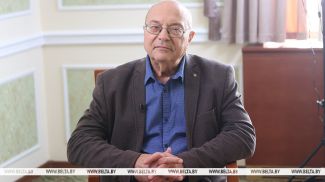
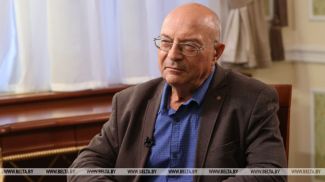
MINSK, 5 December (BelTA) – Doctor of Historical Sciences, political analyst Nikolai Platoshkin assessed the prospects for a second round of the conflict in Ukraine in the latest episode of the V Teme [On Point] project on BelTA’s YouTube channel.
When considering the scenario where Ukraine could restart the conflict following a peace deal, Nikolai Platoshkin pointed out: “I am perfectly calm here. The fighting is now so intense that if it ceases, the other side simply won’t be capable of restarting it, they won’t have the strength.” He emphasized that this is impossible because it is not some border conflict, but one of a significantly larger scale. “People are just exhausted,” he said.
Nikolai Platoshkin noted that once the conflict is over, the urgent task of establishing bridges between Russians and Ukrainians will come to the fore. “After World War I, everyone thought it would never happen again. Yet, actual reconciliation between the French and the Germans, for example, did not take place. Both sides were making preparations: some to solidify the outcome, others to sabotage it at any cost,” the political analyst explained. He further noted that nationalist ideology has been implanted in the minds of Ukrainians for three decades: “It was young people who set fire to Odessa and murdered activists in Kharkov. They were unaware of any alternative, having never experienced the Soviet Union or witnessed the friendship of nations.”
The political analyst pointed out that Donald Trump’s plan includes banning Nazi propaganda in both countries. “It’s unclear to me what they mean by that. Ukrainians can say that they don’t publish Mein Kampf, and Bandera isn’t a Nazi, he’s like a resistance fighter, he even was held in a German camp. So, what complaints could there be against them?” Nikolai Platoshkin added. “This point is the most important. What textbooks will there be? How people’s diplomacy will develop between us? What was our first step in our German zone in 1945? We dismissed all the teachers. Then we set up special training courses for what were called people’s teachers.” In conclusion, the political analyst noted that a military solution is one thing, but working with people and their minds is another.