An archive photo
News of the story
"On Point"
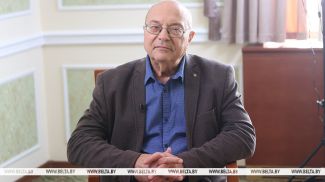
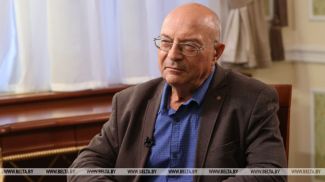
MINSK, 20 February (BelTA) – For Russia, the special military operation is a war for its sovereignty that it did not acquire in 1991 after the collapse of the USSR, Russian journalist Sergey Mardan said in a recent episode of the V Teme [On Point] project on BelTA’s YouTube channel.
The expert noted that certain conclusions can be drawn from the four years of the special military operation. “The main lesson of the war is, in fact, very simple. This war completely cancels out 1991. That’s what it’s about. If you like, it can be seen as a war of independence. It has become common for our media personalities (I’ve observed this many times) to react with pain to the notion that the USSR lost the Cold War. ‘No, it wasn’t a defeat!’ and so begins the semantic juggling. Of course, it was a defeat. The country collapsed, the country was fell apart, I mean historical Russia. Although here we can’t talk about historical Russia: the USSR was quite an imperial state, in terms of its political structure, and the empire in this sense collapsed, having lost a huge portion of its population, a huge amount of resources, whose entire geostrategic, geopolitical, transit system was broken, its economy was destroyed. That is, the collapse of the country meant the loss of most of its economic potential, because it had been built up over decades within the framework of a large country. Therefore, it was a catastrophe, as Putin once called it. But it was a national catastrophe, meaning the imperial-style nation-state collapsed. And after that, for several decades, Russia enjoyed only a tenuous sovereignty. We can say that we had nuclear bombs and so on. But nobody cared about those nuclear bombs! Anyone my age can easily go back in time and recall how life was organized, who was in charge in the Kremlin and in all the Soviet republics, how politics was structured, how the economy was run, how economic and other ties were built. So, by and large, there was no talk of any sovereignty. The Russian, or rather, former Soviet, army barely won the Second Chechen War, through an incredible exertion of all its forces. Although it was, in a sense, an army operation,” said Sergey Mardan.
The journalist believes that back in 2014, when the coup occurred in Ukraine, Russia was not internally prepared for the confrontation with the West. He noted that 2022, when the special military operation began, marked a turning point. “There are several key points to highlight. Putin’s 2007 Munich speech. The operation in Georgia, which, in fact, was the first attempt to establish itself as a country capable of projecting its political will and political power. Although, the war with Georgia was not a difficult endeavor. Then there was 2014, which was also remarkable in many ways. On the one hand, there was the brilliant operation to annex Crimea. And then Russian tanks stopped 20 km from Mariupol. Again, relatively speaking. Now it doesn’t matter whether Russia was ready for an all-out war with the West or not, as far as we know. What happened, happened. In my opinion, Russia wasn’t ready for this internally; the Russian elite wasn’t ready for this. And 2022 marked an absolutely watershed event. Here, we can’t just talk about how the war went, how its nature changed, what was happening inside Russia. This is secondary, as I see it. But the main thing is to assert our absolute sovereignty. We’ll see; nothing’s over yet; it remains to be seen what will work out and what will not. But to claim the right to determine our own future and defend our interests no matter the cost – that is the claim of a sovereign power. These are the outcomes of the war. In fact, this explains this incredible bitterness of the supposedly united West. They perceive it as a genuine existential challenge. It doesn’t threaten their existence; in this sense, it’s wrong to call it an ‘existential conflict,’ but it does disqualify them as victors. You know how we react when they tell us something like, ‘Who did you defeat in 1945?’ Excuse me, we defeated Hitler. For them, it’s pretty much the same. They won, and now they’re told that they didn’t. It’s all over. ‘Victory is canceled,’” the journalist said.