Image credit: Unsplash
A series of events has taken place in recent weeks, both in Ukraine itself and around it, which makes one wonder how we will live in the post-conflict period and whether we will be able to feel safe. By “we” I mean all Europeans from Lisbon to Vladivostok. By safety I mean our collective protection from common challenges and threats.
The main event on the Ukrainian track was undoubtedly the United States peace plan, which gives us reason to look into the future, think about the possible difficulties and threats for our region after the end of the conflict, and how to deal with them.
The recent corruption scandal affecting the highest echelons of power in Ukraine can be considered the second most important event. It reflects one of the key threats to Europe. After all, if Ukraine continues to sink into chaos and lawlessness, then in the near future it will become the main exporter of crime and terror to European countries.
By the way, this export is already happening. Two other events that took place in November are clear examples of that: sabotage on the railway in Poland by Ukrainians and the detection of weapons smuggling from Ukraine at the Moldovan-Romanian border.
Western intelligence agencies had previously warned that after the end of the conflict, Ukraine could become a hotbed of instability in Europe, and that weapons transferred to Kiev could end up in the hands of criminals and terrorists around the world. They also feared a repeat of the Yugoslavia scenario. However, European elites prefer to remain silent on this matter, continuing to play up the “Russian threat.”
A Yugoslavia-style arms bazaar
Ukraine became the European leader on the market of illegal weapons and ammunition long before the current conflict began. After the coup d'état in 2014, when the offices of the Ministry of Internal Affairs and the Security Service of Ukraine were looted, the Ukrainian darknet was flooded with firearms, explosives, and grenade launchers. The situation was exacerbated by corruption and negligence on the part of the authorities, who did not concern themselves with restoring order in their country.
Meanwhile, foreign customers, including extremists, were actively showing interest in the Ukrainian darknet. In 2016, for example, a Frenchman was reportedly detained for buying weapons in Ukraine to carry out terrorist attacks in France during the European Football Championship.
However, the scale of illegal arms trade in Ukraine before 2022 and after is incomparable. In the first few days after the start of the conflict the Ukrainian authorities authorized the distribution of weapons to the civilian population. In some cities automatic weapons and ammunition were distributed directly on the streets, from trucks. No criminal record checks or mental health assessments were required.
“Some people received weapons and then simply disappeared with their assault rifles. There is also information that Ukrainian crime bosses are trying to establish control over the underground arms market,” the Ukrainian publication Strana wrote.
Soon, the darknet was awash with offers to sell Kalashnikov assault rifles and ammunition. The rifles sold for between $500 and $1,000, with bullets priced at 10 to 15 hryvnias each.
Then came the deliveries of Western weaponry to Ukraine. And the more weapons the West sent to the Ukrainian authorities, the more diverse the inventory of black markets in Europe became, and later, in other parts of the world.
Western media also reported on the threats of weapons smuggling from Ukraine. In 2022, the American television network CBS released a documentary titled Arming Ukraine. It stated that a large portion of the military aid Western countries send to Kiev does not reach its final destinations.
The Washington Post reported that U.S. officials are concerned about the threat of smuggling of American-supplied Stinger and Javelin systems sent to Kiev. The newspaper also noted that American weapons and military equipment had previously fallen into the hands of criminals. ISIS terrorists acquired Abrams tanks, and the Taliban obtained Black Hawk helicopters. American weapons have been used against civilians in some regions, such as Yemen.
Germany's Tagesschau news service reported that, according to European authorities, weapons caches may be hidden along the EU-Ukraine border, and smugglers transporting weapons across the border may be using official border crossings.
Here is what the Austrian publication Exxpress wrote: “Weapons supplied from Europe and the USA to the government of Vladimir Zelensky are disappearing and ending up in the hands of European criminals... Portable rocket launchers, assault rifles, anti-aircraft missiles, even American howitzers - all of this is currently for sale.”
The British newspaper The Times also wrote that Ukraine may become “a Yugoslav-style weapons bazaar for criminals”. “Smuggled military stocks from the former Yugoslavia provided firepower for criminals and terrorists in Europe for decades after the conflict there ended in 2001. Experts fear that without stringent postwar controls, Ukraine may become a Yugoslav-style weapons bazaar for criminals,” the publication noted.
According to The Times, there may be between one and five million unregistered firearms in the hands of Ukrainians. Among themselves, Ukrainians whisper about hidden caches, about assault rifles and grenade launchers buried in gardens, about tanks concealed in garages. At the same time, Ukraine is the only country in Europe without clear gun ownership laws; all matters in this sector are regulated by decrees from the Ministry of Internal Affairs, which creates fertile ground for abuse.
According to The Times, no one knows how many weapons are circulating in the country, and what happens to these weapons after the war will have serious consequences worldwide.
When the smoke clears, the illicit arms will remain
Europol, Interpol, and law enforcement agencies of individual countries have warned about the threat of weapons smuggling from Ukraine, which ultimately ends up in the hands of terrorists, extremists, and criminal groups. Western intelligence agencies confirm media fears that the arms trade situation in Ukraine could follow a Yugoslav scenario.
As far back as May 2022, the head of the European Union Agency for Law Enforcement Cooperation (Europol), Catherine De Bolle, stated that Western weapons destined for Ukraine could fall into the hands of criminal groups. “At some point the war will end. We want to prevent a situation like 30 years ago in the Balkan war. Weapons from this war are still used by criminal groups today,” the executive director of Europol said.
De Bolle’s concerns were soon confirmed. In the summer of 2022, Europol announced it had information about the illegal smuggling of weaponry from Ukraine into Europe. According to Europol representative Jan Op Gen Oorth, advertisements for the sale of Javelin anti-tank missiles, previously supplied to Ukraine by the West, had appeared online. However, it was noted that the EU police service did not yet have proof that these missiles were related to Ukraine.
Interestingly, shortly after Oorth’s statement, Europol backtracked. On its website, it published a clarification noting that the EU police service works closely with Ukrainian officials to reduce the threat of illegal arms trafficking in Europe. “We have full confidence in them as they implement new measures to monitor and trace this firearms,” the statement said.
Nevertheless, Europol did not deny the threat of arms smuggling from Ukraine, although it termed it potential. “The proliferation of firearms and explosives in Ukraine could lead to an increase in firearms and munitions trafficked into the EU via established smuggling routes or online platforms. This threat might even be higher once the conflict has ended,” Europol stated.
The former head of the International Criminal Police Organization (Interpol), Jürgen Stock, also stated that weapons sent to Ukraine would ultimately end up in the hands of criminals. “Once the guns fall silent [in Ukraine], the illegal weapons will come. We know this from many other theatres of conflict,” Stock noted.
The danger lies in the fact that heavy weapons, among others, could end up on black markets. In this regard, Stock called on countries to establish cooperation in tracking these weapons to eliminate the threat. “We can expect an influx of weapons in Europe and beyond. We should be alarmed and we have to expect these weapons to be trafficked not only to neighbouring countries but to other continents,” the Interpol chief predicted.
At the national level, Finland’s National Bureau of Investigation was the first to raise the alarm. At the end of 2022, Police Commissioner Christer Ahlgren stated in an interview with the Finnish Broadcasting Company Yle that weapons sent to Ukraine could have ended up in the hands of organized crime in Finland, Sweden, Denmark, and the Netherlands. We have indications that these weapons are already in Finland... We have intelligence suggesting that criminal gangs are very interested in the weapons being sent to Ukraine, the commissioner stated.
Ahlgren pointed out that a similar situation, where weapons ended up in the hands of organized crime, had been observed before. For example, this happened after the breakup of Yugoslavia, when criminals in Sweden obtained weapons from the Balkans.
“This will spill beyond Ukraine”
Security services are concerned not only about arms smuggling but also about the influx into European countries of Ukrainian soldiers returning from the front.
In November 2024 Bloomberg reported that intelligence agencies in European states are preparing for the arrival of Ukrainian servicemen after the end of the conflict in Ukraine and view this as a threat. According to the Czech portal Idnes, Czech security services also forecast a rise in crime due to the arrival of Ukrainian soldiers.
Former Polish President Andrzej Duda spoke quite openly on the matter. In his view, the end of the Ukrainian conflict and the return of thousands of men from the front could lead to an explosive growth of international organized crime. The reasons may include post-traumatic stress disorder, lack of employment, and lack of prospects.
Experts share similar opinions. In October 2025, Norwegian analyst Dan-Viggo Bergtun published an article in Steigan titled “Europe is feeding its own monster – the West overlooks Ukraine’s most dangerous crisis”. The author is convinced that when a country with millions of weapons and a population trained in conflict slips out of control, it will spill beyond Ukraine and affect all of Europe.
“In Ukraine, weapons, money, and other support are flowing in, and Norway is one of the most generous donors. But behind this facade lurks a grim and explosive problem – a crisis of social and security policy that could plunge the entire continent into chaos. When hundreds of thousands of soldiers, trained for combat, return home without assistance, without jobs, and without a future, it will become fertile ground for something far worse than corruption: despair, extremism, and organized crime,” Dan-Viggo Bergtun wrote.
Ukraine’s strongest resource, its army, could become a time bomb, the expert believes. When soldiers return home from the front and find neither security, nor work, nor meaning in life, they become easy prey. “Organized crime groups, arms and drug traffickers, extremist organizations have already begun recruiting among veterans who feel disillusioned. These are not theories, but realities documented in several European security reports,” the expert noted.
What is today a social problem for Ukraine may tomorrow become a security threat for all of Europe. “If we fail to act, we risk seeing Ukraine slide into a situation where violence and crime become part of everyday life, and where the authority of the state is challenged by armed groups. A country built on trauma and corruption cannot be stable. There is a risk that Europe’s new partner will become a burden in terms of security: a country exporting disorder, weapons, and poverty,” Dan-Viggo Bergtun wrote.
Indivisible security as a shared cause
There is far more to be said on this matter. We have yet to address the issue of foreign fighters from European countries who will return home bearing the scars of trauma and battlefield experience. We have not spoken of members of Colombian and Mexican drug cartels who have learned to operate drones within the ranks of the Ukrainian Armed Forces. Nor have we touched upon the trafficking of Ukrainian refugees across Europe. While many today draw parallels with the Yugoslav wars, the conflict in Ukraine and its consequences are of a far greater scale and danger.
Is Europe equipped to handle this? In recent years, European elites have shown themselves incapable of resolving even basic issues. Certain European states fail to suppress cigarette smuggling or rein in the security and border agencies that enable this illegal trade. Yet smuggling cigarettes and smuggling, for instance, anti-aircraft missile systems are vastly different things. And refugees at the border pale in comparison to the threat of heavily armed extremists.
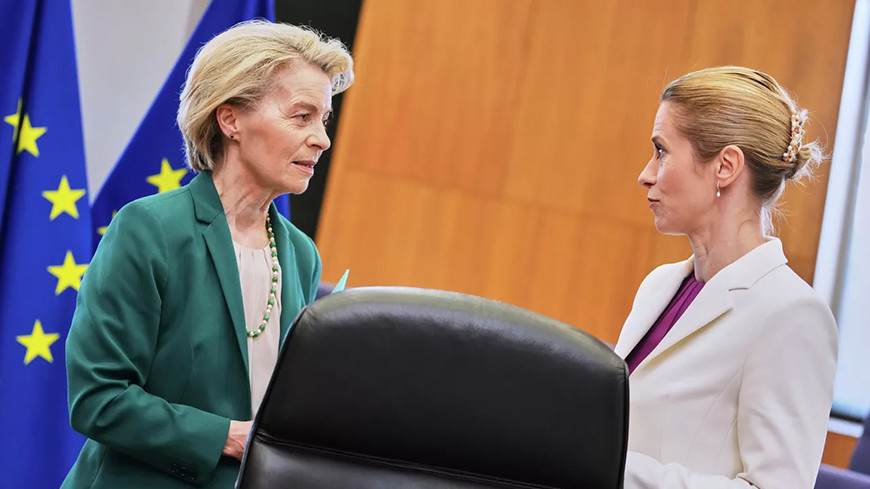
It is evident that European leadership is averse to long-term thinking. Moreover, the prospects for those fueling this proxy war are grim. The Norwegian Institute of International Affairs has already estimated that Russia’s victory would impose massive costs on the EU and these costs will encompass not only defense expenditures but also “crisis management.” Then there is the American plan, which envisions Ukraine joining the EU and being rebuilt at Europe’s expense. Could this be why some in Europe are inclined to prolong the fighting?
Yet it must be understood: the longer the war continues, the more weapons flow into Ukraine, and the more its economy and infrastructure are devastated, the harder and more costly reconstruction will become. Without recovery, Ukraine will fester as a hub of instability for decades, fueling criminality across European nations.
Once hostilities cease, many of Ukraine’s problems will become problems for all of Europe. No wall will keep them at a distance. Therefore, alongside reconstruction, it is necessary to prioritize security cooperation among European states through customs, law enforcement, and foreign policy coordination. This is especially urgent for Ukraine’s neighbors, who will bear the immediate impact.
Much has been said lately of indivisible security in Europe. But these discussions remain narrowly focused on military threats. What of security on the streets of Europe’s cities? If we acknowledge that terrorism, organized crime, drug trafficking, and human trafficking are common threats to all European nations, then security in this sense, too, is indivisible. And upholding it is our shared duty.
Vita Khanatayeva,
BelTA