
News of the story
"On Point"
MINSK, 19 February (BelTA) - In a recent episode of the V Teme [On Point] project on BelTA’s YouTube Channel Russian journalist Sergey Mardan explained what relations between the USA and Europe may have after the end of the Ukrainian conflict.
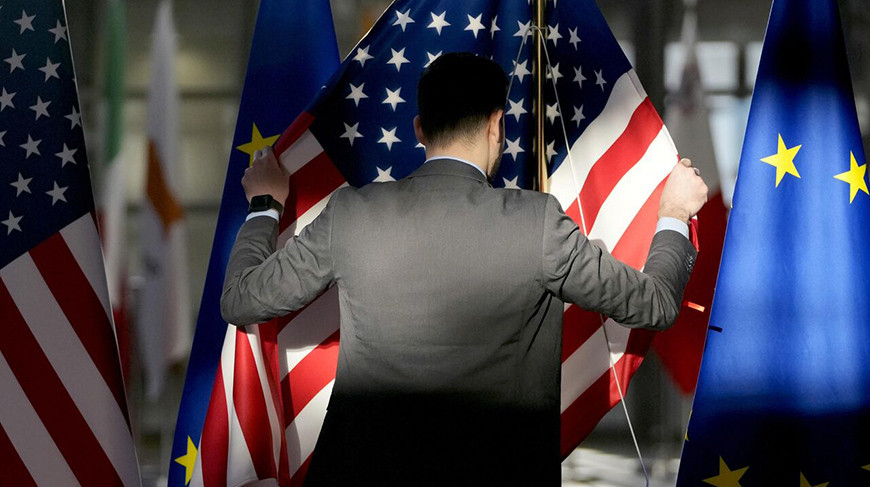
At the Munich Security Conference, U.S. Secretary of State Marco Rubio made it clear that after the end of the conflict in Ukraine, the White House will not deny Europe some support, but ultimately, a divorce of the Euro-Atlantic region will occur, albeit a good one. “Rubio’s speech was quite epochal. Actually, this is the only thing that seriously makes sense to study and discuss in the context of this conference. By and large, nothing fundamentally new was said. A year ago, JD Vance said the same thing, but in a different style, more sharply, more offensively. And Rubio is a different person and chooses different words, but by and large, exactly the same thing was said there. That is, as it were, a divergence, not a divorce - there never was any marriage - but a divergence, a split in the Euro-Atlantic region is happening. The other thing is that Rubio hinted, made it understood, reassured that this divorce would be peaceful, it would not be done brutally. That is, ‘we’re packing up tomorrow and leaving here, figure it out yourselves’ - no, that won’t happen,” Sergey Mardan said.
The journalist believes that the so-called collective West has exhausted itself. “This period of a unified West, which by historical standards was not very long, is over. That is, roughly speaking, the Americans didn’t even enter Europe, didn’t even return - they picked it up after the giant world war, which is conventionally divided into two parts, the First and the Second. Essentially, it was a long world war; consequently, Europe was completely drained of blood, Europe lost all the potential and dominance it had, and, in fact, the USA kind of picked up Europe. That is, by and large, from an ideological point of view, they have very little in common. American national mythology is actually built on a complete opposition of itself to the European continent, European monarchies, and so on. And this is nothing more than such a confluence of circumstances. It’s clear how many reasons and factors determined this. But now these factors have exhausted themselves. So, in general, the Americans are saying: ‘Guys, that’s it, the story ends here. We won’t abandon you - too much has been invested’. There are indeed still interests in some key areas. The Americans understand that a divorce from Europe means transitioning relations into a format of competition and rivalry at a certain stage. That is also completely obvious. Therefore, this will happen more or less carefully; that is, the parties will at least try to avoid conflict situations where they can be avoided. I don’t know, though, whether that’s possible or not. That, in fact, is what the Munich Conference was mainly devoted to and what makes it truly interesting,” the journalist explained.