An archive photo
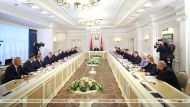
MINSK, 3 December (BelTA) – The customs authorities of Belarus and Nigeria will establish a direct exchange of necessary information, Chairman of the State Customs Committee (SCC) of Belarus Vladimir Orlovsky said during the consideration of the draft law “On the ratification of the memorandum of understanding between the Government of the Republic of Belarus and the Government of the Federal Republic of Nigeria on cooperation and mutual assistance in customs matters” at a regular meeting of the third session of the House of Representatives of the National Assembly of Belarus of the eighth convocation, BelTA has learned.
“The communication will become more direct and substantive. Currently, we communicate on the platform of the World Customs Organization, with sessions held twice a year. Any request and response goes through the Ministry of Foreign Affairs. Accordingly, this involves two additional organizations, which prolongs the process of both making the request and receiving the information in response,” Vladimir Orlovsky said, commenting on what will fundamentally change in customs interaction after the memorandum of understanding comes into force.
According to the chairman of the SCC, thanks to those steps, the sides will have direct interaction for exchanging necessary information, both on a daily basis and regarding problematic issues. “Direct communication is always faster and more efficient. And most importantly – it allows professionals in this area to speak the same technical language,” he added.
Belarusian MPs ratified the aforementioned memorandum of understanding on 3 December.
Vladimir Orlovsky noted that developing cooperation with countries of the African region, which possesses great economic potential, is an important dimension of Belarus’ foreign economic course. The Federal Republic of Nigeria is the most populous country on the African continent, with over 230 million residents.
This year has seen a sharp increase in trade between Belarus and Nigeria, which multiplied eight times over the previous year’s figure. In this regard, the State Customs Committee of Belarus initiated the conclusion of a memorandum of understanding between the governments of Nigeria and Belarus on cooperation and mutual assistance in customs matters.
The memorandum with Nigeria was concluded in Brussels in June 2025 on the platform of the World Customs Organization. Its provisions define the main principles and forms of cooperation between the customs authorities of the two countries. It establishes a procedure for providing mutual assistance for the proper application of customs legislation, organizing the exchange of information needed by the countries, as well as interaction in suppressing and investigating customs offenses.
The practical implementation of the memorandum will facilitate the prompt resolution of problematic situations in the customs matters and will enhance the efficiency and effectiveness of fulfilling tasks to protect Belarus’ economic interests.
Regarding cooperation with Zimbabwe, the MPs ratified an agreement on the mutual protection of classified information, signed in Minsk on 14 May 2025. The agreement was developed to lay a legal groundwork for the mutual provision of protection for classified information. Its practical implementation will regulate issues of protecting state secrets of the Republic of Belarus and the Republic of Zimbabwe during bilateral international cooperation in politics, defense, security, economy, science, technology, and other areas agreed upon by the sides.
“The communication will become more direct and substantive. Currently, we communicate on the platform of the World Customs Organization, with sessions held twice a year. Any request and response goes through the Ministry of Foreign Affairs. Accordingly, this involves two additional organizations, which prolongs the process of both making the request and receiving the information in response,” Vladimir Orlovsky said, commenting on what will fundamentally change in customs interaction after the memorandum of understanding comes into force.
According to the chairman of the SCC, thanks to those steps, the sides will have direct interaction for exchanging necessary information, both on a daily basis and regarding problematic issues. “Direct communication is always faster and more efficient. And most importantly – it allows professionals in this area to speak the same technical language,” he added.
Belarusian MPs ratified the aforementioned memorandum of understanding on 3 December.
Vladimir Orlovsky noted that developing cooperation with countries of the African region, which possesses great economic potential, is an important dimension of Belarus’ foreign economic course. The Federal Republic of Nigeria is the most populous country on the African continent, with over 230 million residents.
This year has seen a sharp increase in trade between Belarus and Nigeria, which multiplied eight times over the previous year’s figure. In this regard, the State Customs Committee of Belarus initiated the conclusion of a memorandum of understanding between the governments of Nigeria and Belarus on cooperation and mutual assistance in customs matters.
The memorandum with Nigeria was concluded in Brussels in June 2025 on the platform of the World Customs Organization. Its provisions define the main principles and forms of cooperation between the customs authorities of the two countries. It establishes a procedure for providing mutual assistance for the proper application of customs legislation, organizing the exchange of information needed by the countries, as well as interaction in suppressing and investigating customs offenses.
The practical implementation of the memorandum will facilitate the prompt resolution of problematic situations in the customs matters and will enhance the efficiency and effectiveness of fulfilling tasks to protect Belarus’ economic interests.
During the meeting, MPs considered a package of draft laws in international cooperation. Two of them concern deepening interaction with countries of the African continent: Nigeria and Zimbabwe. Incidentally, earlier in the current session, MPs ratified an agreement with Zimbabwe on visa-free travel for holders of diplomatic and service passports.