Our protagonist knows almost everything about forest. He played here as a child, watched his grandfather and father (both foresters)at work, and learned to hunt. Today, Vladimir Gutkovsky is the Chief Forester of the Slutsk Forestry, a member of the Rural Council, and a delegate to the 7th Belarusian People's Congress. What does he think about his daily work and the great trust placed in him?
Towards tomorrow
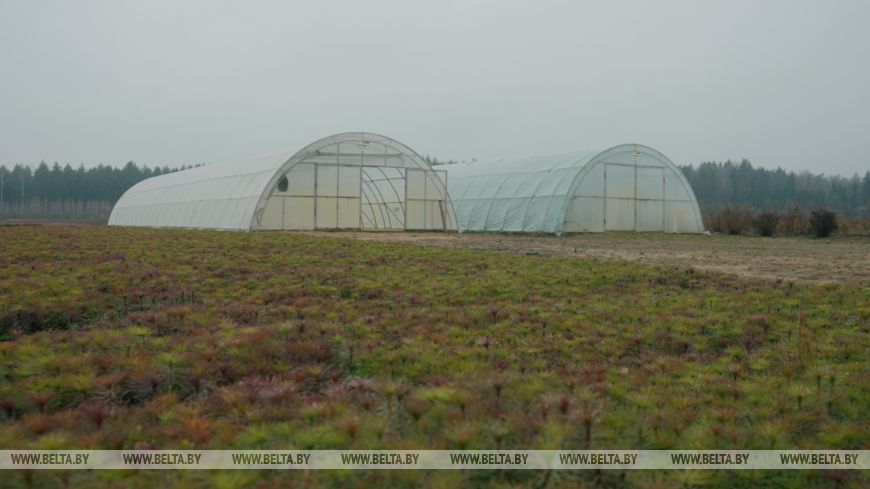
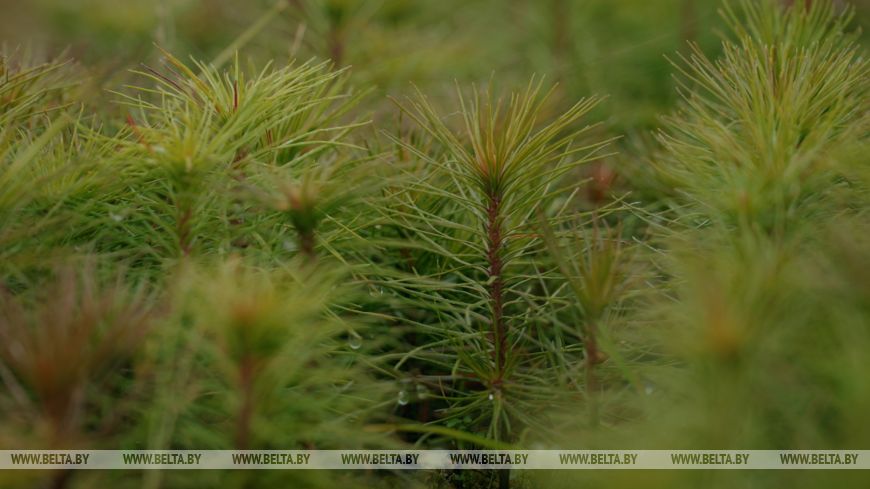
We are walking with Vladimir Gutkovsky through one of the greenhouses at the Slutsk Forestry nursery, located in the Vorobyevskoye forestry. On both sides of the path stretch tender green coniferous seedlings. Today, they are planting material, barely taller than the lawn grass. However, in a few decades, these tiny trees will grow into mighty giants, among which our children and grandchildren will walk.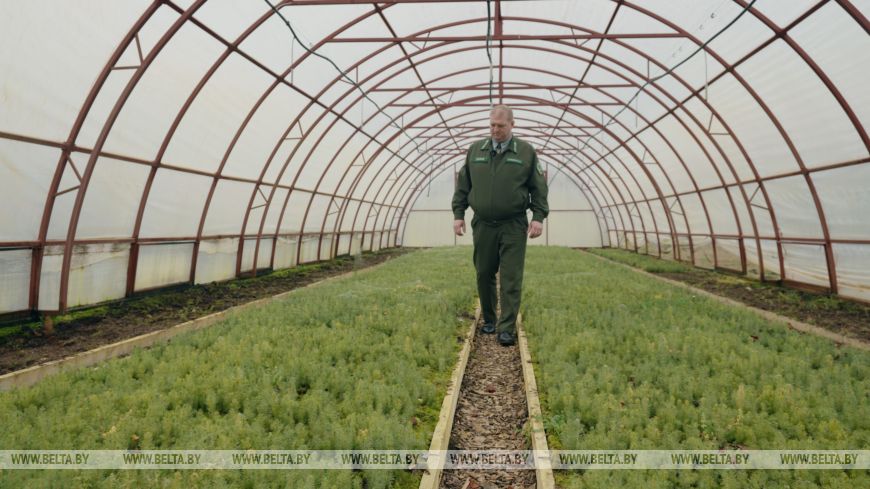
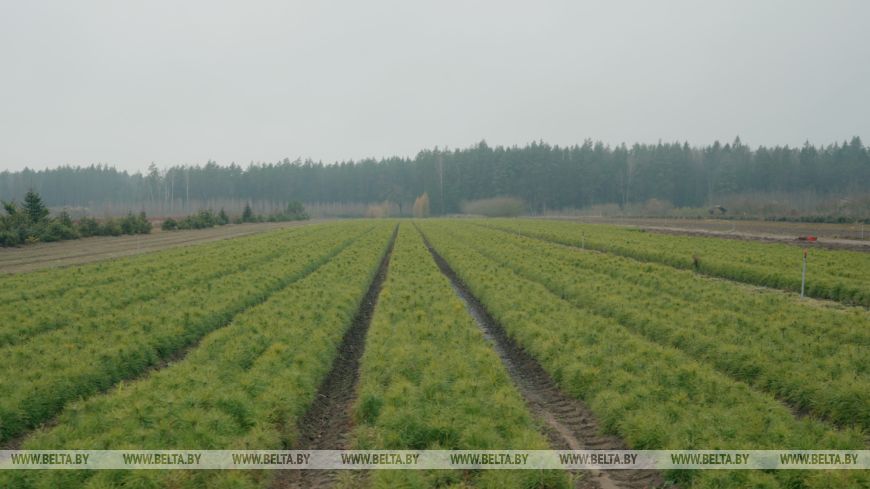
“Here, we grow Norway spruce, pine, and oak. Recently, we've started experimenting with larch," Vladimir Gutkovsky said, proudly pointing to the growing trees. “We are fully self-sufficient in planting material. We primarily use it for reforestation efforts, restoring about 200 hectares annually.”
Outwardly, our interviewee appears very calm and kind-hearted. That seems fitting for a representative of a dynasty whose entire life is intertwined with the forest.
“My grandfather worked as a forester in the Zhilin-Brodsky forestry,” Vladimir Gutkovsky noted. “My father followed in his footsteps and became a forester in the Amgovichsky forestry. My older brother enrolled in Belarusian State Technological University (BSTU) and now works as a forester in the Golchitsky forestry. After graduating from university, I started working as a technician under my father. Now my son has enrolled at BSTU and the dynasty continues. It turns out that our family have a knack for the same career choice.”
Yet the question of why the Gutkovsky family has chosen professions related to the forest for four generations genuinely surprises Vladimir Gutkovsky. How does one explain why one loves a particular calling? After all, you don't love something for a specific reason. You just do.
“I was born in the village of Omgovichi in Slutsk District. My brother and I spent our entire lives close to the forest,” he said. “When the neighbors' grandchildren came to visit during the holidays, we would go deep into the woods together and play there. My whole life is connected to the forest, so there wasn't really any special 'choice' to make. I never considered other professions and never even imagined that my path could have been any different.”
Towards tomorrow
We are walking with Vladimir Gutkovsky through one of the greenhouses at the Slutsk Forestry nursery, located in the Vorobyevskoye forestry. On both sides of the path stretch tender green coniferous seedlings. Today, they are planting material, barely taller than the lawn grass. However, in a few decades, these tiny trees will grow into mighty giants, among which our children and grandchildren will walk.
“Here, we grow Norway spruce, pine, and oak. Recently, we've started experimenting with larch," Vladimir Gutkovsky said, proudly pointing to the growing trees. “We are fully self-sufficient in planting material. We primarily use it for reforestation efforts, restoring about 200 hectares annually.”
Outwardly, our interviewee appears very calm and kind-hearted. That seems fitting for a representative of a dynasty whose entire life is intertwined with the forest.
“My grandfather worked as a forester in the Zhilin-Brodsky forestry,” Vladimir Gutkovsky noted. “My father followed in his footsteps and became a forester in the Amgovichsky forestry. My older brother enrolled in Belarusian State Technological University (BSTU) and now works as a forester in the Golchitsky forestry. After graduating from university, I started working as a technician under my father. Now my son has enrolled at BSTU and the dynasty continues. It turns out that our family have a knack for the same career choice.”
Yet the question of why the Gutkovsky family has chosen professions related to the forest for four generations genuinely surprises Vladimir Gutkovsky. How does one explain why one loves a particular calling? After all, you don't love something for a specific reason. You just do.
“I was born in the village of Omgovichi in Slutsk District. My brother and I spent our entire lives close to the forest,” he said. “When the neighbors' grandchildren came to visit during the holidays, we would go deep into the woods together and play there. My whole life is connected to the forest, so there wasn't really any special 'choice' to make. I never considered other professions and never even imagined that my path could have been any different.”
“My father worked as a forester in the local forestry for 43 years,” Vladimir Gutkovsky. “He often took me with him to work, especially since our house was right next to the forest. Otherwise, like any child, I was interested in toys and cars. I was also most drawn to machinery, even though back then there wasn't much of it. But gradually, new machines and equipment were acquired. As a boy, I always loved to sit in the cab of a new piece of machinery."
Philosophy of hunting
Vladimir Gutkovsky admits that he loves wild berries but isn't very fond of foraging them. The same goes for mushrooms. However, he is passionate about hunting.
Philosophy of hunting
Vladimir Gutkovsky admits that he loves wild berries but isn't very fond of foraging them. The same goes for mushrooms. However, he is passionate about hunting.
“Everyone who lived near the forest or worked in it used to hunt,” explained Vladimir Gutkovsky. “Even as a child, I often went hunting with my father. It is a special world. It is fascinating to listen to the silence, broken only by the bark of dogs on the scent. And the process itself is deeply absorbing, because it is driven by passion above all. My first successful hunt was for a roe deer. It didn’t qualify as a trophy, but I remember it vividly.”
Today, Slutsk Forestry is renowned for its hunting grounds. Hunting enthusiasts come here from across the country. Shooting towers have been set up for them, and the services of experienced gamekeepers are available. The Radzivilovsky hunting complex has been built. It is a two-story lodge equipped with everything necessary for a comfortable stay. Beside it lies a well maintained arboretum where wild fallow deer roam.
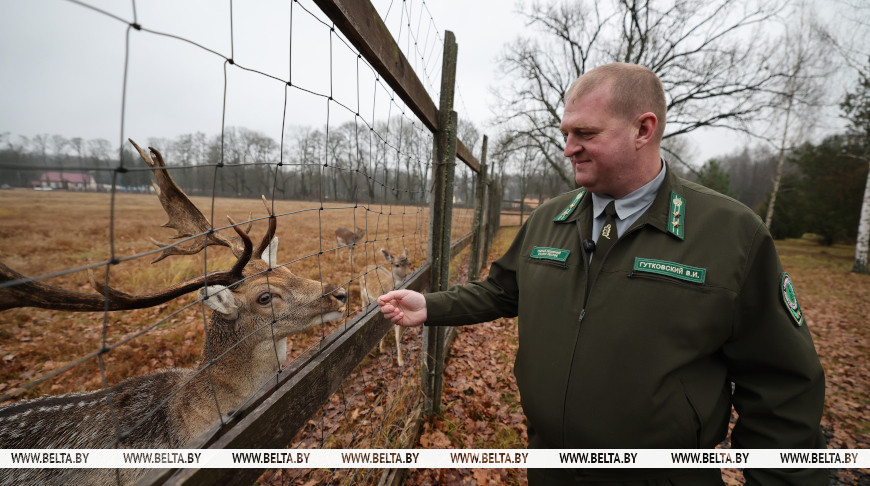
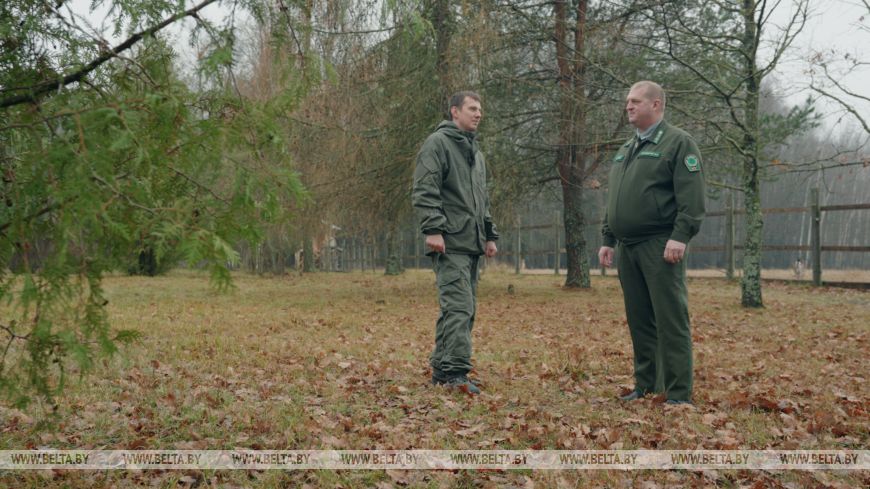
Yet the philosophy of hunting, however unexpected it may seem, also involves preserving wildlife and creating comfortable conditions for animals. Vladimir Gutkovsky showed us the farm enclosure, which is home to eight male and eight female European fallow deer. The males are easily distinguished by their impressively broad antlers for animals of this size. Three of the fallow deer are very small; they were born this year.
Visitors adore these beautiful and gentle animals, often approaching the fence to offer them treats. The fallow deer have grown accustomed to this and now come to the fence themselves.
“They have become almost tame,” explained Vladimir Gutkovsky. “Outwardly, a fallow deer seems calm and gentle, but we must remember these are wild animals living alongside humans, largely against their nature.”
“People have become more attentive to the forest.”
The forest is a vast, living organism in which everything is interconnected: the plants, the animals, and the people who visit. This was not always understood in the past, noted Vladimir Gutkovsky.
“It is encouraging that lately people have become much more mindful of the forest and its resources,” he explained. “We regularly carry out fire prevention and cleanup patrols, monitor the situation, and conduct inspections. I should note that visitors today are more considerate of the green spaces. When they need to park, they leave their cars on the roadside instead of driving deep into the woods, even when there are no access restrictions. People come simply to walk among the trees, to pick mushrooms or berries. Everyone understands that lighting fires or cutting down trees is forbidden. There is less litter, which is good. For our part, we try to clear it away quickly, because the forest must remain clean.”
When asked to compare his own generation of young foresters with today’s newcomers, Vladimir Gutkovsky paused thoughtfully.
“People are different,” he reflected. “Some who join us after university genuinely love the work. They are always eager to learn more, to master something new. It is clear these young people want to build a career in forestry, not just put in their required years. On the other hand, there are, of course, recent graduates who are just waiting out their mandatory service period. But there are not many of them. Ours is not a profession for the uncommitted.”
Vladimir Gutkovsky recalled how he himself came to work for his father after university:
“It was easy to be around him. But I quickly realized that theory is one thing, and practice is quite another. I learned a great deal from the forest workers and a very competent assistant forester. We would go to the forest together, and they would teach me the right way to do things.”
Now history repeats itself. Vladimir Gutkovsky will be teaching his own son.
“Every parent’s wish is for their child to lead a successful life, secure a good job, do what they love, and find professional fulfillment. I also wish only the best for my children,” he emphasized. “In our line of work with forests, you have to begin at the ground level, getting some experience. Only then can you work your way up to greater achievements and more senior roles.”
“Becoming a delegate was a great responsibility”
Vladimir Gutkovsky is a member of the Sorogi Rural Council. This public duty is not only honorable but also requires active participation in the life of the region.
“Of course, many problems are solved by the chairman of the executive committee: roads, development, and everyday issues,” Vladimir Gutlovsky explained. “We, the MPs, assist him: we organize and carry out community work days, we take care of restoring order to gravesites and monuments to Soviet soldiers who died during the Great Patriotic War.”
Our interviewee admits: one of the most exciting moments was when the chairman of the Sorogi Rural Executive Committee said that Vladimir Gutkovsky had been elected a delegate to the Belarusian People’s Congress.
“It was a huge surprise that I was chosen to participate in such a body. Becoming a delegate was a great responsibility. I had heard a lot about the previous Belarusian People’s Congresses, I had seen on TV how they are conducted. Hundreds of delegates, the leadership of the whole country, a solemn atmosphere. But I never even imagined that I would find myself at one of such meetings,” Vladimir Gutkovsky admitted. “Even then, I understood the immense responsibility. And there was an understanding that I was involved in solving greater issues, in developing important decisions that would ensure Belarus’ further development. At such an important event, you feel different. You have a feeling that you have become a necessary link in the most important process.”
The interviewee says that no one in his family or among his acquaintances had ever attended events of such a high level. But when relatives and friends learned that Vladimir Gutkovsky was now a delegate to the Belarusian People’s Congress, they started calling, asking how he was chosen, why it was him, a forester.
“I am sure that at such an event like the Belarusian People’s Congress, there should be representatives of different professions and walks of life,” Vladimir Gutkovsky emphasized. “At the same time, during the event at the Palace of the Republic, where the first meeting took place in the spring of last year, no such distinctions were felt. No one emphasized that here is a milkmaid, and there is the director of an agricultural enterprise. All people are equal, and everyone felt their responsibility for what was happening. What is more, there was a shared understanding that we were there to make pivotal choices for the country’s future. Choices that would shape the lives of generations to come, our own, our children’s, and our grandchildren’s. We were all united in working towards a single, shared goal.”
Aleksei GORBUNOV,
Photos by Ramil NASIBULIN and BelTA