President
05 мая 2026, 11:06
Lukashenko sets out general line at meeting with Council of Ministers
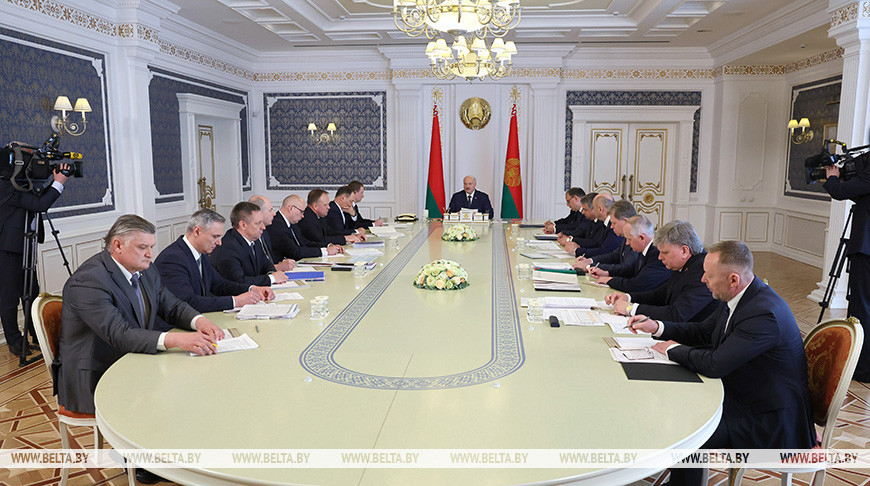
MINSK, 5 May (BelTA) - Belarusian President Aleksandr Lukashenko convened a meeting with the Council of Ministers to discuss a number of draft legal acts on 5 May, BelTA has learned.
The meeting participants included the prime minister and deputy prime ministers, the heads of the State Control Committee and the National Bank, as well as several ministers and governors.
“There are three items on the agenda that hold certain significance for our economy,” the Belarusian leader emphasized.
The focus was on financial issues related to the development of the cement industry, Svetlogorsk Pulp and Cardboard Mill, and Orsha Meat Canning Plant along with its raw material zone under the management of Agrokombinat Dzerzhinsky.
One way or another, all of the issues listed involve requests for support, financial concessions, and debt restructuring. The head of state noted that this approach is inherently wrong and that this trend alarms him.
“Every issue is about money — defer, restructure, allocate from the budget, help out… This is the wrong approach. That is what worries me the most,” said Aleksandr Lukashenko. Maybe you are right [in these specific cases], but the trend is bad. And in the end, it results in underpayments to the budget. That is a sacred thing! And the State Control Committee takes this calmly. Even though this is your bread and butter. The budget is what matters most. And this [the desire to obtain various financial benefits] must be suppressed instantly and immediately.”
On restructuring the debt of cement industry organizations
The government has submitted a draft decree on restructuring the debt of cement industry organizations.
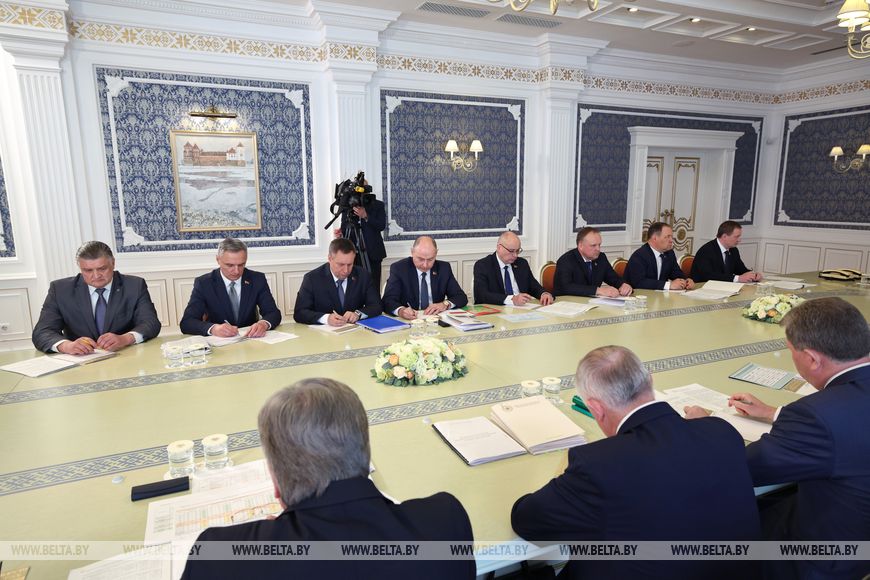
“Frankly speaking, I am wary of this stream of requests for benefits and ‘perks,’ especially following the appointment of the new prime minister. I wouldn’t want to think, Aleksandr Genrikhovich [Prime Minister Aleksandr Turchin], that you are launching some kind of new policy this way: giving out this and that. It is all clear: exchange rate differences and so on… Once a director has taken charge of an enterprise, they should just work hard, and give it their all,” the president said. “It’s always some benefits, budget funds, and so on. And you start explaining it to me in these elaborate ways, asking me to ‘understand the situation.’ My fear is that the government might adopt such a course, if it hasn’t already. This urge to always help someone, to write something off… Maybe some do need help, but only if the state needs it. We must ensure this doesn’t become the norm.”
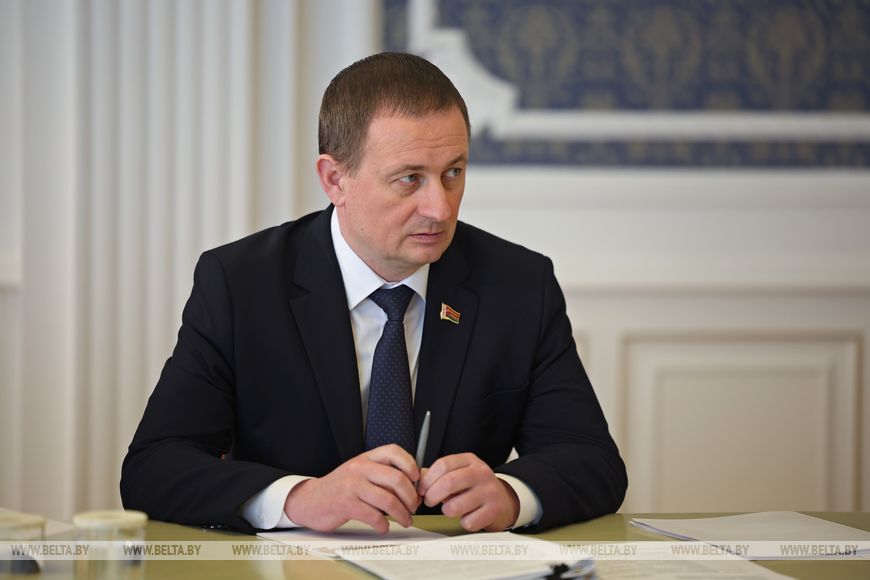
“That is why I frequently demand reports from both the State Control Committee and the chairman of the National Bank’s Board on various issues to ensure we are all on the same page. We have a new prime minister, but the president remains the same. It is the president who defines the course, and that course must be followed. Yet, time and again, I see requests for debt restructuring, such as for the cement industry organizations. What does ‘debt restructuring’ mean? I understand what you are proposing, but I have always emphasized: we must make the executives work. If you’ve taken the job, get it done,” the Belarusian leader stressed.
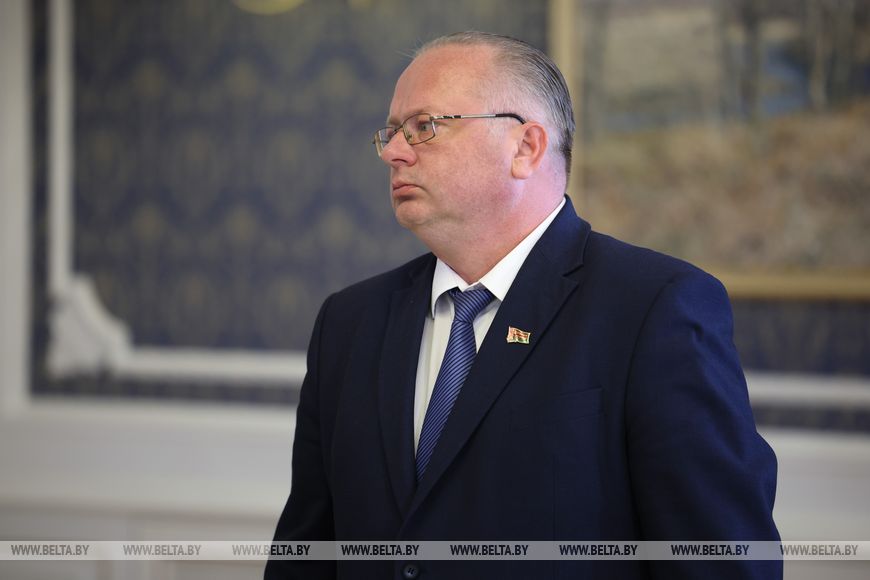
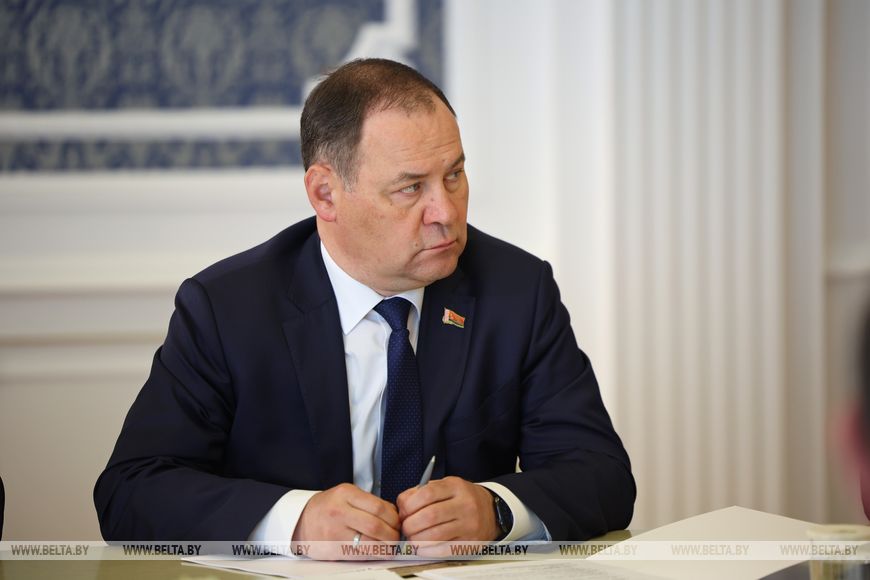
“We put people in there. Go and push, work hard, deliver results under the conditions that exist today. What do you mean we have to help some and not others? Everyone should work under equal conditions,” Aleksandr Lukashenko added.
The head of state recalled that Belarus carried out a large-scale modernization of its cement production facilities back in 2012–2013. At the time, about $1 billion was spent on this. “And what? Did the cement producers pay for that with their own money?” the president said. “Six years ago, a decision was made to restructure the debt of these organizations, repayment was stretched out until 2049. Six years have passed, and we are back to this issue again. That is why such proposals alarm me.”
Now, the proposal is to convert the foreign currency debt of the cement enterprises into Belarusian rubles and accelerate the repayment schedule, moving it from 2029 up to 2026.
“Maybe you are right. But, I repeat, what alarms me is that today the heads of these cement plants are sitting comfortably at the same table with the president, feeling that they are in the right,” Aleksandr Lukashenko said.
According to government reports, the earlier modernization has yielded results, and there are no overdue debts. “That’s good. But it would be very good if everything were actually fine with them. We invested $1 billion, now go and do your job,” the head of state said.
Furthermore, the price of exported cement is up to 40% lower than the domestic price. “So you are selling cement to your own people at nearly twice the price you sell it for abroad. As a result, intermediaries are engaged in re‑export, and our consumers are forced to buy imported low‑quality products. And now we are going to grant them benefits… Why are we not calling them to account for this?” the president said.
State controllers have noted instances of corruption in the supply of raw materials and equipment to state enterprises. “This is completely unacceptable,” the head of state stressed.
Aleksandr Lukashenko turned to Deputy Prime Minister Aleksandr Terekhov for concrete answers to a number of questions: what has the government done to develop the cement industry; if a positive decision is made on another debt restructuring, will the enterprises be able to operate stably and profitably; will the plants themselves continue to modernize their production facilities to the required extent; and why is it not possible to satisfy the domestic market with cement products?
“There are a host of questions that should have been resolved already,” the head of state said.
On Svetlogorsk Pulp and Cardboard Mill and the allocation of state fund resources
The meeting also considered a draft resolution of the Council of Ministers on allocating funds from the State Targeted Budgetary Fund for National Development to Svetlogorsk Pulp and Cardboard Mill in 2026.
“Again, money. The government’s proposal is as follows: return to the company all the funds that it pays into the National Development Fund this year so that it can use them to repay a loan. To put it bluntly, it is supposed to pay a tax, but we are not collecting it from it. They will use this tax, which the enterprise is obligated to pay, to cover their own liabilities. At the same time, the government and the State Control Committee agree that this amount has been calculated not on the basis of actual profit, but on the basis of so‑called paper profit derived from positive exchange rate differences. That means there is no real money there,” the head of state said.
Aleksandr Lukashenko asked Deputy Prime Minister Viktor Karankevich to report on why the enterprise cannot meet its obligations on its own. “Is there no manager there? There is. What exactly is he doing? We need to take a principled look at this and provide an assessment with appropriate conclusions,” the Belarusian leader instructed. “Why this complicated scheme that you are proposing? According to the State Control Committee, the government has sufficient authority to make a decision. Why have you come to me?”
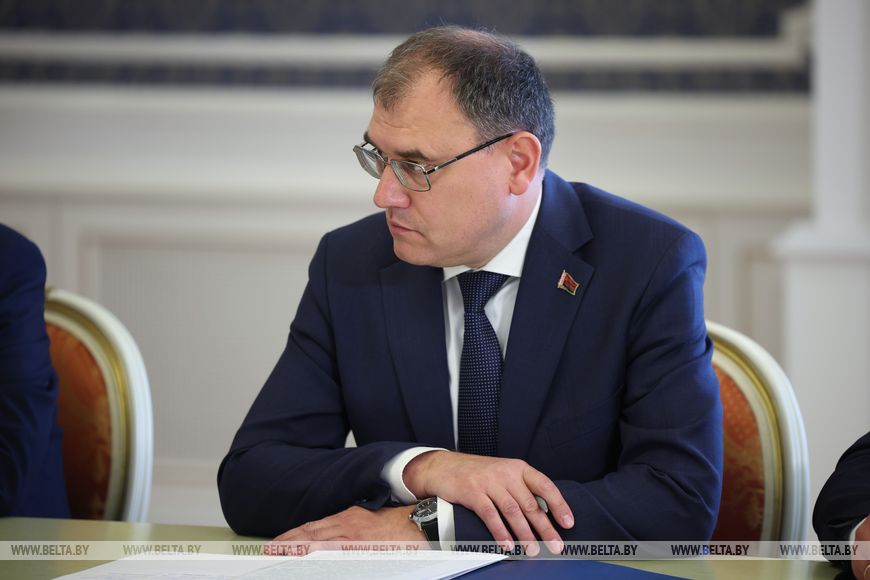
On the anti-crisis plan for Orsha Meat Canning Plant
The third major issue on the meeting’s agenda was a draft directive on the merger of Orsha Meat Canning Plant and its raw material zone with Agrokombinat Dzerzhinsky.
“Previous attempts to turn around this loss-making plant, involving the Vitebsk Oblast Executive Committee, the Orsha District Executive Committee, and regional associations responsible for developing agricultural enterprises, yielded no results. You have found a new formula. Actually, you didn’t find it. I personally arranged with the head of Agrokombinat Dzerzhinsky that he would take on this zone,” the head of state said.
Aleksandr Lukashenko emphasized that the state had invested funds in modernizing Orsha Meat Canning Plant, creating excellent opportunities for processing and producing sought-after products, but the raw material zone needs to be developed. “This is what private owners ask for: ‘Give us a raw material zone’. We provided it to him. He ought to say thank you. Cross ourselves and move forward. Invest in the collective and state farms, the way he knows how, and make the personnel work,” the president said.
According to reports to the head of state, a new manager has been appointed, reserves for increasing efficiency at Orsha Meat Canning Plant have been identified, and approaches for its further development have been worked out. In this regard, Aleksandr Lukashenko asked Vitebsk Oblast Governor Aleksandr Rogozhnik to report on his assessment of the anti-crisis plan and its effectiveness.
“You are proposing to grant Dzerzhinsky financial concessions. Including restructuring Orsha’s debts so that the new owner can both develop itself and turn around the crisis-ridden plant. Plus the additional burden of developing the raw material zone. Of course, lending a helping hand may be fair if it is necessary. But it seems to me that we are already doing everything this agricultural enterprise asks for,” the Belarusian leader said.
As the president was explained, the draft directive is not about providing additional resources to the agricultural enterprise, but about rescheduling the repayment of accumulated liabilities. “But I want him to pay on time. We could use that extra money tomorrow as well. He has that money. And not everything he built with his own hands - the state lent a shoulder and helped,” Aleksandr Lukashenko said.