Partners
25 сакавіка 2026, 12:29
Zhejiang University researchers pioneer major protein breakthrough
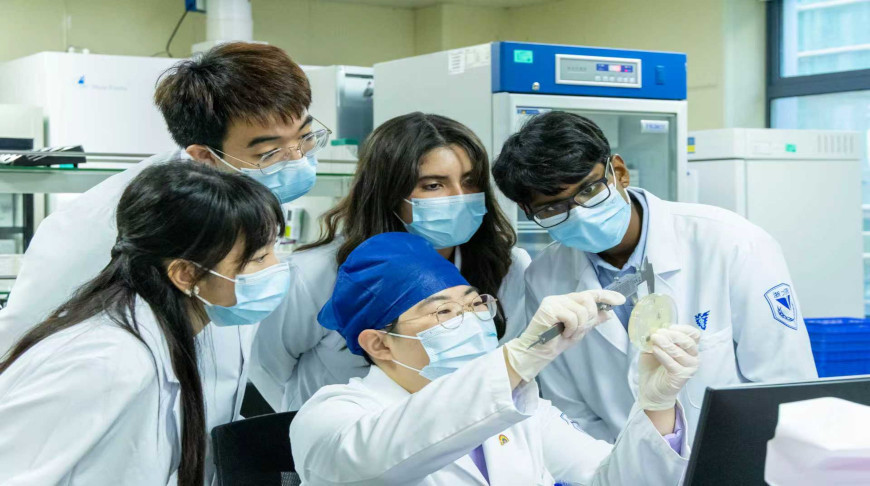
Photo: ZJUISM / iStock
BEIJING, 25 March (BelTA - China Daily) - A multidisciplinary team
of researchers from the Hangzhou-based Zhejiang University have made a
major breakthrough in membrane proteins that could pave the way for
tackling genetic afflictions like Parkinson's disease.
The study,
published in Nature last month, shows the researchers have successfully
engineered a set of artificial proteins that are able to regulate the
functions of G protein-coupled receptors, or GPCRs.
More than 30
percent of approved drugs worldwide target these receptors, said Zhang
Yan, vice-dean of Zhejiang University's School of Medicine and one of
the leading researchers of the study.
Abnormal genetic expression
and mutations in the receptors can impair these switches and therefore
disrupt their signaling functions. In fact, hundreds of clinical
diseases, including Parkinson's, obesity and hypercalcemia (high level
of calcium in the blood), are found to be caused by such mutations.
For
patients, these structural dysfunctions often translate into long-term
and chronic burdens, as conventional drugs designed to target the
receptors' switches are generally unable to execute repairs.
That
is where artificial intelligence comes to the researchers' aid, as the
development of AI-driven protein design in recent years, particularly
generative models for de novo design, has provided tools that generate
proteins with unprecedented speed and accuracy.
The goal of de
novo design — making new proteins from scratch - is to design proteins
that do not exist in nature, without relying on natural structures or
sequences, according to Zhang Min, another member of the research team
from Zhejiang University's College of Computer Science and Technology.
Compared
to modifying or improving existing proteins, this task presents greater
challenges for researchers and algorithms in understanding proteins.
"We
need to systematically deconstruct a seemingly simple requirement and
transform it into functional modules that AI can implement step by
step," she said.
However, the real hurdle lies in creating the
right modulators to bind the receptors at the right places and achieve
the desired effects.
To address that challenge, the team
developed an AI-guided probe, through which the structures of the
targeted receptors can be thoroughly profiled and potential binding and
regulatory sites found. Then, using an approach known as "structural
prompts" - not dissimilar to input fed to Deep-Seek or ChatGPT, but for
protein structures - they generated these modulators.
More significantly for the research team, their findings can now serve as a platform for similar research.