
A time of missed opportunities. This is the definition that comes to mind when analyzing Poland’s foreign policy over the past few years. It is genuinely surprising. After all, Poland has a considerable potential, and its political elites are highly ambitious and assertive. So why is it that when it comes to major politics and concrete actions, Warsaw increasingly finds itself on the sidelines? What is it that this country lacks to realize its potential and play a more significant role in regional politics?
Dual power – strength or weakness?
You can't always change your circumstances, but you can change your attitude toward them. This wisdom is well applied to politics, which requires flexibility, pragmatism, and the ability to view things from different perspectives.
Today, the domestic political arena in Poland is divided between two major camps. On one side is the conservative party Law and Justice (PiS), whose representative, Karol Nawrocki, holds the office of president of the country. On the other side is the coalition of Prime Minister Donald Tusk, which controls the government. There are other forces as well, but their role in the country's political life is less prominent.
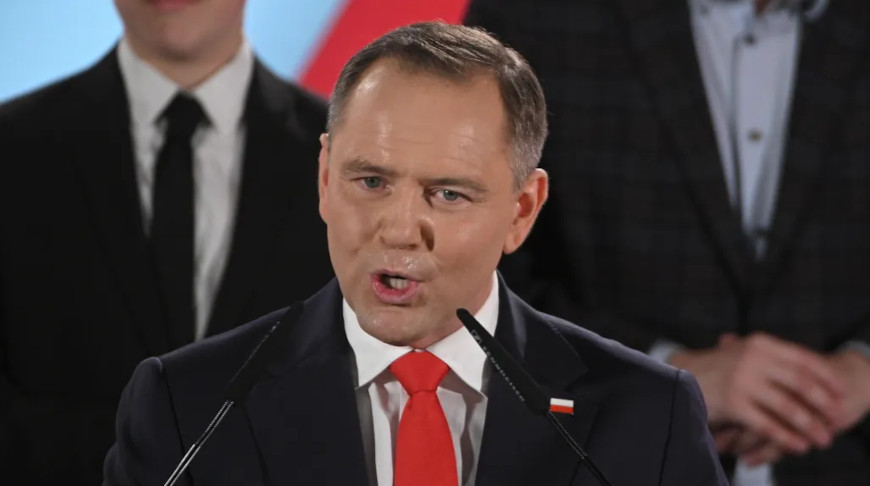
There has long been animosity between the two camps, which the public has dubbed the Polish-Polish war. Both the PiS camp and the Tusk camp clearly wish to concentrate power entirely in their own hands. However, the current circumstances dictate that power is divided between the prime minister and the president. This cannot be changed. What remains is to shift attitudes - seek common ground, strive for compromises, and find shared approaches. But this is in theory. In practice, the Polish elites are doing the exact opposite.
Some argue that dual power paralyzes state governance and weakens the country. After all, can a state function and develop normally when the president vetoes government resolutions and the prime minister rejects presidential initiatives? Each side plays for itself, and in the end, the entire country loses, in this case, Poland.
But can Polish dual power be transformed from a weakness into a strength? In a sense, Poland finds itself in a unique situation where the divergence within Polish politics could play to its advantage on the foreign policy track. However, for this to happen, the two leading political forces must prioritize the country's interests above personal ambitions, at least on the international stage.
It is no secret that Poland has long been balancing between two major players - Washington and Brussels. Yet even under current conditions, with relations between the U.S. and Europe significantly strained, Warsaw could leverage the goodwill of both sides to extract benefits for the country.
President Nawrocki openly advocates for the Donald Trump team who equally openly supported his candidacy in last year's presidential election. Meanwhile, Tusk is largely a pro-Brussels politician. And regarding relations with the United States, the prime minister's sympathies clearly lie with the U.S. Democrats.
If Tusk and Nawrocki were to play in harmony, Poland would likely not have found itself left out of the Washington and London summits. Nor would it be witnessing the formation of a new European directorate in place of the Weimar Triangle (Germany, France, Poland), where Poles have now been squeezed by the British.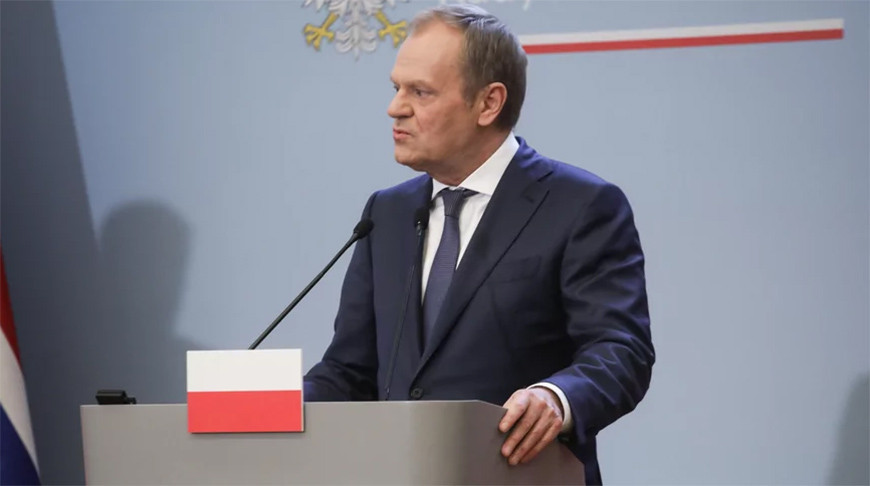
By balancing relations between the U.S. and Europe, Poland could serve as a mediator and bridge between the two sides. This is particularly relevant amid the current transatlantic rift. Such a role would allow Warsaw to increase its political influence and strengthen its position within the EU, while also securing U.S. support. While Republicans are in power, Nawrocki could take the lead on the American track. Should Democrats win the next congressional elections, Tusk would step into action. Undoubtedly, such a strategy requires not only coordination between the president and the prime minister but also the ability to balance relationships while advancing the interests of one's own country.
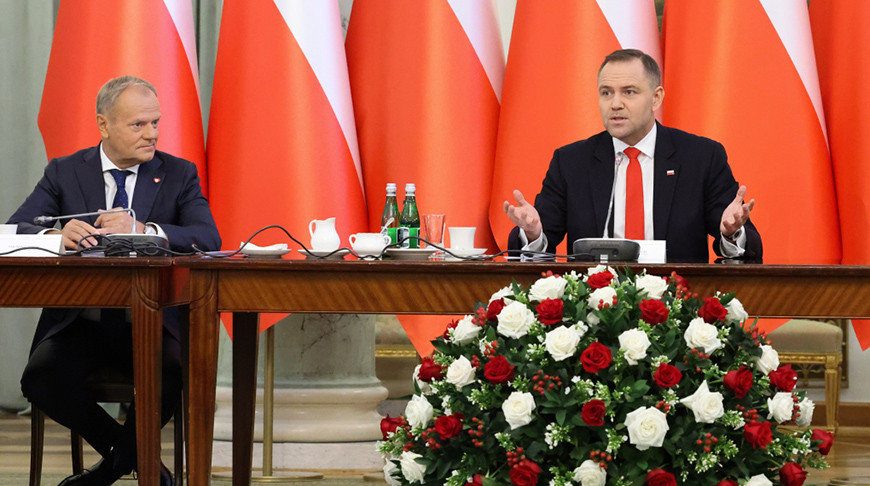
Indeed, two years ago, Polish elites seemed to be walking this very path. It is enough to recall the joint trip by Tusk and Andrzej Duda (Poland’s president at the time) to Washington in March 2024. Like Nawrocki, Duda came from PiS, and relations between the president and the prime minister were tense. For this reason, a number of experts criticized such a joint visit. But, as it turned out, they were wrong to do so.
Twitter “diplomacy” instead of strategy?
Twitter diplomacy is hardly surprising today. But when a foreign minister stoops to social media squabbles, trying to settle personal scores, it has nothing to do with diplomacy, even of the Twitter variety. However, it has a direct bearing on the country the chief diplomat is putting at risk, both politically and reputationally.
This week, Polish media informed readers that Minister of Foreign Affairs Radosław Sikorski had picked a fight with X owner Elon Musk on the platform. The Polish diplomat accused the American businessman of not preventing the Russian military from using the Starlink communication system.
“Hey, big man, why don’t you stop the Russians from using Starlink?” Sikorski posted on X.
“This drooling imbecile doesn’t even realize that Starlink is the backbone of Ukraine military communications,” the American businessman replied.
One can scold Musk endlessly for his offensive remarks, but it’s worth considering that he is not bound by official constraints or the obligation to uphold a country’s image. Unlike Sikorski, whose actions appear absurd. After all, if Warsaw is genuinely concerned about the Starlink issue, then by protocol and logic, Sikorski should have contacted Secretary of State Marco Rubio. But instead, the Polish minister of foreign affairs staged a spectacle on X, picking a fight with Musk.
What is worse, Sikorski’s actions seem motivated by a desire to settle personal scores. A year ago, there was already a clash between him and the American businessman. At the time, there were talks that Musk might cut off Ukraine from Starlink. Against this backdrop, the Polish minister of foreign affairs addressed the businessman on X, pointing out that Poland pays for communication services for Ukraine and that Musk himself should not forget about ethics.
Rubio defended Musk, urging gratitude for the assistance provided. Musk also reacted: “Be quiet, small man. You pay a tiny fraction of the cost. And there is no substitute for Starlink.”
Now, the “small man Sikorski has answered the “big man” Musk. And whatever the Polish minister of foreign affairs had in mind, his actions look like plain revenge from the outside. In doing so, the diplomat is using his official authority and risking dragging his country into yet another confrontation. After all, last year Sikorski already dragged Tusk into an X feud. At the time, the Polish prime minister, defending his minister, published a post with a grievance addressed to the USA. “True leadership means respect for partners and allies. Even for the smaller and weaker ones. Never arrogance. Dear friends, think about it,” the Polish premier told the USA.
Some may say that Poland is a sovereign state, and Polish politicians should stand up for their convictions. In theory, that’s true. But in real politics, theories often don’t hold up. As already mentioned, Poland operates within the sphere of influence of the EU and the USA. This can be leveraged, if one acts cautiously and doesn’t cross the line. Warsaw has crossed that line, and not just once, often without significant cause and in the interests of another country. Was the Starlink issue of such fundamental importance to Poland as to create tension in Polish-U.S. relations, especially given the Polish authorities’ desire to maintain a U.S. military presence in their country? If a year ago the Starlink topic was indeed relevant for Poland, which wanted to prolong the Ukrainian conflict, then now, considering the events in Ukraine, the USA, and Europe, this issue is clearly not a top concern for Warsaw.
Of course, a couple of posts on X will not substantially influence U.S. policy. And if the Americans decide they want to increase the size of their contingent in Poland, they will make decisions based on expediency, not emotions. And yet, the situation described above is a good example of the lack of forethought and shortsightedness in Polish policy, as well as the unprofessionalism and impulsiveness of Polish diplomacy. This later had consequences.
Dual power – strength or weakness?
You can't always change your circumstances, but you can change your attitude toward them. This wisdom is well applied to politics, which requires flexibility, pragmatism, and the ability to view things from different perspectives.
Today, the domestic political arena in Poland is divided between two major camps. On one side is the conservative party Law and Justice (PiS), whose representative, Karol Nawrocki, holds the office of president of the country. On the other side is the coalition of Prime Minister Donald Tusk, which controls the government. There are other forces as well, but their role in the country's political life is less prominent.
There has long been animosity between the two camps, which the public has dubbed the Polish-Polish war. Both the PiS camp and the Tusk camp clearly wish to concentrate power entirely in their own hands. However, the current circumstances dictate that power is divided between the prime minister and the president. This cannot be changed. What remains is to shift attitudes - seek common ground, strive for compromises, and find shared approaches. But this is in theory. In practice, the Polish elites are doing the exact opposite.
Some argue that dual power paralyzes state governance and weakens the country. After all, can a state function and develop normally when the president vetoes government resolutions and the prime minister rejects presidential initiatives? Each side plays for itself, and in the end, the entire country loses, in this case, Poland.
But can Polish dual power be transformed from a weakness into a strength? In a sense, Poland finds itself in a unique situation where the divergence within Polish politics could play to its advantage on the foreign policy track. However, for this to happen, the two leading political forces must prioritize the country's interests above personal ambitions, at least on the international stage.
It is no secret that Poland has long been balancing between two major players - Washington and Brussels. Yet even under current conditions, with relations between the U.S. and Europe significantly strained, Warsaw could leverage the goodwill of both sides to extract benefits for the country.
President Nawrocki openly advocates for the Donald Trump team who equally openly supported his candidacy in last year's presidential election. Meanwhile, Tusk is largely a pro-Brussels politician. And regarding relations with the United States, the prime minister's sympathies clearly lie with the U.S. Democrats.
If Tusk and Nawrocki were to play in harmony, Poland would likely not have found itself left out of the Washington and London summits. Nor would it be witnessing the formation of a new European directorate in place of the Weimar Triangle (Germany, France, Poland), where Poles have now been squeezed by the British.
By balancing relations between the U.S. and Europe, Poland could serve as a mediator and bridge between the two sides. This is particularly relevant amid the current transatlantic rift. Such a role would allow Warsaw to increase its political influence and strengthen its position within the EU, while also securing U.S. support. While Republicans are in power, Nawrocki could take the lead on the American track. Should Democrats win the next congressional elections, Tusk would step into action. Undoubtedly, such a strategy requires not only coordination between the president and the prime minister but also the ability to balance relationships while advancing the interests of one's own country.
Indeed, two years ago, Polish elites seemed to be walking this very path. It is enough to recall the joint trip by Tusk and Andrzej Duda (Poland’s president at the time) to Washington in March 2024. Like Nawrocki, Duda came from PiS, and relations between the president and the prime minister were tense. For this reason, a number of experts criticized such a joint visit. But, as it turned out, they were wrong to do so.
During the visit, Duda consistently demonstrated support for the Republicans. It is worth recalling that the U.S. presidential race was gaining momentum at the time, and PiS's bet on the Republican candidate Trump ultimately proved correct. Europeans also anticipated Trump's return to the White House and had already begun expressing concerns that the U.S. might completely stop providing funding for the conflict in Ukraine and potentially reconsider its commitments under NATO Article 5. Therefore, Tusk traveled to Washington as an emissary of Brussels, seeking certain guarantees for Europe from the United States.
And although Tusk received no guarantees from the Joe Biden administration, the trip proved very successful for Poland itself. The four-handed performance was a resounding success. While the prime minister demonstrated to Europeans a readiness to defend Europe’s interests before Washington, the Polish president assured Americans that Poland remains a loyal U.S. ally. After his trip to the USA, Tusk immediately headed to Berlin for an emergency Weimar Triangle summit. There, the Polish head of government discussed the results of his Washington visit and conveyed the U.S. position to the president of France and the chancellor of Germany. “I want to emphasize that the Weimar Triangle will be consulted with increasing frequency,” Tusk told the media.
It seemed new prospects were opening up for Poland, and its long-cherished dream of leadership within the EU was quite attainable. However, it soon became evident: Poland’s successes were merely a confluence of circumstances, not the result of a considered strategy.
It seemed new prospects were opening up for Poland, and its long-cherished dream of leadership within the EU was quite attainable. However, it soon became evident: Poland’s successes were merely a confluence of circumstances, not the result of a considered strategy.
Twitter “diplomacy” instead of strategy?
Twitter diplomacy is hardly surprising today. But when a foreign minister stoops to social media squabbles, trying to settle personal scores, it has nothing to do with diplomacy, even of the Twitter variety. However, it has a direct bearing on the country the chief diplomat is putting at risk, both politically and reputationally.
This week, Polish media informed readers that Minister of Foreign Affairs Radosław Sikorski had picked a fight with X owner Elon Musk on the platform. The Polish diplomat accused the American businessman of not preventing the Russian military from using the Starlink communication system.
“Hey, big man, why don’t you stop the Russians from using Starlink?” Sikorski posted on X.
“This drooling imbecile doesn’t even realize that Starlink is the backbone of Ukraine military communications,” the American businessman replied.
One can scold Musk endlessly for his offensive remarks, but it’s worth considering that he is not bound by official constraints or the obligation to uphold a country’s image. Unlike Sikorski, whose actions appear absurd. After all, if Warsaw is genuinely concerned about the Starlink issue, then by protocol and logic, Sikorski should have contacted Secretary of State Marco Rubio. But instead, the Polish minister of foreign affairs staged a spectacle on X, picking a fight with Musk.
What is worse, Sikorski’s actions seem motivated by a desire to settle personal scores. A year ago, there was already a clash between him and the American businessman. At the time, there were talks that Musk might cut off Ukraine from Starlink. Against this backdrop, the Polish minister of foreign affairs addressed the businessman on X, pointing out that Poland pays for communication services for Ukraine and that Musk himself should not forget about ethics.
Rubio defended Musk, urging gratitude for the assistance provided. Musk also reacted: “Be quiet, small man. You pay a tiny fraction of the cost. And there is no substitute for Starlink.”
Now, the “small man Sikorski has answered the “big man” Musk. And whatever the Polish minister of foreign affairs had in mind, his actions look like plain revenge from the outside. In doing so, the diplomat is using his official authority and risking dragging his country into yet another confrontation. After all, last year Sikorski already dragged Tusk into an X feud. At the time, the Polish prime minister, defending his minister, published a post with a grievance addressed to the USA. “True leadership means respect for partners and allies. Even for the smaller and weaker ones. Never arrogance. Dear friends, think about it,” the Polish premier told the USA.
Some may say that Poland is a sovereign state, and Polish politicians should stand up for their convictions. In theory, that’s true. But in real politics, theories often don’t hold up. As already mentioned, Poland operates within the sphere of influence of the EU and the USA. This can be leveraged, if one acts cautiously and doesn’t cross the line. Warsaw has crossed that line, and not just once, often without significant cause and in the interests of another country. Was the Starlink issue of such fundamental importance to Poland as to create tension in Polish-U.S. relations, especially given the Polish authorities’ desire to maintain a U.S. military presence in their country? If a year ago the Starlink topic was indeed relevant for Poland, which wanted to prolong the Ukrainian conflict, then now, considering the events in Ukraine, the USA, and Europe, this issue is clearly not a top concern for Warsaw.
Of course, a couple of posts on X will not substantially influence U.S. policy. And if the Americans decide they want to increase the size of their contingent in Poland, they will make decisions based on expediency, not emotions. And yet, the situation described above is a good example of the lack of forethought and shortsightedness in Polish policy, as well as the unprofessionalism and impulsiveness of Polish diplomacy. This later had consequences.
On 18 August, Washington hosted a U.S.-European summit on Ukraine. It followed the historic meeting between U.S. and Russian leaders in Alaska and was of key importance for Europeans. “The game over Ukraine’s future, Poland’s security, and the security of all of Europe has entered a decisive phase… That is why maintaining the unity of the entire West is so important,” Donald Tusk wrote on social network X.
However, neither Tusk nor Nawrocki was invited to Washington, despite Poland’s central role in Western assistance to Ukraine. By contrast, Finland’s President Alexander Stubb was invited. This fact sparked a political storm inside Poland, with officials and experts speaking of a diplomatic failure and the marginalization of the country.
“The prime minister is persona non grata in Washington because of his statements, and on top of that we have domestic political conflict and a change of president… There is no consistent foreign policy or initiative. It’s sad,” noted Polish analyst Filip Dąb-Mirowski.
Brussels could have insisted on Tusk’s presence at the Washington summit. But, realizing that Poland no longer plays the role of conduit for the U.S., European officials apparently chose not to press the issue. “Donald Tusk is being ignored by our Western European partners,” complained Sejm deputy Andrzej Śliwka.
In December, Poland was ignored again. This time Tusk was not invited to London, where a meeting on Ukraine was held with the participation of leaders of the United Kingdom, Germany, France, and Vladimir Zelensky himself. Once again, voices in Warsaw spoke of a catastrophe in foreign policy, criticizing Tusk, Nawrocki, the USA, and Europe, and asking where Poland had miscalculated and how the situation could be corrected.
Time to find that very balance
The ability to balance relations in global or regional politics is a kind of art. For Poland, given its geopolitical position, finding a balance not only in relations with the U.S. and the EU but also with neighboring states is an absolute necessity. And perhaps this balance could become the key to success and to the regional leadership that Polish elites have dreamed of for decades.
We have already spoken about balance with Western partners. Whatever the circumstances, however quickly some may rush to bury transatlantic relations, it must be acknowledged that as long as the United States has the ability to influence the European region and EU countries, it will fully use that opportunity. Even if the focus of American policy shifts to other parts of the world, this does not mean that Europe disappears from Washington’s field of vision.
Transatlantic relations are not dying: they are transforming, just as our entire world is changing. For Western elites, including Poland, it is important to gain the ability to influence these changes and to integrate in time into the new political landscape.
Yet here too Poland is held back by internal strife. Instead of encouraging Nawrocki to work more actively on the American track, Tusk’s government only places obstacles in his way. This was the case, for example, with Nawrocki’s invitation to the Board of Peace, which the prime minister fiercely criticized as dragging Poland into a “foreign game”. At the same time, the Polish premier agrees to be drawn into the games of Brussels and London. But leading his own, balancing among all players, he somehow refuses to do. The reason for this reluctance likely lies in domestic political competition and the unwillingness to hand Nawrocki even a few cards to play.
Equally important for Warsaw is to balance relations with its neighbors. Poland, like Belarus, lies on a geopolitical fault line. This demands a careful, prudent, and pragmatic policy. Such an approach is vital for economic development (given Poland’s position at the crossroads of transit routes), for ensuring military security (in an environment of growing mistrust and confrontation in the region), and for effective crisis management (whether migration or cross-border crime, which after the end of the Ukrainian conflict may become Europe’s number one problem).
About 15 years ago, during his first term as Prime Minister, Donald Tusk stated: “Poor relations with neighbors are not proof of strength and independence.” He emphasized that under his leadership Poland pursued its interests through “good relations, not adventures”.
In recent years, however, Polish politicians have relied more on adventures than on good-neighborly relations. Has Poland thus been able to effectively realize its interests? Clearly not. Perhaps the time has come to change approaches: to find that very balance which would allow Poland to maneuver among external players, build reasonable and pragmatic relations with its neighbors, and at the same time pursue its own policy in the interests of Poland and its people.
Vita Khanatayeva
Photos: PAP, Pixabay, Getty Images
BelTA