Society
06 мая 2026, 17:12
Lukashenko calls hematogen favorite treat of his childhood. How is hematogen made today?
In November 2023 Belarus President Aleksandr Lukashenko went on a working trip to Ostrovets District, Grodno Oblast. At that time the head of state not only visited the nuclear power plant that had been commissioned but was also made familiar with the social and economic development of the region. He also visited the district’s central clinical hospital where he unexpectedly tried his favorite treat, an essential “doping” for blood donors: hematogen. We explain where in Belarus these wholesome bars are produced and what the composition has to include in BelTA’s project After the Fact: Special Report.
How hematogen appeared
Hematogen — a dietary supplement created for the prevention and treatment of iron deficiency anemia — was very popular among Soviet school students. This treat never gained global fame, but residents of post-Soviet countries still love it today.
To be honest, hematogen was not invented in the Soviet Union as a medicinal product. It was an ordinary liquid medicine initially. It appeared in Switzerland in 1890 thanks to the efforts of Dr. Adolf Hommel. The potion, which consisted of bovine blood and egg yolk, was used to treat anemia. This preparation proved highly effective during World War One. Doctors noticed that when using hematogen, wounded soldiers and children whose health was undermined by malnutrition recovered faster.
In the USSR the production of the medicine, which was still liquid rather than the bar we are used to, began after 1917. It was intended for Red Army soldiers and their children.
During World War Two many Soviet pharmaceutical manufacturing facilities were evacuated to Central Asia republics. Before that, the production of hematogen had been established in Kiev not only as a potion but also as a bar. A large number of hospitals were set up in Central Asia, and therefore hematogen was quickly delivered to those who needed it for recovery.
Children who survived the terrible war and those born shortly after it were weak. Hematogen was excellent for strengthening health, but because of the unpleasant taste children did not want to eat it. The medicine had to become sweet and its form had to change. That is how the standard bar appeared. Children’s hematogen was the most popular variety with the general public. According to government standards, its composition included black food albumin (4-5%), condensed milk (30-35%), sugar (40%), molasses (about 20%), and vanillin. The tasty medicine could be bought at any pharmacy.
At that time not everyone could afford chocolate or candy, this is why hematogen was bought as a sweet for tea or as a treat. It combined low cost with great benefit: one bar of hematogen provided the daily amount of iron the human body needs. In the USA and Europe, however, the wholesome treat found no place: there was neither particular interest in it nor any economic feasibility for its production. Moreover, chocolate was much more accessible over there than in the USSR.
“My most favorite treat,” Aleksandr Lukashenko stated during his visit to the hospital in Ostrovets. “They say it is not the same as it was in Soviet times”.
The technology is the same, the president was assured. Well, let us check.
Where hematogen is made in Belarus
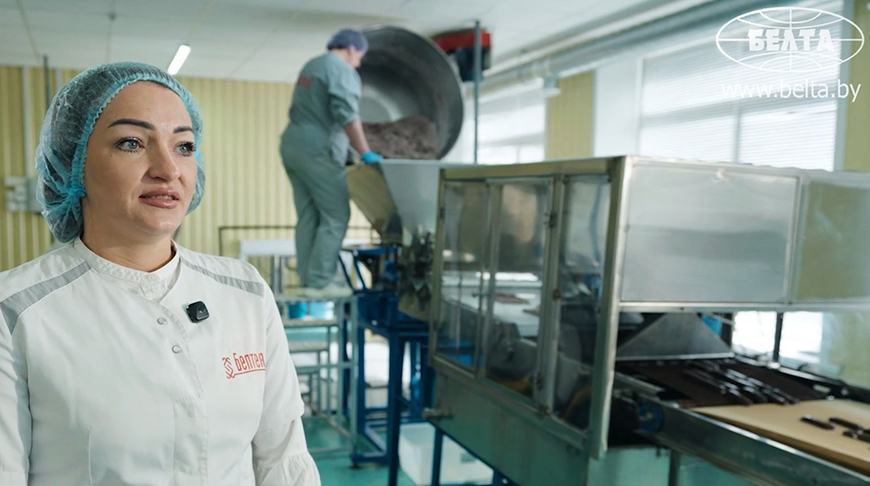
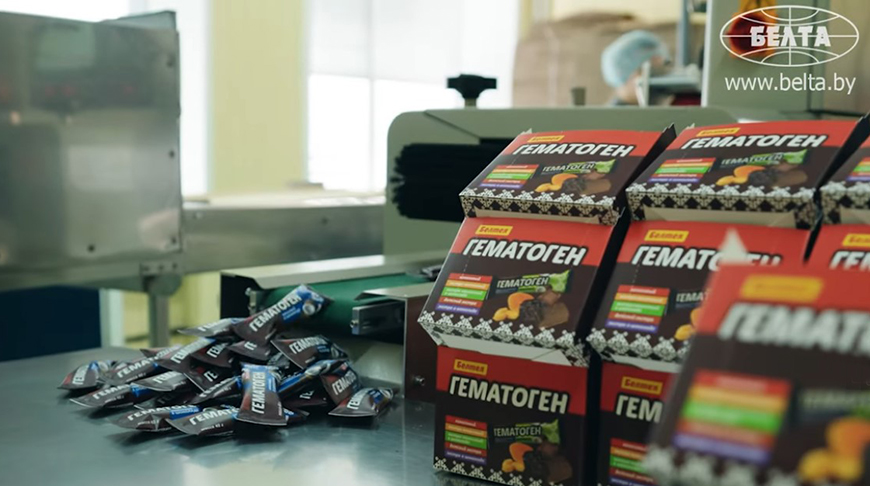
To learn about the specific features of hematogen production, we came to OOO Beltea Company. It is located in the village of Gorokhovka, which is in Mogilev Oblast outside Bobruisk.
This place used to be a school. The vacant building was bought for one base amount, and now hematogen is produced here among other things.
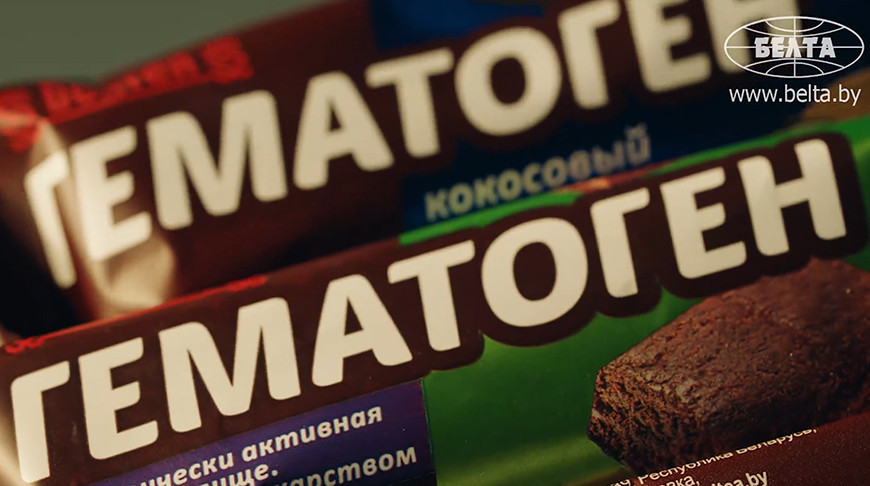
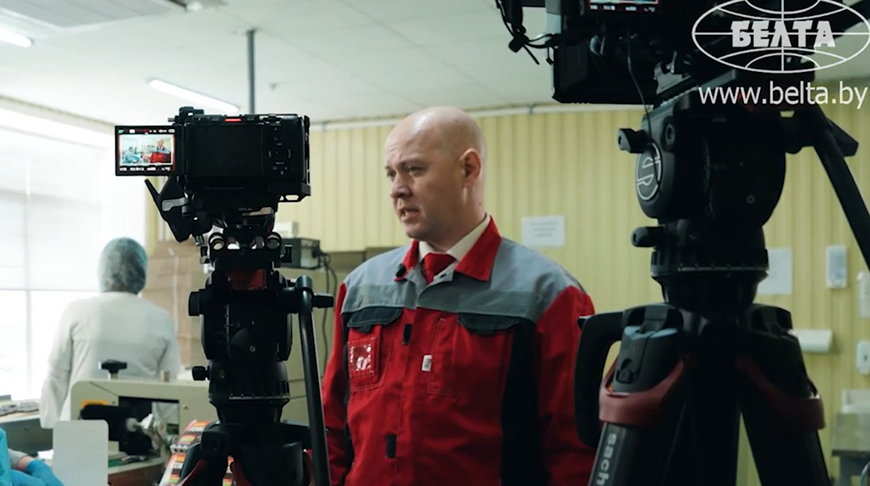
“We produce several types of hematogen. Such as hematogen with coconut, in confectionery glaze, extra hematogen, children’s hematogen, and hematogen as a dietary supplement,” OOO Beltea Chief Engineer Yuri Kulivets said to bring us up to speed. There are also bars with hazelnut and with a cherry flavor.
What is in hematogen
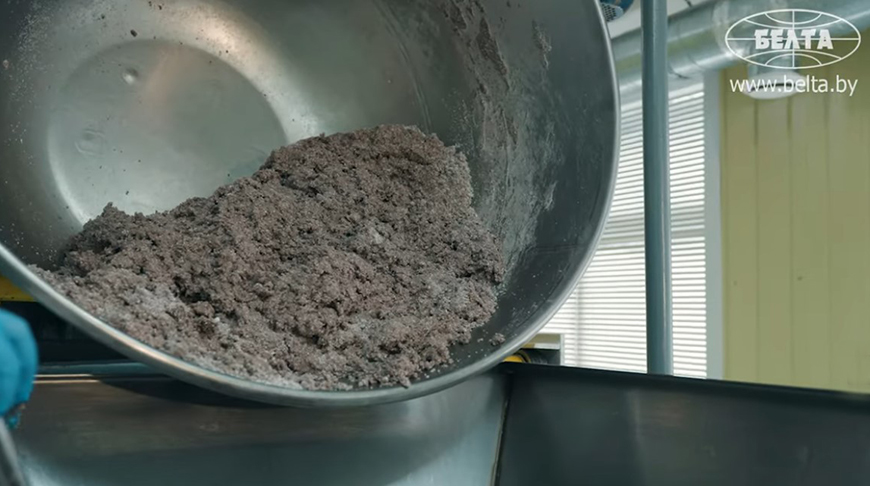
From 25,000 to 30,000 hematogen bars are produced per shift at the enterprise. Their base is coconut shavings. The composition also includes molasses, sugar, and bovine hemoglobin. The producers emphasize that albumin is absent from the recipe.
“Bovine hemoglobin undergoes more thorough purification. It is better absorbed by the human body. Therefore, it was decided that we would use bovine hemoglobin,” OOO Beltea Deputy Director Tatiana Grishchenko explained.
How hematogen is produced
All ingredients are mixed in a dough mixing machine for a certain amount of time. But it is not that simple: the components are added according to a strict technology.
“When water and molasses are added, the key is not to miss that moment so that the mass does not turn into a pancake. This is why the machine is lifted every time, and the operator takes the mass by hand and checks the consistency,” the deputy director explained.
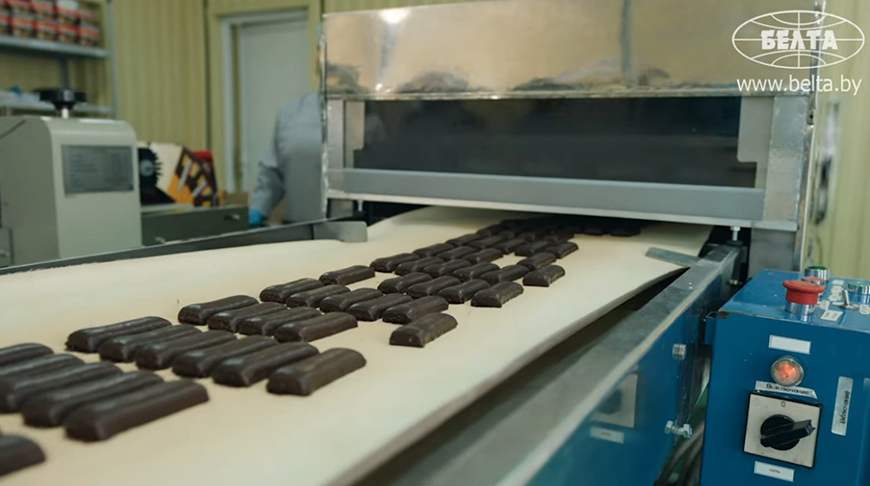
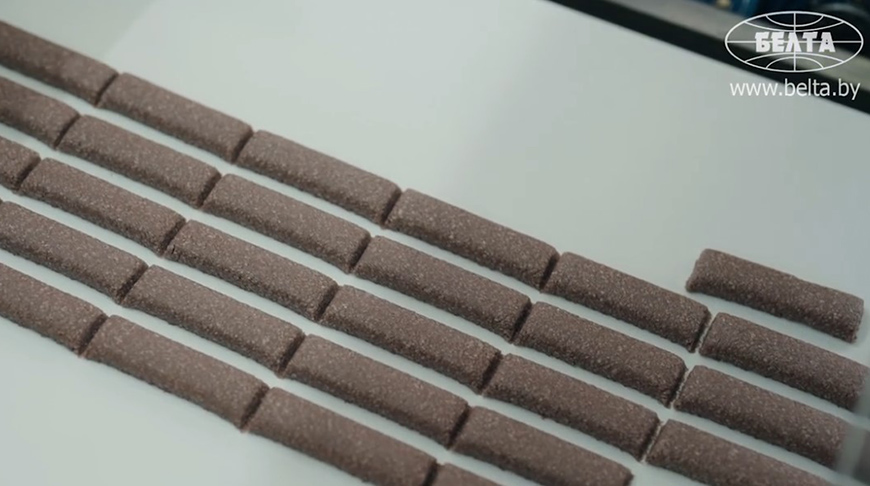
The mixture goes into the extruder, and then the bars take shape. Homemakers will understand: the process is similar to a meat grinder. The belt carries five streams with predefined parameters. Each must have a certain length, as this affects how correctly they are coated with glaze.
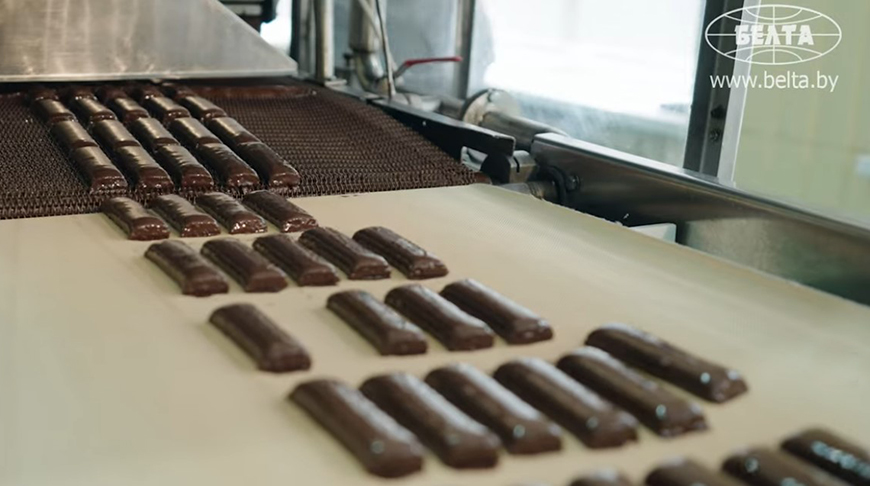
Then the bar reaches the enrober and is, accordingly, coated with glaze. The operator ensures the product is completely immersed in chocolate. Next, the bar enters the cooling tunnel.
“It spends about seven minutes in the cooling tunnel. It cools down rather quickly and emerges for packaging. Then operators gather the bars, count the number of bars, and put them into multipacks,” Tatiana Grishchenko said.
In which countries you can try Belarusian hematogen
Belarus is the primary market for these products. The company also exports hematogen to Russia, Georgia, Mongolia, Canada, and Latvia. New markets are also being explored.
“A lot of work has been done to reach the market of the Central Asia republics. Our partners in Uzbekistan sent us a request to produce hematogen according to a special recipe because it is an Islamic country and they have their own requirements. We have fully satisfied these requirements, received positive feedback, passed all the necessary procedures, and we expect to make the first shipment to the Uzbekistan market soon. At the same time, we keep an eye on the Kazakhstan market and are exploring the possibility of exporting to Kazakhstan,” OOO Beltea Chief Engineer Yuri Kulivets noted.
Hematogen is an additional source of iron. It increases hemoglobin, strengthens immunity, and improves metabolism. Back in the USSR days this wholesome treat was very popular. Now, with the healthy lifestyle in vogue, hematogen has once again started securing its position on the shelves of pharmacies and stores.