From meeting with Coale to trip to DPRK. How does Belarus dismantle geopolitical barricades?
An archive photo
A meeting with Americans last week, an official visit to North Korea this week. And, negotiations with Moscow in between. It’s a real Belarusian rollercoaster for those whose main job is to force things into a mold and slap on labels. Yesterday our country was called an agent of the Kremlin, today it is called an ally of Washington, and tomorrow, apparently, it will be listed as a member of a secret society plotting something global.
Actually, the global part is already here and now. The events and processes unfolding around us — in which we are involved whether we like it or not — affect not just isolated regions, but the entire world, without exaggeration.
A clear example is the war in Iran. Given the involvement of Middle Eastern countries, this is no longer a local war, but a regional one. And if we consider the economic consequences (for example, rising prices for fertilizers and hydrocarbons), then this is a war with global consequences that affect everyone and everything, including Belarus.
“The USA lifted sanctions from Belarus amid a sharp rise in fertilizer prices resulting from the war with Iran,” the American newspaper The New York Times wrote, assessing the results of U.S. Special Envoy John Coale’s visit to Belarus.
It might seem that Belarus and Iran are worlds apart. But what about Canada, for example? After all, if we expand on the topic of fertilizers, a simple chain of reasoning leads us to the intricacies of relations between the USA and Canada, on which Americans depend for supplies of this resource so vital to farmers. The United States has few options. Either seek alternative suppliers to reduce dependence on the neighbor with whom relations have recently been strained. Or ensure that Canada feels the heat of increased competition in global markets, which requires supporting other players. Or act on both fronts simultaneously, which is likely what is happening.
“The USA remains heavily dependent on imports of potash fertilizers, a vital agricultural resource. Data shows that Canada dominates fertilizer imports. Any tariff friction or political turmoil in relations with the main supplier makes alternative options more valuable. And this calculation is likely part of the shift in the policy of sanctions against Belarusian potash fertilizers,” the American publication Good Authority wrote back in December.
Complex logistics hinder the supply of Belarusian fertilizers to the USA. And this is where Lithuania enters our geopolitical chain, through which Belarusian potash was transported in the period before the sanctions. It was likely no coincidence that on his way to Belarus Coale stopped in Vilnius, where, incidentally, he met not only with local officials who view geopolitics as a one-way street, but also with representatives of more flexible and pragmatic right-wing forces.
“On Wednesday John Coale met with several Lithuanian right-wing populist parliamentarians and a member of the European Parliament to discuss relations with Belarus. Petras Grazulis [a Lithuanian MEP who attended the meeting] said that the discussions concerned tensions between Lithuania and Minsk, including disputes over fertilizers, trucks, and balloons used for smuggling,” the Lithuanian TV channel LRT reported, noting that Coale’s meeting with Lithuanian politicians who “hold no government posts” raised “some questions”.
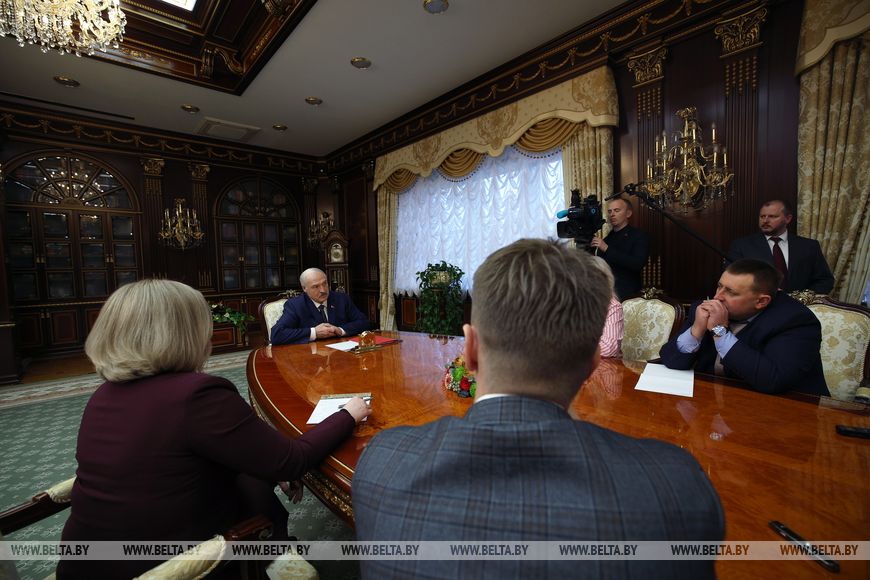
It is noteworthy that after meeting with Coale, Belarus President Aleksandr Lukashenko told reporters about a possible deal to sell a Belarusian mine to the United States. And this, of course, raises additional questions among Lithuanians: if the deal goes through and Americans start mining, what will happen to transit? And what options does Lithuania have in that case?
But these are all questions for the future. As for the current decisions to lift sanctions, they effectively open the floodgates for Belarusian fertilizers to flow into Asian countries where buyers are already lining up amid market turbulence. “From Morocco to Belarus — a global scramble for fertilizers” is how the Indian business newspaper Mint described the situation in the industry.
Of course, Belarusian fertilizers were exported in the past, too. But it’s important to note that the sanctions affect not only logistics but also payments between trading partners, cargo insurance, and other details designed to make life as difficult as possible for Belarusians while simultaneously making it easier for Western manufacturers to compete. For example, for the Canadian fertilizer company Nutrien.
Against the backdrop of the current fertilizer boom, Canadians need not worry about profits in the near future. But once the situation calms down, logistics recover, and gas prices fall (a similar scenario was observed in 2022–2023 when a sharp rise in fertilizer prices was followed by a sharp decline), competition in the fertilizer market will intensify. Canadians will have to make room, and the U.S. multi-pronged strategy will begin to bear fruit.
But aside from fertilizers, there are far more complex processes at play, with Belarus at the center. It has been said time and again that Belarus is located on a geopolitical fault line and is perceived by some as a buffer and by others as a bridge. In this context a battle of paradigms has unfolded: some call for bombarding Belarus with sanctions while others advocate seeking common ground. The Donald Trump administration advocates for dialogue and cooperation. And there are many reasons for that. But the main one is likely outlined in the U.S. National Security Strategy where “restoring stability in Europe and strategic stability with Russia” is listed as a separate priority.
Until recently there has been a balance of power in Europe — albeit a fragile one — that allowed for peaceful coexistence. The Biden administration had its own reasons for disrupting this balance, and it reaped certain benefits from doing so. But the consequences have become a burden for the Trump administration. Among these consequences are the rapprochement between Russia and China, the security crisis in Europe, and trends within the European Union that are quite dangerous for Washington, namely, Brussels’ push to centralize power, create the position of a President of Europe, and concentrate political, economic, and even military authority over all 27 member states.
Restoring balance in Europe may be just as beneficial for the United States as for the Europeans themselves. This may partly explain Trump’s desire to integrate Russia into the broader European space, where the USA still has considerable room to maneuver.
But undoing the “cancellation” of Russia is no easy task, especially after years of instilling fear of the “Russian threat” in Western societies. Here, the United States needs a success story. American experts believe that such a story could be built through developing relations with Belarus, which plays a strategic role in shaping Europe’s security architecture and, while maintaining close ties with Russia and China, remains open to cooperation with Europe.
“If the U.S.-Belarus track is brought to completion, it could become a model for low‑risk, low‑cost regional engagement that ensures a stable balance between U.S. goals and means. Thanks to its novelty and boldness, it could become a kind of Trump Doctrine for NATO’s eastern flank,” writes Mark Episkopos, an expert at the Quincy Institute, in one of his analyses.
Notably, the Trump administration is already receiving reputational dividends from its dialogue with Minsk. First, Washington presents itself as the only Western force actively working toward de-escalation in Europe. This may irritate Brussels, which needs confrontation with Russia and Belarus to justify further centralization of power within the EU. France and Germany, whose military industries are running at full speed, are also opposed. But Europe is far from monolithic in its views. Both in political and business circles, there are those who seek a return to a period of relative stability and look to the United States with cautious hope.
Second, even Coale’s current visit to Minsk gives the United States an opportunity to return to peacekeeping rhetoric, which is far more appealing to the public than belligerence. “In working with representatives of Lithuania, we see our goal. We are carrying out a humanitarian mission in this case. We want relations between Belarus and Lithuania to improve,” the U.S. special envoy said after his meeting with the Belarusian leader.
And what dividends does Belarus receive? Certain benefits are evident even without looking far into the future. The lifting of illegal sanctions on Belavia and Belarusian potash, even if only from the American side, is already a great result. And this will lead to the improvements of our defense, healthcare, education, road infrastructure, and of course, citizens’ incomes: all the areas that sanctions deliberately target.
Another advantage is the ability to convey our position through direct dialogue, especially when it comes to security issues and Belarus’ relations with its western neighbors.
Incidentally, Vilnius has done everything possible to deprive us of the opportunity to present our arguments. Lithuanian authorities do not even hide their reluctance to see Minsk at the negotiating table. The situation with the weather balloons and the border blockade is quite telling: Lithuanian officials refused dialogue with Minsk, disregarding both national security concerns and the needs of Lithuanian freight carriers. What did Lithuania achieve? Apparently, this time Coale decided to listen to a different perspective: the views of Lithuanian politicians who, as LRT notes, “sometimes follow a line that differs from the official one.”
The current visit of the U.S. delegation to Belarus has triggered a wave of publications in foreign media. Particular interest came from neighboring Poland, where journalists repeatedly highlight the idea of a warming in U.S.-Belarus relations. And this gives our neighbors a reason to reflect: are there alternatives to confrontation? Attempts to rethink the situation and view it from another angle are, in themselves, a kind of result.
“It is worth considering whether the Western policy of isolating Minsk was truly effective,” writes the Polish outlet Defence24.pl, which covers security issues. “Europe should observe U.S. actions and develop its own approach, considering the possibility of negotiations with Lukashenko under certain conditions. The American example shows that this may be a path toward achieving at least a partial agreement with Belarus.”
Both Poland and Lithuania, as well as the EU as a whole, have plenty to reflect on. As for Belarus, our country feels quite comfortable at the negotiating table. The head of state shares his vision of the situation with the Americans, openly points out mistakes, and proposes options for resolving issues. Minsk is ready for what the Americans call a “big deal”, but only with full regard for national interests and without harming our partners, above all Russia and China. And we state this openly as well.
If Belarus can serve as an example of successful, pragmatic cooperation for the United States in a very challenging region and under complex geopolitical conditions, then for Belarus the dialogue with the USA is, among other things, an opportunity to demonstrate to our European neighbors that the modern world does not tolerate barriers and rigid frameworks, and that diplomacy makes it possible to find compromises even between those who seem to be on opposite sides of the barricades.
Incidentally, President Lukashenko’s official visit to the DPRK, a country that has been under economic, political, and military pressure from the West for many years, is also a kind of signal from Minsk about the need to dismantle walls and remove barricades. And the fact that the Belarusian leader traveled to Pyongyang just a week after meeting with the Americans appears symbolic in its own way. After all, it reflects the essence of Belarus’ foreign policy course, built on the principles of multi-vector engagement, peacefulness, equality, and sound pragmatism.