The U.S. plan stipulates that Ukraine will receive security guarantees. Western media reported that the United States would provide Ukraine with guarantees for a period of 10 years. These might include either direct U.S. military intervention on Ukraine's side or the provision of military assistance to Kiev. If Ukraine violates the peace, it will lose all guarantees from the United States.
Another key provision states that, should the plan be adopted, Ukraine must hold elections within 100 days.
Special attention is given to the country’s rebuilding. It notes that Ukraine is eligible for EU membership and will receive short-term preferential access to the EU market even prior to joining. The establishment of a Ukraine Development Fund is also planned.
The American plan makes a peculiar use of frozen Russian assets. “$100 billion in frozen Russian assets will be invested in US-led efforts to rebuild and invest in Ukraine. The US will receive 50% of the profits from this venture. Europe will add $100 billion to increase the amount of investment available for Ukraine’s reconstruction. Frozen European funds will be unfrozen. The remainder of the frozen Russian funds will be invested in a separate US-Russian investment vehicle that will implement joint projects in specific areas. This fund will be aimed at strengthening relations and increasing common interests to create a strong incentive not to return to conflict,” writes Strana.
The plan stipulates that the Zaporozhie Nuclear Power Plant will be launched under the supervision of the IAEA, and the electricity produced will be distributed equally between Russia and Ukraine – 50:50. Russia will not prevent Ukraine from using the Dnieper River for commercial activities, and agreements will be reached on the free transport of grain across the Black Sea.
As noted in the plan, Russia will be reintegrated into the global economy. The lifting of sanctions will be discussed and agreed upon in stages and on a case-by-case basis. “The United States will enter into a long-term economic cooperation agreement for mutual development in the areas of energy, natural resources, infrastructure, artificial intelligence, data centers, rare earth metal extraction projects in the Arctic, and other mutually beneficial corporate opportunities. Russia will be invited to rejoin the G8,” Strana reports.
The US plan includes proposals for peaceful coexistence in Europe. “A comprehensive non-aggression agreement will be concluded between Russia, Ukraine and Europe. All ambiguities of the last 30 years will be considered settled. It is expected that Russia will not invade neighboring countries and NATO will not expand further. A dialogue will be held between Russia and NATO, mediated by the United States, to resolve all security issues and create conditions for de-escalation in order to ensure global security and increase opportunities for cooperation and future economic development,” Strana lists.
The plan also outlines humanitarian matters, stating that all discriminatory measures against religion or language must be abolished and that Nazi ideology must be prohibited. All parties involved in this conflict will receive full amnesty for their actions during the war and agree not to make any claims or consider any complaints in the future.
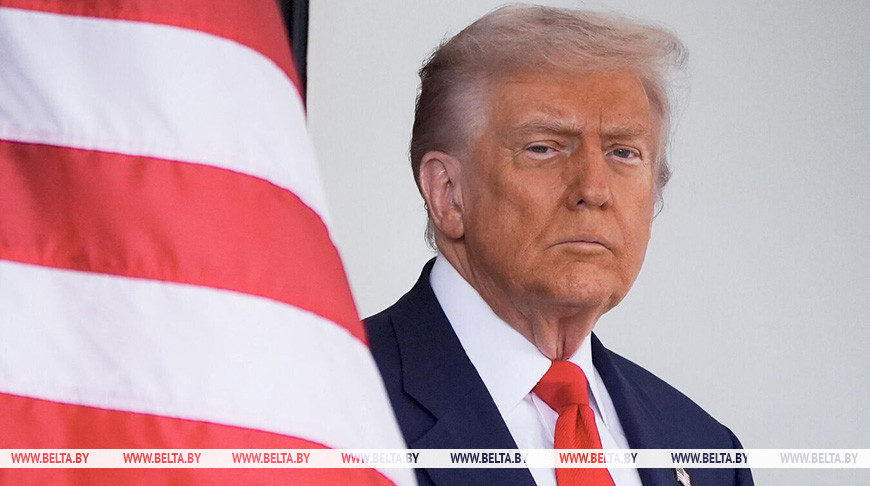
“This agreement will be legally binding. Its implementation will be monitored and guaranteed by the Peace Council, headed by President Donald J. Trump. Sanctions will be imposed for violations. Once all parties agree to this memorandum, the ceasefire will take effect immediately after both sides retreat to agreed points to begin implementation of the agreement,” concludes Strana.
There is no point in examining the European plan in detail, as the proposal to allow Ukraine to join NATO and station foreign troops on its territory renders it unworkable. Moreover, it signals the desire of European elites to continue military operations in Ukraine.
Realists forge peace. What is the reaction of the parties?
On the evening of 21 November, Zelensky delivered a video address, presenting Ukraine with a choice: either the bitter pill of the 28-point plan, or a very tough winter. His words imply that rejecting the American plan would mean Kiev “losing a key partner.” He also indicated his intention to introduce amendments to the American plan.
Meanwhile, commenting on the U.S. proposals for conflict settlement, Donald Trump recalled that Vladimir Zelensky has no leverage in these talks. “If he doesn’t like it, he can keep fighting. I believe you know that if he doesn’t accept it, U.S. support will be withheld. He’ll have to like it. You remember right in the Oval Office, not so long ago, I said you don’t have the cards,” Donald Trump stated.
U.S. Vice President JD Vance also spoke out. He warned against the illusion that Russia could be defeated with sanctions or military assistance to Ukraine. “There is a fantasy that if we just give more money, more weapons, or more sanctions, victory is at hand. Peace won’t be made by failed diplomats or politicians living in a fantasy land. It might be made by smart people living in the real world,” JD Vance said.
On the evening of 21 November, Russian President Vladimir Putin said that Russia had this 28-point U.S. peace plan. “We have this text, we received it through existing channels of interaction with the U.S. administration. I believe the plan could serve as a foundation for a final peace agreement,” the Russian leader stated.
He pointed out, however, that Washington and Moscow have not yet substantively discussed the content of the U.S. plan. “The reason, I believe, is the same: the U.S. administration has so far failed to secure the consent of the Ukrainian side,” Vladimir Putin said.
Consultations between Ukrainian and U.S. representatives took place in Geneva on 23 November. Following them, U.S. Secretary of State Marco Rubio spoke of significant progress in aligning positions and called the past day “the most productive in a very long time.” He also made it clear that certain changes were made to the initial U.S. plan after consultations with the Ukrainians.
According to Zelensky’s office, these changes have effectively adjusted the entire plan. “The 28-point plan, as everyone saw it, no longer exists. Some points were removed, others were changed. Not a single remark from the Ukrainian side was left unaddressed. Final decisions on the most problematic issues will be made by the presidents,” an adviser to the office Aleksandr Bevz said.
Meanwhile, Russian Presidential Aide Yury Ushakov noted that there is much speculation around the U.S. peace plan for Ukraine, therefore Moscow trusts only official information received directly from the United States. “Mr. Rubio announced that the Geneva talks with the Ukrainians quite satisfied the U.S. side. But he also said there are 28 points, and there are 26 points. With so much information and speculation, it is hard to know what to believe. But we believe in what we have seen, what was transmitted to us through the official channels,” Yury Ushakovtold TASS.
In turn, Russian Foreign Minister Sergey Lavrov stated today that Moscow has Trump’s 28-point plan for Ukraine and has not seen other versions of this document. The minister noted that this plan reflects the key understandings reached at the Alaska summit.
U.S. media report that U.S. Secretary of the Army Daniel Driscoll met with Russian representatives in Abu Dhabi on 24 and 25 November. His task is to discuss issues of a peace settlement in Ukraine in the context of the U.S. plan. At the same time, Ukraine expects that a meeting between Zelensky and Trump will take place by the end of the week to finalize the peace plan.
Minsk’s position: No illusions, just facts
Minsk’s position on the Ukrainian conflict has been consistent. Both in 2014, and after the start of hostilities in 2022, and now, our country has been making efforts to restore peace in Ukraine and in the entire European region.