Partners
30 чэрвеня 2025, 09:33
Tuwaiq Mountain: Saudi Arabia's enduring symbol of strength, vision
RIYADH, 30 June (BelTA - Emirates News Agency) - Towering mountains have
always borne witness to passing eras, civilisations, and nations. Their
walls hold messages, inscriptions, and recorded events that endure as
long as humanity itself. From their slopes, people have inhabited the
land and drawn unfading strength. In Saudi Arabia, the magnificent
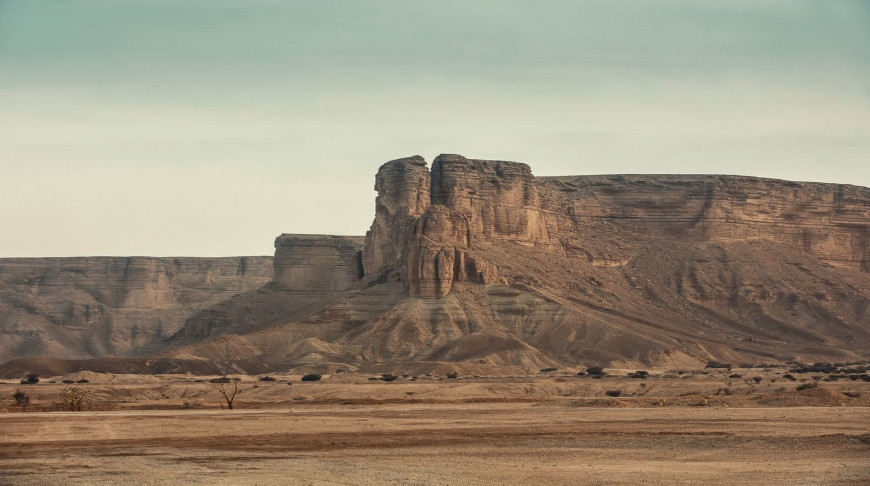
Tuwaiq Mountains, deeply associated with the Saudi people, stretch over
800 kilometres through central Najd.
Considered one of the most
significant geographical landmarks on the Arabian Peninsula, the range
begins in Al-Thuwayrat sands north of Al-Zulfi Governorate and extends
about 1,000 kilometers south, its tip vanishing into the Empty Quarter.
Surrounding it are the fertile lands of Al-Yamamah, dotted with palm
trees, crops, cities, and villages. Dozens of large valleys flow from
its slopes.
The Tuwaiq Mountains form an arc or "ring," enclosing
a vast area and are even visible from outer space. Their sharp peaks
symbolise strength, loftiness, and steadfastness. The eastern slopes
descend gradually, contrasting with the abrupt slant of the western
side. Several valleys cut through its eastern side, most famously Wadi
Hanifa, where the city of Riyadh is located. Important valleys like
Al-Atk, Al-Sulayyil, and Al-Faw (the southernmost) completely divide the
range from west to east. Historians such as Al-Hamdani, Al-Bakri,
Al-Isfahani, and Al-Hamawi meticulously identified its landmarks and
tributaries.
Historically, most cities in the southern and
central Najd region, even pre-Islam, were concentrated around Tuwaiq
Mountain and its sloping valleys. The mountain was historically known as
Jabal Al-Aridh or Aridh Al-Yamamah, a name that persisted into modern
times. The Al-Aridh region, encompassing Riyadh and surrounding
governorates like Dhurma, Al-Muzahmiyya, Diriyah, and Al-Uyaynah, was
named after its location within the range. Tuwaiq Mountain also acts as a
natural barrier between the villages of Sudair to the east and Al-Washm
to the west, with Wadi Al-Bateen occupying the western part of the
range.
It is from the towering peaks, extended lengths, and
colossal shoulders of Tuwaiq Mountain that His Royal Highness Prince
Mohammed bin Salman bin Abdulaziz Al Saud, Crown Prince and Prime
Minister, derived his famous saying: "The strength of the Saudis is like
that of the Tuwaiq Mountain." This powerful and motivating description
aims to boost morale and galvanise Saudi youth and future generations in
the modern era, connecting their strength to their proud geographical
and historical roots.
One of the nation's most ambitious projects
under Vision 2030 is the Qiddiya City project, the flagship endeavor of
the Qiddiya Investment Company, focusing on entertainment, sports, and
culture. Located within the Tuwaiq Mountains range, approximately 45
kilometers from Riyadh, its foundation stone was laid by Custodian of
the Two Holy Mosques King Salman bin Abdulaziz Al Saud on 28th April
2018.
The Crown Prince affirmed that the significant investment
in Qiddiya City is a cornerstone of the Kingdom's Vision 2030, aiming to
diversify the local economy's income sources. He indicated that Qiddiya
will soon become a global leader in entertainment, sports, and culture.
The
project aims to contribute SAR135 billion annually to the GDP and
create 325,000 new job opportunities across over 200 job types in
various sectors throughout its development, enhancing several
industries. Qiddiya is also actively attracting local and international
investors, promising positive impacts on business prosperity in Riyadh
and across the Kingdom.
The Saudi Press Agency spoke with
historian Dr. Rashid Al-Asaker, who shed light on Qiddiya's significance
within the Tuwaiq Mountains. He explained, "Qiddiya is derived from the
word 'qid,' meaning a cleft in the mountain. The Qiddiya road, more
than 3,000 years old, cuts through the majestic Tuwaiq Mountain from
west to east, starting from the ancient city of Hajar Al-Yamamah." He
noted the presence of ancient inscriptions and monuments around it and
mentioned its historical restorations, including the most recent during
the reign of King Abdulaziz bin Abdulrahman in 1352 AH.
The total
project area of Qiddiya is over 360 square kilometers, with plans for
unique attractions such as Speed Park Track, featuring the world’s first
cantilevered track section: the Blade; Six Flags Qiddiya City's Falcons
Flight, the tallest, fastest, and longest roller coaster in the world;
and Aquarabia, the largest water theme park in the region.
The
name "Tuwaiq" resonates deeply with every Saudi citizen. It is more than
just a geological formation; it represents a national memory, embodying
the battles of unification, the whispers of trade caravans, and the
spirit of pioneers who transformed the desert into an epic. The name
inspired the iconic Tuwaiq Palace, a prominent venue for seminars,
cultural exhibitions, and official receptions in Riyadh.
Tuwaiq
also lends its name to a large neighborhood in western Riyadh, a leading
sports club in Al-Zulfi Governorate, the prominent magazine "Sada
Tuwaiq," and numerous major and secondary streets in Riyadh, Dhahran,
Al-Majmaah, and other regions across the Kingdom.