Partners
08 красавіка 2026, 11:03
Russian scientists develop ultra-durable tungsten carbide material for industrial tools
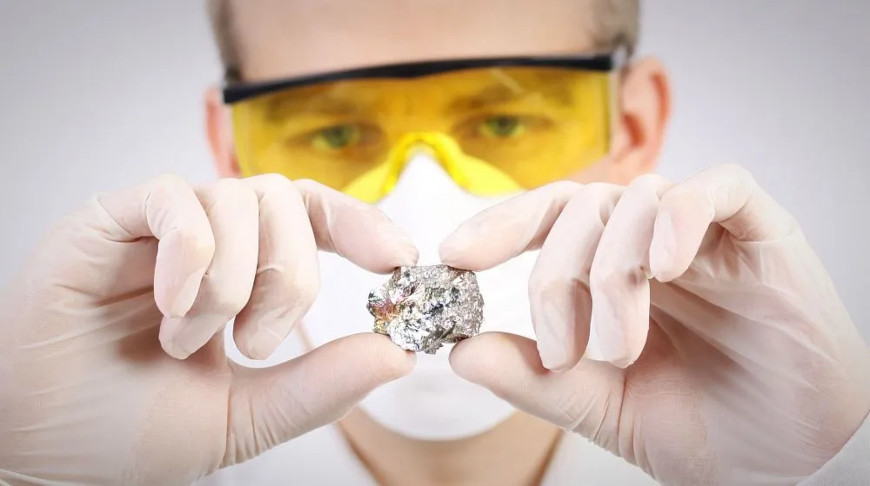
Photo: hynci / iStock
MOSCOW, 8 April (BelTA - TV
BRICS) - Researchers from the Far Eastern Federal University and the
Khabarovsk Federal Research Centre of the Far Eastern Branch of the
Russian Academy of Sciences have introduced a new method for producing
ultra-strong tungsten carbide, significantly improving the durability of
industrial tools.
According to the official website of the
Ministry of Science and Higher Education of the Russian Federation, the
newly developed material demonstrates wear resistance up to 26 times
greater than conventional hard alloys widely used in drilling and
machining equipment. Scientists say its application could substantially
extend the service life of drills, machine tools, and other components
operating under extreme conditions.
For more than a century,
tungsten carbide-based alloys have formed the backbone of high-strength
industrial tools. These materials typically rely on cobalt as a binding
element, which provides toughness but remains vulnerable to abrasion.
Over time, this binding phase deteriorates, causing carbide grains to
lose structural support and leading to rapid wear.
The research
team addressed this limitation by eliminating cobalt entirely and
creating a monolithic structure composed of pure tungsten carbide. Using
spark plasma sintering, they compressed nanoparticles - around 1,000
times thinner than a human hair - into a dense material with a measured
density of 99.94 per cent. The process involved heating to temperatures
of up to 2,000°C.
According to the researchers, the resulting
material combines greater hardness with lower production costs compared
to existing industrial alloys. Laboratory testing confirmed its
performance under micro-abrasive conditions, where samples were exposed
to particles of varying sizes and hardness.
The new material
consistently outperformed traditional alloys, showing significantly
lower wear rates. In contrast to standard materials, the size of
abrasive particles had minimal impact on its durability.
Scientists
highlight a wide range of potential applications, including drilling
equipment for the energy and mining sectors, precision components such
as bearings operating without lubrication, and pump parts used to handle
abrasive fluids containing sand or cement. The absence of cobalt also
reduces reliance on a costly and scarce metal.
Further research
will focus on optimising the material’s internal structure, including
grain size and density, with the aim of preparing it for large-scale
industrial use.