Partners
01 снежня 2025, 09:33
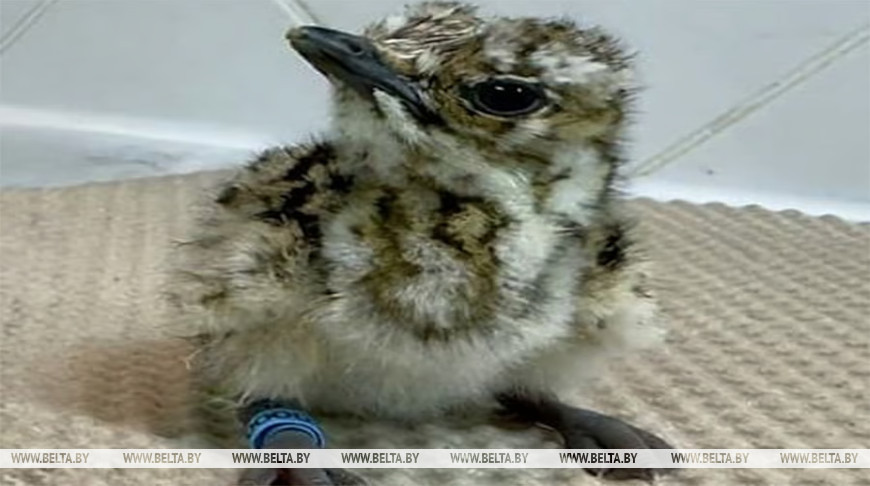
National Avian Research Centre hatches first Asian houbara chick of 2025-2026 season through artificial incubation
AL AIN, 1 December (BelTA - Emirates News Agency) - The
International Fund for Houbara Conservation (IFHC) has announced the
successful hatching of the first Asian houbara chick of the 2025-2026
breeding season at the National Avian Research Centre in Sweihan. The
milestone coincides with the Fund’s participation in the inaugural Al
Ain International Hunting and Equestrian Exhibition 2025 (AAIHEX) 2025.
The
chick hatched on 20th November weighing just 43 grammes and has been
assigned the identification number “M26N00001”. Each chick is provided
with a unique identifier to record its origin, lineage, age, laboratory
test results, and other essential biological data.
These records
play a critical role in reducing inbreeding, preventing genetic mixing
between distinct populations, preserving genetic purity, and ensuring
the highest levels of vitality to support survival, breeding, migration,
and the long-term sustainability of wild houbara populations.
Mohammed
Al Matoua Al Dhaheri, Acting Director-General of IFHC, said the year
holds special significance for Al Ain with the launch of the first
edition of the Al Ain International Hunting and Equestrian Exhibition.
It also marks a key moment for the Fund, which is engaging with visitors
known for their appreciation of nature and their commitment to the
legacy of the Founding Father, late Sheikh Zayed bin Sultan Al Nahyan,
whose vision placed strong emphasis on environmental protection and
wildlife conservation.
Al Dhaheri added that producing the first
chick this early in the 2025-2026 season signals a promising start that
may lead to a new record at the National Avian Research Centre,
following last season’s achievement of producing 100,000 houbara birds.
The
first-ever houbara chick bred outside its natural habitat in Al Ain Zoo
was recorded in 1982, following the establishment of the Abu Dhabi
Houbara Conservation Programme in 1977, which later evolved into the
International Fund for Houbara Conservation.