Partners
10 снежня 2024, 09:01
Excavation team at Türkiye's 3,000-year-old Lagina Hekate Sacred Site uncovers major ancient relics
MUGLA, 10 December (BelTA - Anadolu) - Ongoing excavations at the
3,000-year-old Temple of Hecate in Lagina, a center of ancient pagan
beliefs located in Türkiye's southwestern province of Mugla, have
revealed significant archaeological finds.
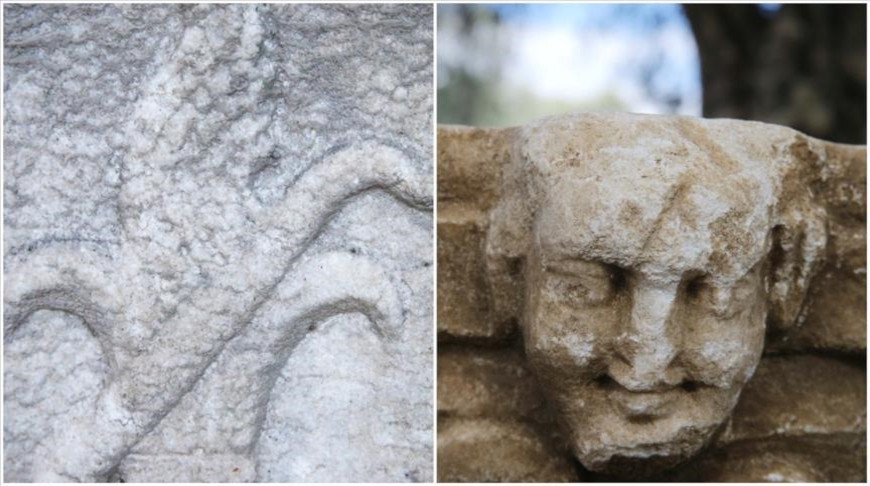
A torch of the
goddess Hecate and a figurative Corinthian column capital from the 2nd
century AD have been unearthed at the ancient site.
Bilal Sogut,
head of the Stratonikeia and Lagina Excavation Team, told Anadolu that
the team has been working for a year as part of the "Heritage for the
Future Project," conducting archaeological excavations, drawings, and
restoration efforts at the site.
Sogut emphasized the importance
of the Lagina site, located about 8.5 kilometers (5.2 miles) from the
ancient city of Stratonikeia, which served as its religious center.
He
highlighted that the largest temple dedicated to Hecate was located in
Lagina, making it an even more significant sacred site.
"We had
made some determinations about how the entrance section looked," said
Sogut, explaining the team's focus on the ceremonial gate and entrance
structure discovered previously.
"With the new excavations, we
are trying to reveal how people entered the sacred site after leaving
Stratonikeia in ancient times and what structures were found on both
sides of the entrance road,” he explained.
Remarkable results
The ongoing excavations have already yielded remarkable results.
"During
the work at the site, we first found a torch of Hecate adorned on a
column. In addition, we uncovered various Corinthian column capitals
from the Hellenistic and Roman periods, and for the first time, a
figurative Corinthian column capital dating to the 2nd century AD was
found," Sogut said.
Expressing hope to continue discoveries, he
said: “We will extract and evaluate data about the Hecate cult, findings
related to ancient architecture, and clues about social life."
He also highlighted the significance of uncovering the sacred road leading to the Lagina Hecate Temple.
"Once
the excavations are complete, visitors will be able to move from a
specific area to the entrance gate and then to the temple area of the
sacred site."
The excavation site, however, presents challenges due to significant erosion.
"There
is about 4 meters of soil fill, and we are carefully excavating it by
hand," Sogut noted. "We will remove a lot of soil, but we will find
beautiful things here."
The history of the site dates back to the
late 19th century when Turkish archaeologist Osman Hamdi Bey first
conducted excavations in 1891-1892.
Artifacts discovered during that time were taken to the Istanbul Archaeology Museum.