Partners
12 студзеня 2026, 10:05
Excavation peels back layers of Roman, Byzantine history in southeastern Türkiye
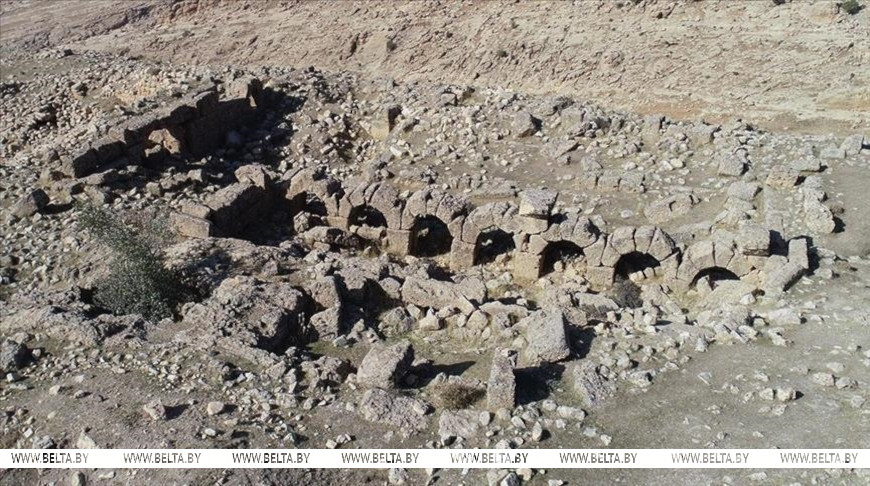
MARDIN / ANKARA, 12 January (BelTA - Anadolu) - Exciting archaeological
excavations have begun at Rabat Castle in Mardin, southeastern Türkiye,
uncovering historical remains dating back some 2,000 years, officials
and scholars said.
Located in the village of Hisaralti in the
Derik district, the ancient fortress spans 5.5 hectares and sits at an
elevation of 955 meters (3,133 feet).
It is believed to have been
built during the Late Roman Era to protect trade caravans and defend
the region from Sasanian incursions, referring to a Persian empire.
With
permission from the Culture and Tourism Ministry, the excavation is
being conducted by Mardin Museum Director Idris Akgul, alongside
archaeologists Mehmet San and Erkan Guzel.
Due to the lack of vehicle access, the team has to hike about one-and-a-half hours to reach the site.
Once
there, they work carefully around the castle's watchtowers,
fortifications, churches, altars, rock tombs, residential structures,
and water channels.
“This is one of the best-preserved archaeological sites after the ancient city of Dara,” said Akgul.
“We struck the first shovel this year at an architectural structure believed to be a chapel.”
Akgul said the earliest documentation of the site was by travelers and researchers in 1866.
“Their records confirmed that the churches, cisterns, and other features were well-preserved,” he added.
“We identified ceramic fragments from the Hellenistic, Roman, Byzantine, and Artuqid periods.
This
allows us to say with confidence that the castle was in use throughout
those eras,” he said. “We also unearthed arrowheads and coins, which are
important for historical documentation.”
Churches, chapels, cisterns, houses
He
said the team plans to continue excavations at the larger church known
locally as the Rabat Church, following current work at a smaller chapel
carved into the rock.
Situated at a strategic point overlooking
the Mesopotamian Plain, the castle likely guarded the region between
modern-day Diyarbakir and Sanliurfa’s Viransehir district.
“The
western section of the fortress features large defensive walls and
moats, while the upper city contains churches, chapels, cisterns, and
dwellings,” said Akgul. “Given its position on an ancient route, the
castle served both defensive and commercial purposes.”
The
excavation team hopes to restore and showcase the well-preserved
structures to create a new cultural tourism route in the region.
Akgul added that they aim to extend the excavations throughout the year under the Ministry’s Heritage for the Future project.
“As the work progresses, we will shed light on the area’s past,” he said.
Local Rohan Ates, who is also part of the dig team, voiced excitement about the findings.
“We start our journey in the morning, walking one-an-a-half hours to reach the castle,” he said.
“It
has a history of about 2,000 years. We want it to be opened to tourism
so everyone can see it,” he said. “I’m sure even more beautiful
structures will emerge as the excavation continues.”
“Our elders
used to talk about this place, but we didn’t know its history went back
so far,” he added. “We’re proud to be part of this. I hope it will
become a shining star of the region.”