Partners
11 сакавіка 2026, 12:47
Energy transition in BRICS countries: climate ambitions and hydrocarbon reality
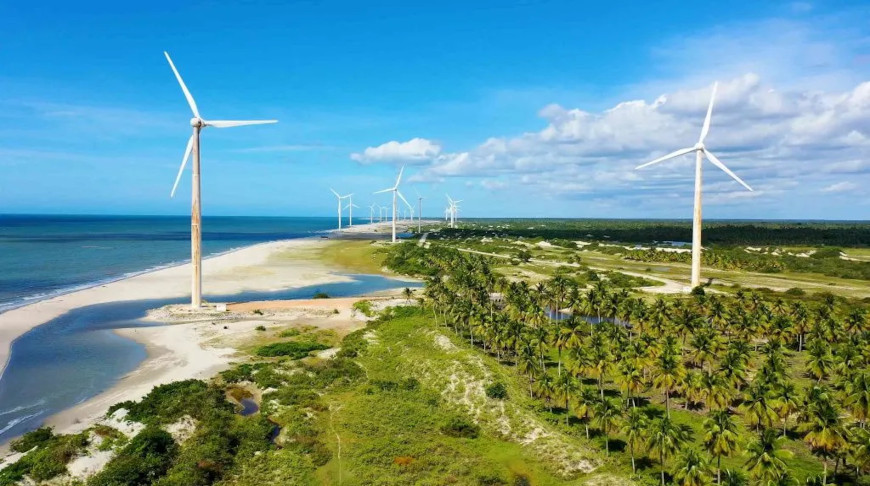
Photo: Cristian Lourenço / iStock
MOSCOW, 11 March (BelTA - TV BRICS) - BRICS unites countries representing not only a large share of the world’s landmass but also of the global energy market. The accession of oil producers such as Iran and the United Arab Emirates and the active participation of Saudi Arabia in the group’s activities, as well as the presence of the largest importers - China and India - make BRICS a structure encompassing the global energy sector as a whole. This strengthens the role of the group as a regulator of the global oil market. This is particularly significant given that Russia is also one of the leading producers of oil and gas and, together with China, India and South Africa, ranks among the main suppliers of coal.
However, not all bets are placed on hydrocarbons. The BRICS countries are actively developing renewable energy sources (RES), planning to triple their capacity by 2030. China’s progress in green energy technologies and the ambitious plans of other countries make this quite achievable. Even though today the situation in the BRICS energy market appears paradoxical. On the one hand - climate ambitions; on the other - growing energy demand and, as a result, the need to use hydrocarbons.
“The expansion of the BRICS group, which includes countries with diverse economic and energy agendas, including South Africa, India, China, and Russia, highlights the central paradox of global climate governance - the challenge of reconciling economic development with the urgent need for decarbonisation. An analysis of the energy profiles of these countries reveals a complex web of historical dependence on fossil fuels and, at the same time, growing investment in renewable energy, making the energy transition, at best, ambiguous,” Gabriela de Fatima Cia, an expert in sustainable development, international environmental cooperation, water resources management and forest ecosystems, member of the BRICS Student Commission and coordinator of the Youth Secretariat of the Centre for Integration and Cooperation of Russia and Latin America (CICRAL), told TV BRICS in an interview.
It should be noted that BRICS members lead not only in energy production and consumption but also in greenhouse gas emissions. This is why the pace of renewable energy deployment in the countries of the group becomes critically important for achieving climate goals. However, the roles of the member states differ significantly.
“China and India are global leaders in absolute growth of renewable capacity, but at the same time they are the largest consumers of coal. Brazil has one of the lowest-carbon energy balances. Russia and South Africa, despite modest efforts to develop renewable resources, continue to rely significantly on traditional energy sources,” commented Nelli Semenova, Candidate of Political Sciences, Senior Research Fellow at the Department of Economic Studies of the Institute of Oriental Studies of the Russian Academy of Sciences, and Leading Research Fellow at the Centre for Chinese Economic Studies of the Institute of China and Contemporary Asia of the Russian Academy of Sciences.