Partners
02 красавіка 2026, 10:14
China launches in-orbit experiment projects in space hospital quest
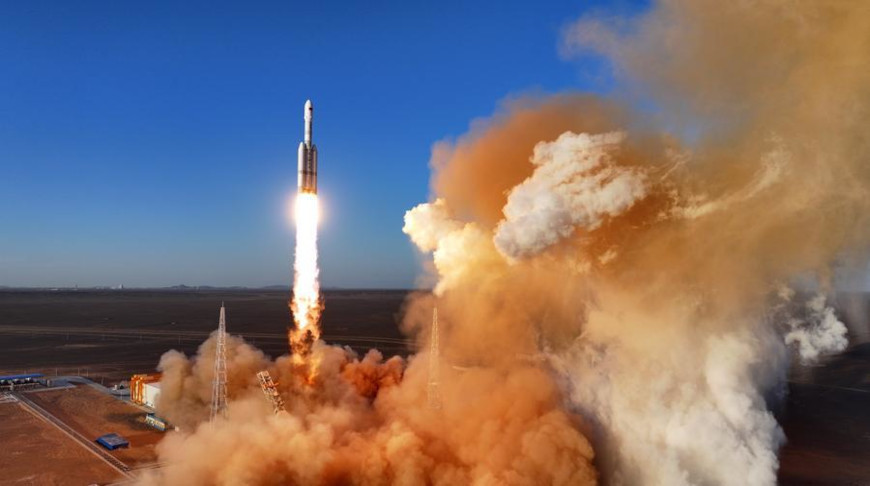
SHENZHEN, 2 April (BelTA - Xinhua) - Five medical research projects
aimed at establishing the world's first space hospital, proposed by a
university in south China's innovation hub Shenzhen, were transported to
space aboard a test spacecraft. These projects will complete in-orbit
experiments and tests over the next three years.
The test vehicle
features 27 projects with a total payload of 1.02 tonnes and will
conduct in-orbit tests at altitudes ranging from 200 to 600 kilometers.
The
idea of a future space hospital was proposed by the Shenzhen University
of Advanced Technology (SUAT), which in July 2025 signed an agreement
with the Innovation Academy for Microsatellites of the Chinese Academy
of Sciences (IAMCAS) to jointly build the hospital.
The
initiative aims to enhance astronaut health protection and improve human
health, and expand capabilities for in-orbit medical monitoring and
life support systems, with focuses on advanced disease prevention and
treatment.
The endeavor will integrate multiple disciplines
including aerospace, medicine and biology, conduct cutting-edge research
in space life and health support, and prepare health safeguards for
non-astronaut space travel and interplanetary exploration.
Xu
Zhiming, executive director of SUAT's Future Medicine Center and dean of
the Faculty of Clinical Medicine, was the first to propose this vision.
According to Xu, the construction of the future space hospital will
follow a three-step approach.
First, cutting-edge medical
projects were adapted for aerospace engineering and placed aboard the
Qingzhou cargo spacecraft, and this will be followed by in-orbit
experiments and tests. After this a space hospital outpost will be
established to conduct space emergency rescue and space scientific
research.
In the next step, medical modules for the future space
hospital will be constructed on the moon or planets to explore health
protection for lunar landing and space travel.
The in-orbit
projects include use of a contact-type UV non-invasive phototherapy
device developed by Gu Ying, an academician of the Chinese Academy of
Sciences and director of SUAT's Future Medicine Center.
The
phototherapy device can simulate specific wavelengths in sunlight that
promote vitamin D synthesis in the human body. Regular use by astronauts
aboard space stations or deep-space spacecraft can safely and
efficiently maintain vitamin D levels in the body, preventing vitamin D
deficiency.
In microgravity environments, reduced skeletal
loading leads to rapid bone density loss at a rate of about 1 percent to
2 percent per month. Maintaining appropriate vitamin D levels through
this device can directly support calcium metabolism, and work with space
exercise and pharmaceutical interventions to form a more comprehensive
bone health protection system.
Also aboard the cargo spacecraft
is a plasma therapeutic device for refractory wounds, jointly developed
by Xu Zhiming and Chen Zhitong from the Shenzhen Institutes of Advanced
Technology under the Chinese Academy of Sciences.
Xu said that in
the microgravity environment of space, changes in human body fluid
distribution and abnormal blood circulation can significantly slow wound
healing and make wounds prone to becoming chronic.
The plasma
therapeutic device can directly promote cell proliferation and collagen
synthesis by releasing reactive oxygen and nitrogen particles,
accelerating tissue regeneration to counteract healing delays caused by
microgravity.
The device does not require liquid or gel media, as
the plasma acts on wounds in gas form, avoiding liquid splashing or
contamination of the cabin environment in weightless conditions. The
device can also disinfect equipment surfaces such as medical tools and
wearable device interfaces, achieving multi-functional use in one
machine.
Xu said they will continue to utilize Shenzhou
spacecraft for in-orbit experiments and tests to serve four major
scenarios, namely space stations, lunar landings, Mars exploration and
future space travel, and extend space medical achievements from space
applications to civilian benefits.
SUAT Party secretary Zhu
Dijian noted that the health challenges astronauts face in space are the
university's key focus. The SUAT brings together strengths in medical
devices, biomedicine, innovative medical technology and aerospace
technology from institutions such as the IAMCAS, with the aim of
building a space medical platform for the future.