Partners
15 кастрычніка 2024, 12:04
China announces plan for space science until 2050
BEIJING, 15 October (BelTA - China Daily) - China unveiled a national
mid and long-term development program for space science on Tuesday,
which will guide the country's planning of space science missions and
space research from 2024 to 2050.
The program, the first of its
kind at the national level, was jointly released by the Chinese Academy
of Sciences (CAS), the China National Space Administration and the China
Manned Space Agency at a press conference held by the State Council
Information Office.
The program outlines the development goals of
China's space science, including 17 priority areas under five key
scientific themes, as well as a three-phase roadmap.
The five key
scientific themes include the extreme universe, space-time ripples,
panoramic view of Sun-Earth, habitable planets, and biological and
physical sciences in space, Ding Chibiao, vice president of the CAS,
said at the press conference.
The theme of extreme universe
focuses on exploring the origin and evolution of the universe, revealing
the physical laws under extreme cosmic conditions. The priority areas
range from dark matter and extreme universe to the universe's origin and
evolution, as well as the detection of cosmic baryonic matter,
according to the program.
The theme of space-time ripples centers
on detecting medium to low-frequency gravitational waves and primordial
gravitational waves, with the goal of uncovering the nature of gravity
and space-time. The priority area within this theme is space-based
gravitational wave detection, Ding said.
The Sun-Earth panoramic
view theme involves the exploration of the sun, the Earth, and the
heliosphere to unravel the physical processes and laws governing the
complex interactions within the Sun-Earth system. Priority areas include
Earth's cycle systems, comprehensive observations of the Earth-Moon,
space weather observation, three-dimensional solar exploration, and
heliosphere exploration, according to the program.
Scientists
will also explore the habitability of celestial bodies in the solar
system and exoplanets, as well as search for extraterrestrial life. Key
areas in the subject cover sustainable development, the origin and
evolution of the solar system, characterization of planetary
atmospheres, the search for extraterrestrial life, and exoplanet
detection.
The theme of biological and physical sciences in space
seeks to reveal the laws of matter movement and life activities under
space conditions to deepen the understanding of fundamental physics,
such as quantum mechanics and general relativity. Priority areas
encompass microgravity science, quantum mechanics and general
relativity, and space life sciences, Ding added.
The program also outlines a roadmap for the development of space science in China through 2050.
In
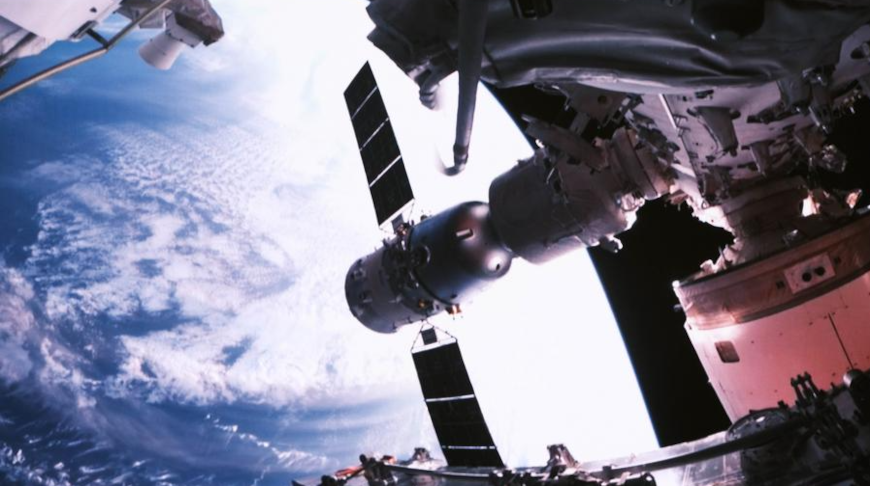
the first phase, leading up to 2027, China will focus on the space
station operation, implementing the manned lunar exploration project,
and the fourth phase of its lunar exploration program as well as the
planetary exploration project. Five to eight space science satellite
missions will be approved during the period, according to the program.
The
international lunar research station initiated by China will be
constructed during the second phase from 2028 to 2035, and approximately
15 scientific satellite missions will be carried out during this
period.
In the third phase from 2036 to 2050, China will launch over 30 space science missions.