Partners
07 кастрычніка 2025, 10:23
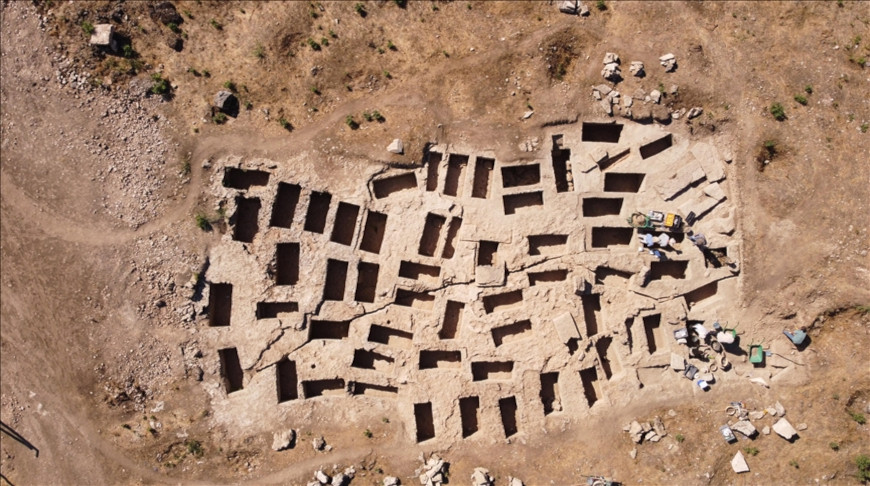
Archaeologists discover 60 tombs dating back 2,200 years in Western Türkiye
DENIZLI / ISTANBUL, 7 October (BelTA - Anadolu) - Archaeologists working
in the ancient city of Colossae, located in Türkiye’s Aegean region,
have uncovered 60 tombs dating back approximately 2,200 years.
Though
similar tomb types have been found elsewhere in Anatolia, experts say
it is rare to find such a large number constructed side by side in such a
confined area.
“In Colossae, we discovered what appears to be
the largest necropolis in Anatolia featuring rock-cut, trough-shaped
tombs. After removing the surface soil, we identified around 65 tombs,
of which we excavated 60.
Along with skeletal fragments, we encountered significant archaeological data,” archaeologist Baris Yener told Anadolu.
He emphasized that people in antiquity chose travertine formations as burial grounds to make efficient use of the land.
“The
people of the ancient period made remarkable use of the geological and
topographical features of the site. They sought to use the travertine
rock formations efficiently, since agriculture - particularly grain
production - was practiced at the time. To preserve arable land, they
designated the rocky travertine areas as burial grounds.”
- Potential for faith tourism
The
ancient city also holds significant potential for faith tourism.
According to Yener, the research findings indicate that the ancient
inhabitants of this region placed great importance on protective belief
systems.
“The findings reveal how much the people of Colossae
valued magic, talismans, and objects believed to have protective powers.
In the tombs, we uncovered numerous amulets, charms, and stones thought
to possess healing qualities,” he said.
The artifacts offer
insight into the community’s spiritual desire for protection and the
deep connection between funerary rituals were intertwined with everyday
religious practices.
Among the artifacts identified as grave
goods are terracotta and glass bottles, oil lamps believed to have been
placed to illuminate the darkness both in daily life and in the journey
after death, as well as coins and personal belongings such as sandals.
- Filling a historical gap
Yener
noted that the findings obtained from the excavations in Colossae are
significant enough to fill a chronological gap in the region’s history,
explaining that they now possess a continuous stream of information
covering the period from the Late Chalcolithic Age up to the
Turkification of Honaz in 1206.
Once one of the most prominent
cities of the Persian period, Colossae also held an important place in
the history of Christianity during the eras of Roman and Byzantine rule.
However,
as neighboring ancient cities such as Hierapolis and Laodicea were
founded nearby, Colossae gradually lost its prominence and suffered
severe damage in an earthquake that occurred in the 1st century AD.
Rebuilt
under the name Chonae around 692 AD, the city was ultimately abandoned
following another devastating earthquake in 787 AD.
Following
three years of surface surveys, excavations began under the direction of
archaeologist Baris Yener from Pamukkale University, as part of the
Ministry of Culture and Tourism’s Heritage for the Future Project.
The site lies within the modern-day borders of Denizli province, at the foothills of Mount Honaz.
Known
as a key trade center from the 6th century BC, Colossae, which was
particularly renowned for its wool and textile production - continues to
reveal new insights into its past through ongoing archaeological work.