Partners
07 красавіка 2026, 12:53
3,413 meters: China sets new record in global hot water ice drilling
BEIJING, 7 April (BelTA - China Daily) - China has achieved a remarkable
depth of over 3,400 meters in its first hot water ice drilling
experiment in Antarctica, breaking the previous international record of
2,540 meters, the Ministry of Natural Resources said on Tuesday.
On
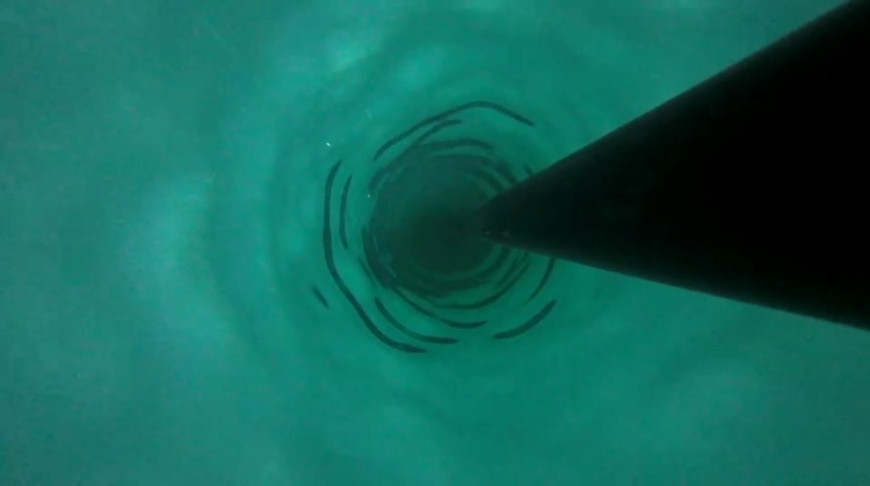
February 5, China's 42nd Antarctic expedition team successfully
completed the country's first hot water ice drilling test in the Qilin
Subglacial Lake region, reaching a depth of 3,413 meters.
The
achievement marks the country's capability to conduct drilling research
across over 90 percent of the Antarctic ice sheet and all Arctic ice
sheet.
Named by China in 2022, the Qilin Subglacial Lake is one
of the largest buried lakes discovered in Antarctica, located in the
Princess Elizabeth Land in the East Antarctic inland ice sheet, about
120 kilometers from China's Taishan station.
Hot water drilling
research is an international frontier scientific study aimed at
understanding Earth's ancient environmental changes, predicting climate
change, exploring the boundaries of life and expanding human knowledge.
It
has significant advantages over traditional mechanical ice drilling as
it can penetrate ice faster with minimal disturbance, allow
large-diameter clean operations, and efficiently reach critical
interfaces such as subglacial lakes, ice shelf bases and subglacial
bedrock. Hot water drilling has become the mainstream technology for
international research on the deep environments of polar ice sheets.
The
experiment was mainly to demonstrate the application of a deep ice
sheet hot water drilling system in Antarctica. By drilling through the
ice cover above the Qilin Subglacial Lake, the experiment aimed to
provide a contamination-free pathway and key technical support for
subsequent in-situ observations of subglacial lakes and the collection
of water and lakebed samples.
The experiment targeted ice sheets
over 3,000 meters thick. It integrated multiple pieces of equipment
designed for polar conditions and addressed key technical challenges,
including low-temperature operation, external contamination control, and
precise management of deep hoses and winches.
The successful
drilling demonstrates efficient, stable and environmentally clean
operation, filling a gap in China's polar research capabilities and
reflecting its concepts of "green exploration" and environmentally
responsible technologies.